
Is UV Printing on Stainless Steel Cutlery a Durable Option?
Finding a reliable way to brand your products can be challenging. You need a custom logo that looks sharp, but you worry it will fade, scratch, or wash off after a few uses. This erodes your brand's perceived quality and disappoints your customers. Understanding the specifics of UV printing on stainless steel cutlery is the first step to ensuring your branding investment is durable and effective.
UV printing on stainless steel cutlery can be durable, but its longevity is not automatic. Durability depends entirely on the quality of the surface preparation, ink system compatibility, UV curing process, and post-production testing. It is a misconception that UV printing is inherently more wear-resistant than traditional methods like pad or screen printing without proper process control.
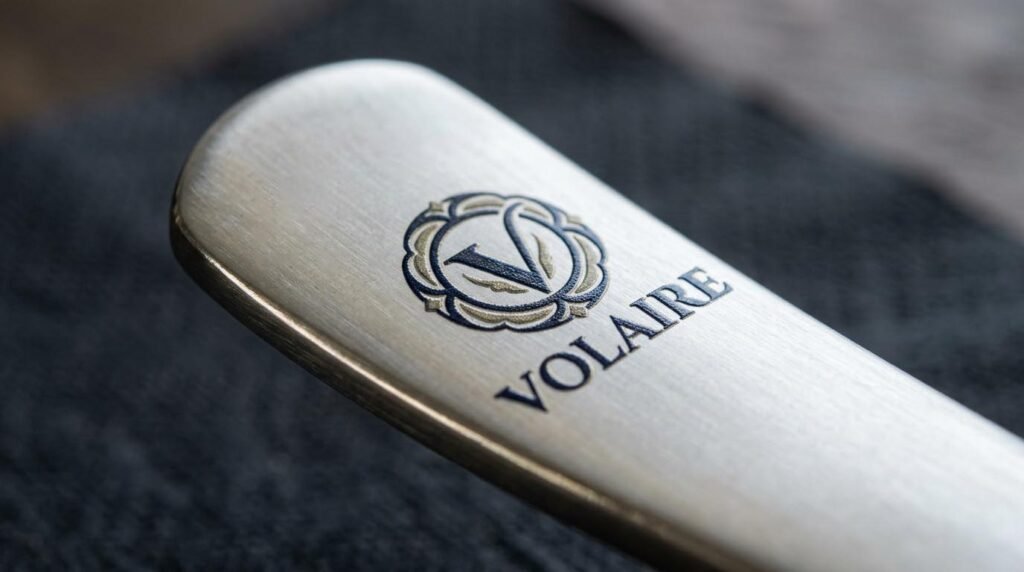
Now that you have the direct answer, let's explore the details. The real value for importers, wholesalers, and private label brands lies in understanding the process, its limitations, and how to verify quality. This knowledge is crucial for writing effective product specifications and selecting a capable manufacturer.
How Does UV Printing on Stainless Steel Cutlery Work?
Struggling to get vibrant, multi-color designs onto your flatware with traditional methods? You need a process that can handle complexity without compromising production speed. This is where UV printing often enters the conversation as a potential solution for decorative and branding needs.
UV printing is a process that uses ultraviolet (UV) light to instantly cure or dry specially formulated inks as they are printed onto a substrate. Unlike conventional inks that dry through evaporation, UV-curable inks solidify the moment they are exposed to the UV light source.
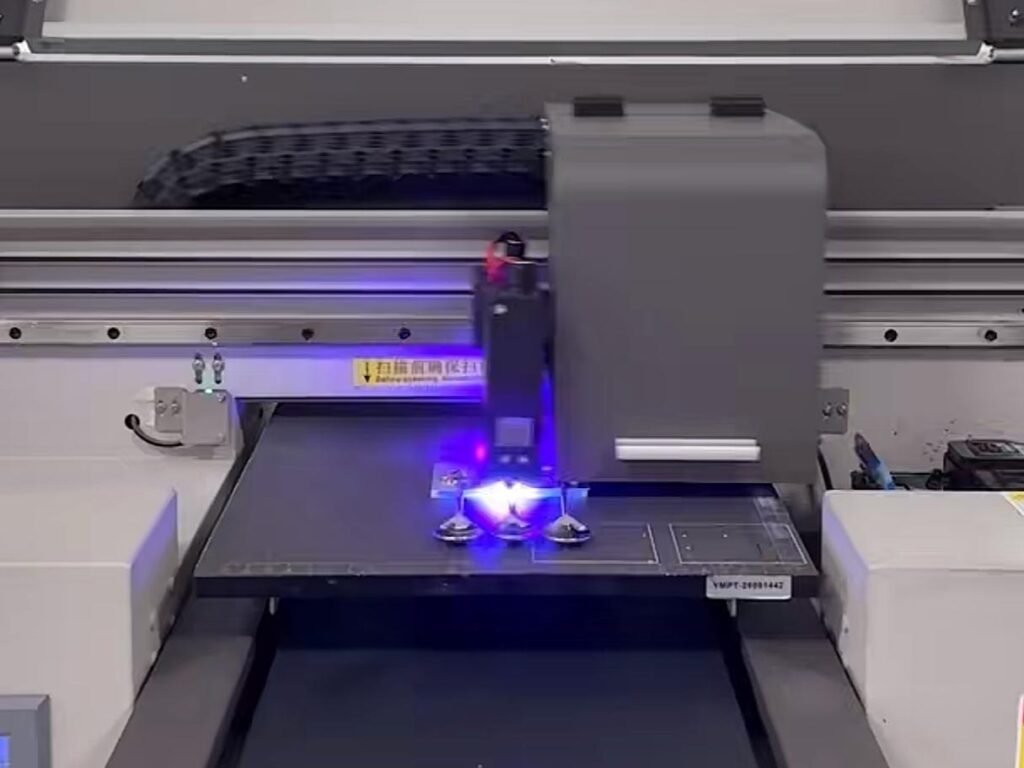
The UV Printing Process Breakdown
As a manufacturer with over 20 years of experience, I've seen many branding technologies evolve. For UV printing on stainless steel cutlery, a successful outcome relies on a precise, multi-stage process. It's much more than just pressing a "print" button.
The typical workflow includes:
- Artwork Preparation: The client provides the logo or pattern file (e.g., .AI, .EPS). Our team checks it for resolution, color separation, and compatibility with the printing equipment.
- Surface Preparation: This is arguably the most critical step. The cutlery pieces must be meticulously cleaned to remove any oils, polishing compounds, dust, or residues. An immaculate surface is essential for good ink adhesion.
- Ink Application: The cutlery is placed in a jig or fixture within the UV printer. The print head, similar to an inkjet printer, applies the UV-curable ink to the designated area on the handle or other parts of the flatware.
- UV Curing: Immediately following the ink application, a high-intensity UV lamp passes over the printed area. The UV energy triggers a photochemical reaction, instantly hardening the ink into a solid, durable layer.
- Quality Inspection: Each piece is inspected for print clarity, color accuracy, correct positioning, and any visible defects. More importantly, samples from the batch undergo adhesion and abrasion tests based on the client's requirements.
What Can Be Printed?
UV printing is highly versatile, allowing for a wide range of customizations that can enhance brand value for wholesalers, hotel suppliers, and retail brands. Common applications include:
- Brand Logos: From simple single-color marks to complex multi-color emblems.
- Text and Names: Company names, hotel branding, or specific event text.
- Decorative Graphics: Intricate patterns, floral designs, or abstract art on handles.
- Full-Color Images: On suitable surfaces, photo-quality images can be reproduced, though this is less common for high-use cutlery.
The final result depends on the printer's resolution, the ink system used, the shape of the cutlery, and the complexity of the artwork itself.
What Affects the Quality and Durability of UV Printing on Cutlery?
Have you ever sourced a custom-branded product, only to have the logo scratch off with a fingernail? This quality failure is a major concern for any brand. It signals poor manufacturing control and can ruin a product's reputation before it even reaches the end consumer.
The durability of UV printing is not a given; it's an outcome of a meticulously controlled process. Key factors include ink adhesion, surface compatibility, and resistance to real-world wear and tear. Simply seeing a crisp, dry logo is not proof of durability.
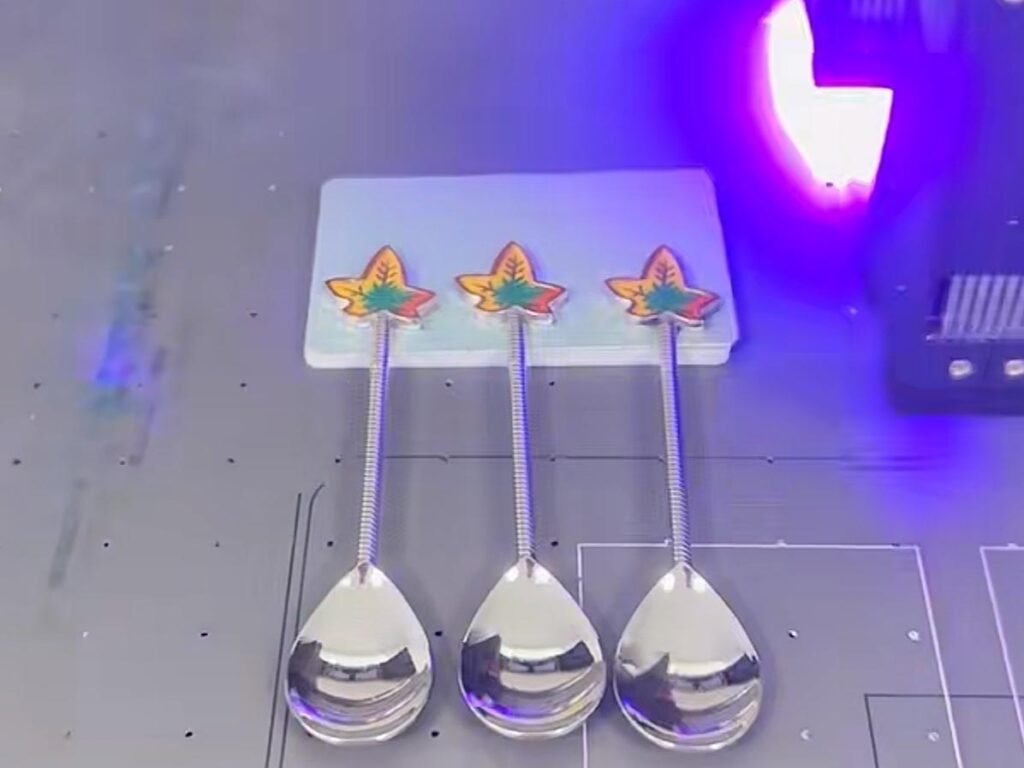
Key Factors Influencing Durability
In our 8,000㎡ production facility, we've identified several critical variables that determine the success or failure of UV printing on stainless steel cutlery. Buyers must be aware of these to set clear quality standards.
Surface Finish and Preparation
The type of stainless steel finish dramatically impacts ink adhesion.
- Mirror Finish: The ultra-smooth surface offers less "tooth" for the ink to grip. While it provides a high-contrast look, adhesion must be rigorously tested. The surface must be perfectly clean, as any fingerprint or oil residue will cause the ink to fail.
- Matte/Satin Finish: These finishes have a slightly rougher texture, which can improve mechanical adhesion. The visual contrast may be more subtle, so sample approval is crucial.
- Brushed Finish: The directional grain of a brushed finish can interfere with the fine details of a print. The ink may not settle evenly within the tiny grooves, potentially affecting sharpness.
- PVD-Coated Finish: Printing on a Physical Vapor Deposition (PVD) coating (like gold, black, or rose gold) is a different challenge. The ink must be compatible with the PVD layer, not the underlying stainless steel. Adhesion tests performed on bare steel are irrelevant for PVD-coated products.
Ink Compatibility and Curing
Not all UV inks are created equal. The chosen ink system must be specifically formulated for non-porous surfaces like metal or the specific PVD coating being used. Furthermore, the UV curing process must be optimized.
- Under-curing: Insufficient UV energy will leave the ink soft and easy to scratch.
- Over-curing: Too much energy can make the ink brittle and prone to chipping.
The correct curing parameters (lamp power, distance, and exposure time) are essential for achieving a tough, resilient print.
Common Defects to Watch For
For bulk production, visual and physical quality control is non-negotiable. Common defects include:
- Poor Ink Adhesion: The print can be scraped off easily (the most critical failure).
- Incomplete Curing: The surface feels tacky or soft.
- Blurred or Uneven Graphics: Poor focus or inconsistent ink flow.
- Color Inconsistency: Variation in color across a batch.
- Incorrect Positioning: The logo is misplaced, skewed, or not centered.
UV Printing vs. Other Methods: Which Is Best for Your Cutlery?
You have a design, but you're getting conflicting advice on how to apply it. One supplier suggests UV printing, another recommends pad printing, and a third mentions screen printing. This confusion can lead to choosing a process that is ill-suited for your specific product and design.
The best printing method depends on your design's complexity, the cutlery's shape, the order volume, and your durability requirements. There is no single "best" technology; there is only the best technology for a specific application.
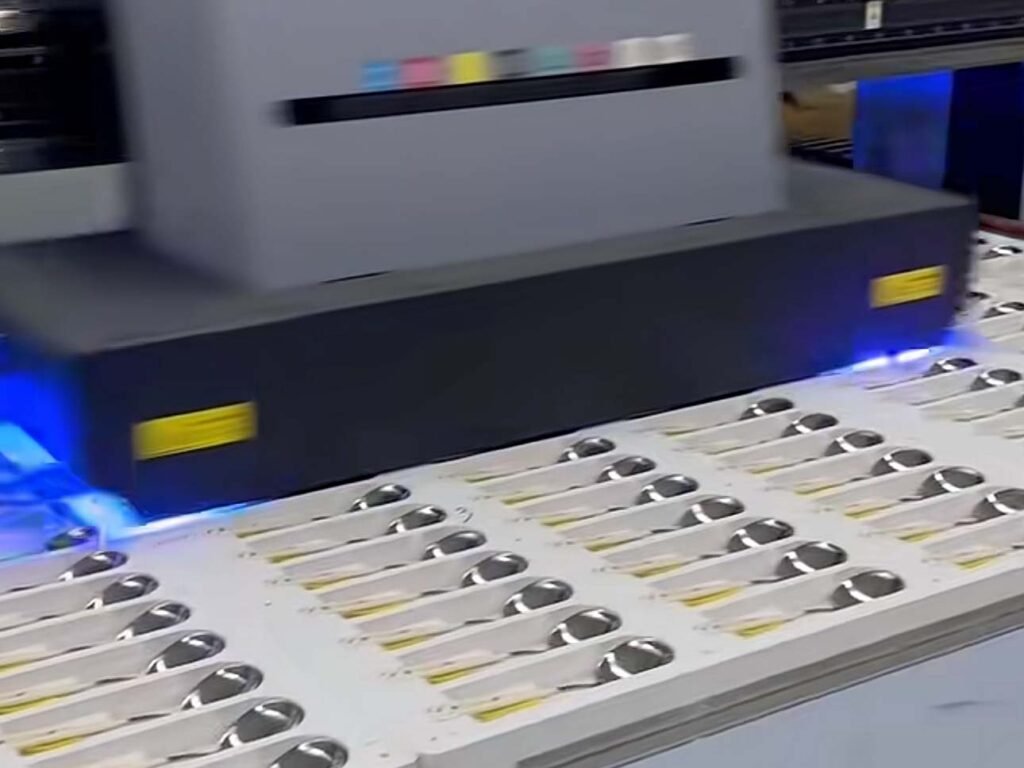
Comparing Customization Technologies
Let's break down the three common printing methods for cutlery branding. It’s important to note that for all three methods, the durability is determined by the ink system, surface preparation, and curing/drying process, not just the name of the technology.
| Comparison Metric | UV Printing | Pad Printing1 | Screen Printing2 |
|---|---|---|---|
| Core Principle | UV-curable ink is jetted and instantly cured by UV light. | A silicone pad transfers ink from an etched plate to the object. | Ink is pushed through a mesh screen/stencil onto the surface. |
| Best For | Multi-color, complex graphics; decorative patterns. | Small logos, text on curved or slightly irregular surfaces. | Single-color logos or text on relatively flat, large areas. |
| Pattern Complexity | High. Capable of photographic detail, depending on the printer. | Moderate. Best for vector logos and text. Fine details can be challenging. | Low to Moderate. Best for bold graphics with clean lines. |
| Shape Adaptability | Limited. Best for flat or slightly curved areas. Complex curves are difficult. | Excellent. The flexible pad can conform to many irregular shapes. | Poor. Primarily for flat surfaces. |
| Durability | Depends on ink, surface prep, and curing. Requires testing. | Depends on ink system and drying. Can be very durable. | Depends on ink system and drying. Can be very durable. |
Making the Right Choice
Based on my experience handling OEM/ODM orders for clients worldwide, the choice often comes down to these scenarios:
- Choose Pad Printing for: A simple, one-color logo on the curved part of a spoon handle. It's cost-effective and highly adaptable to shape.
- Choose Screen Printing for: A large, bold brand name running down the length of a flat-handled knife. It provides excellent coverage and opacity.
- Choose UV Printing for: A hotel chain wanting a small, full-color crest on their flatware, or a private label brand creating a decorative floral pattern on the handle for a retail set.
The key is to not start with a technology in mind, but with a clear design and use case. A good manufacturer will then recommend the most appropriate and reliable process.
How Can Buyers Ensure Quality for Bulk UV Printed Cutlery Orders?
You've approved a beautiful pre-production sample, but now you're worried. Can the factory maintain this quality across a 30,000-set order? Inconsistent color, misplaced logos, or poor adhesion on a large scale can turn a promising product into a costly liability.
Ensuring quality in bulk production requires a robust and mutually agreed-upon quality control plan before the first piece is made. It's about translating the "perfect sample" into a repeatable, scalable manufacturing process.
The Pre-Order Quality Checklist
Before placing a purchase order for a large quantity of custom-printed cutlery, every importer, distributor, or brand manager should have a detailed discussion with their manufacturer.
Let’s use a hypothetical order: A private label brand wants 30,000 cutlery sets with a two-color logo UV printed on the PVD-coated black handles.
Here is the checklist we would work through with the client:
- Finalize Base Product: Confirm the cutlery model, stainless steel grade (e.g., 18/10), dimensions, weight, and the PVD coating specification.
- Artwork & Positioning:
- Obtain the final vector artwork for the logo.
- Create a technical drawing showing the exact size and position of the logo on the handle, with tolerances (e.g., +/- 0.5mm).
- Ink & Color Specification:
- Specify Pantone Matching System (PMS) codes for the two colors.
- Confirm the ink system is tested and proven for adhesion on the specific PVD coating.
- Pre-Production Samples (PPS):
- Produce a small batch of samples (5-10 sets) using the final production process.
- These samples are not lab prototypes; they represent what the mass-produced items will look like.
- Define Testing Protocols & Acceptance Criteria: This is non-negotiable.
- Adhesion Test: Agree on a method, such as the ASTM D3359 cross-hatch tape test. The acceptance criterion could be "No ink removal."
- Abrasion Test: Define a test for wear resistance, especially if the product is marketed as dishwasher-safe. For example, "The print must remain intact with no significant degradation after 50 commercial dishwasher cycles."
- Visual Inspection: Define criteria for color accuracy (compared to PMS codes), print sharpness, and position.
- Packaging Approval: The packaging must be designed to protect the printed area during shipping and handling to prevent scratches before it even reaches the customer.
- Formal Sign-Off: The client must formally approve the PPS and all testing criteria in writing before mass production begins.
This structured approach minimizes ambiguity and protects both the buyer and the manufacturer. It shifts the conversation from a subjective "it looks good" to an objective "it meets the agreed-upon standards."
Frequently Asked Questions
Is UV printing on cutlery dishwasher safe?
It can be, but "dishwasher safe" is not an inherent feature of UV printing. It must be validated. Durability depends on the ink system, surface preparation, and curing process. We recommend defining a specific test (e.g., 50 cycles in a commercial dishwasher) and having samples tested to confirm they meet this standard before making any claims.
Can you UV print on a matte black or gold PVD fork?
Yes, it is possible to UV print on PVD-coated cutlery. However, it requires a different process validation than printing on bare stainless steel. The ink must be specifically formulated for adhesion to the PVD layer. We always perform adhesion tests on the actual PVD-coated product surface to ensure compatibility and durability.
What is more durable: UV printing or laser engraving?
Laser engraving is fundamentally more durable. Engraving permanently removes or alters the surface material of the steel itself, so it cannot scratch or wear off. UV printing adds a layer of ink on top of the surface, which, even when durable, is susceptible to eventual wear and abrasion. The choice depends on whether you need a permanent mark (laser) or color and complex graphics (UV printing).
How much does UV printing add to the cost of cutlery?
The cost varies significantly based on several factors: the complexity of the design, the number of colors, the size of the print area, and the order quantity. A simple, one-color logo on a large order will be much more affordable per piece than a complex, full-color image on a small batch. Buyers should always request a detailed quote based on their specific artwork and volume.
Conclusion
UV printing can be an excellent choice for adding complex, colorful branding to flatware, but it is not a magic solution. The success of UV printing on stainless steel cutlery hinges on a disciplined manufacturing process that prioritizes surface preparation, ink compatibility, and rigorous quality testing. The technology itself doesn't guarantee durability; the expertise of the manufacturer does. As a buyer for a wholesale, private label, or hospitality brand, your most important step is to partner with a supplier who understands these nuances and can work with you to define and verify clear quality standards for your bulk order.
If you are looking for a reliable partner for your next custom cutlery project, contact XR Cutlery. With over 20 years of manufacturing and export experience, we can guide you to the perfect branding solution that meets your design needs and quality expectations.
-
For more details, see our guide to [Screen Printing for Stainless Steel Cutlery], which explains the process, suitable applications, and key quality considerations for bulk orders. ↩
-
Read our guide to [Pad Printing for Stainless Steel Cutlery] to learn how pad printing works on curved and irregular cutlery surfaces and what buyers should consider when customizing logos. ↩