
What is the difference between cheap and expensive flatware?
You see two forks that look almost identical, but one costs five times more. You wonder if you're overpaying for a name or missing a crucial quality difference.
The difference lies in the material, construction, weight, and finish. Expensive flatware uses higher-grade 18/10 stainless steel, is forged for better balance and durability, and has a refined polish. It is a long-term investment in quality and guest experience.

I've had many buyers, including my experienced client Peter, hold a cheap fork in one hand and one of my premium forged forks in the other. The "aha" moment is instant. That physical difference is the result of many factors that are invisible at first glance. Let's break down exactly what you're paying for when you choose a more expensive set.
Is It Just About Material and Durability?
You're told expensive flatware is more "durable," but what does that really mean? Your budget says to go cheap, but you're worried about bent tines and rust spots.
Yes, it's largely about the material. Expensive flatware uses 18/10 stainless steel, which has more nickel for superior rust resistance. It's also forged from a single steel piece, not stamped from a thin sheet, making it much stronger.
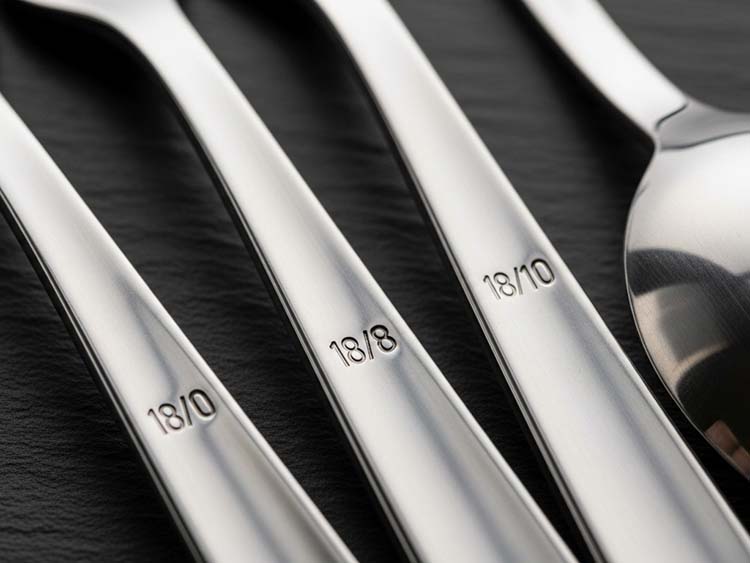
The material grade is the single biggest factor. When you see "18/10" or "18/8" stainless steel, it means it has 18% chromium and 8-10% nickel. That nickel is crucial; it gives the steel its brilliant shine and powerful resistance to rust. Cheaper flatware often uses 18/0 steel or 201 steel, which has no nickel, making it far more likely to get rust spots in a commercial dishwasher.
Beyond the material, there's the construction method.
- Stamped: This is how most cheap flatware is made. A machine stamps the shape from a thin sheet of steel. It's fast and economical but results in a lighter, less balanced piece that can feel flimsy and bend easily.
- Forged: This is the premium method. A single thick piece of steel is heated and hammered into shape. This creates a much denser, heavier, and stronger utensil. The difference in a forged knife1's bolster—the thick part where the blade meets the handle—is a clear sign of this superior quality. It will never bend under normal use.
Does Expensive Flatware Really Look and Feel Better?
You look at a catalog, and all the spoons look like spoons. It's hard to justify a higher price for aesthetics alone when the basic shape is the same.
Absolutely. The difference is in the weight, balance, and polish. Expensive flatware has a satisfying heaviness and is ergonomically balanced. The polishing is more meticulous, resulting in a deeper, more consistent shine or a smoother matte finish without any imperfections.

The way flatware feels in your hand is a huge part of the dining experience. This is what we call "balance and heft." Cheaper, stamped flatware is often too light or poorly balanced, which can secretly communicate a lack of quality to the diner. Forged, expensive flatware has its weight distributed evenly, making it feel like a natural extension of the hand. When I give Peter a sample, he doesn't just look at it; he picks it up and pretends to eat with it. He knows that weight and balance create a perception of luxury. Then there is the finish. On a cheap set, you might see tiny machine marks or an inconsistent polish. Premium flatware goes through multiple stages of polishing and buffing2 to create a flawless mirror finish or a perfectly uniform satin feel. This level of craftsmanship elevates the entire piece from a simple tool to an element of the table's design.
Why Pay More If They Both Do the Same Job?
A fork is a fork, right? It just needs to pick up food. Paying more seems like a waste when the basic function is identical across all price points.
You're paying for longevity and a better customer experience. Expensive flatware is a long-term investment that withstands heavy commercial use without bending or rusting. It elevates the dining experience, reflecting the quality of the food and service you provide.

This comes down to the total cost of ownership and brand alignment. A cheap set might save you money today, but you'll be replacing pieces constantly due to damage or rust. That cost adds up. A high-quality set made from 18/10 stainless steel can last for decades, even in a demanding restaurant, making it a better investment over time.
But more importantly, flatware is a silent messenger for your brand.
- Use Case for Cheap Flatware: Perfect for high-volume, casual settings where cost and replacement speed are top priorities. Think cafeterias, schools, or fast-food courts.
- Use Case for Expensive Flatware: Essential for any business that wants to project an image of quality. Fine dining restaurants, luxury hotels, and special event venues use premium flatware because it enhances the guest's perception of value. The quality of the fork should match the quality of the food.
Conclusion
The choice between cheap and expensive flatware isn't just about price. It's a strategic decision about durability, guest experience, and the long-term value you want for your brand.