
What is the difference between stamped and forged cutlery?
You see two sets of cutlery that look almost identical, but one costs three times as much. You can't feel the difference through the box and worry you're either paying too much for a brand name or buying a cheap set that will bend and rust.
Stamped cutlery is cut from a large sheet of steel, making it lighter and more affordable. Forged cutlery is shaped under heat and pressure from a single block of steel, creating a heavier, stronger, and more balanced piece, often identifiable by a thick bolster.
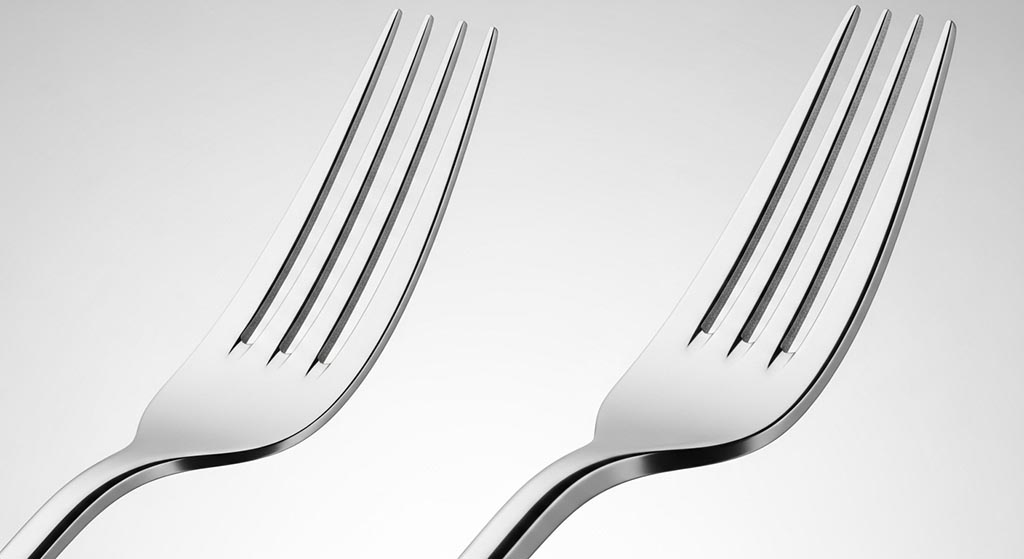
In my factory, the difference between these two methods is like night and day. One side of the factory floor has massive presses that punch out forks by the thousands, fast and efficient. The other side has the heat and noise of the forge, where skilled workers shape each piece individually. A professional buyer like Jacky knows this. He can tell which process was used just by holding a fork in his hand. Let me share what he's looking for, so you can see the difference too.
What is stamped cutlery?
You see the word "stamped" on the box and assume it means something is cheap or low-quality. You are not sure what the process is and why so much flatware is made this way.
Stamped cutlery is made by using a high-pressure machine to punch the shape of a fork or knife out of a large, continuous sheet of steel, much like a cookie cutter. It is a fast and cost-effective method for producing lightweight, uniform cutlery.
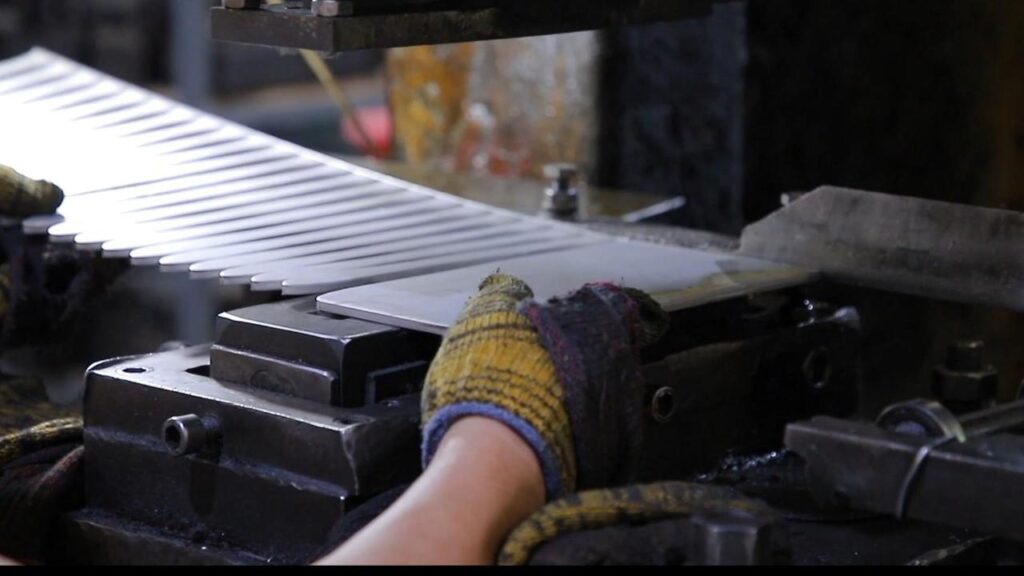
The stamping process is all about efficiency. It’s the method we use when a large supermarket chain needs hundreds of thousands of identical sets at a very specific price point. We start with a massive coil of cold-rolled stainless steel. This coil is fed into a huge press that stamps out the basic shape of the spoon or fork. For knives, the blade shape is punched out, and then a separate process grinds an edge onto it. After stamping, the pieces are tumbled to smooth the edges, polished to a shine, and the handle is attached. The handles on stamped knives usually have a "partial tang" or "rat-tail tang," meaning the steel doesn't extend all the way through the handle, which also saves cost and weight. It's a precise, highly-automated process that delivers consistent quality at high volume.
| Feature | Description |
|---|---|
| Process | Cut from a sheet of steel. |
| Weight | Lightweight and uniform. |
| Cost | Lower and more affordable. |
| Tang (Knives) | Usually partial, meaning less steel in the handle. |
| Best For | Everyday use, budget-friendly sets, large-scale catering. |
What are the disadvantages of forged cutlery?
You have heard that forged is the gold standard for quality. However, the much higher price gives you pause, and you wonder if there are any other downsides to consider before you invest.
The main disadvantage of forged cutlery is the significantly higher cost due to the complex, labor-intensive manufacturing process. Forged pieces are also much heavier, which some people may find uncomfortable or fatiguing for certain tasks.
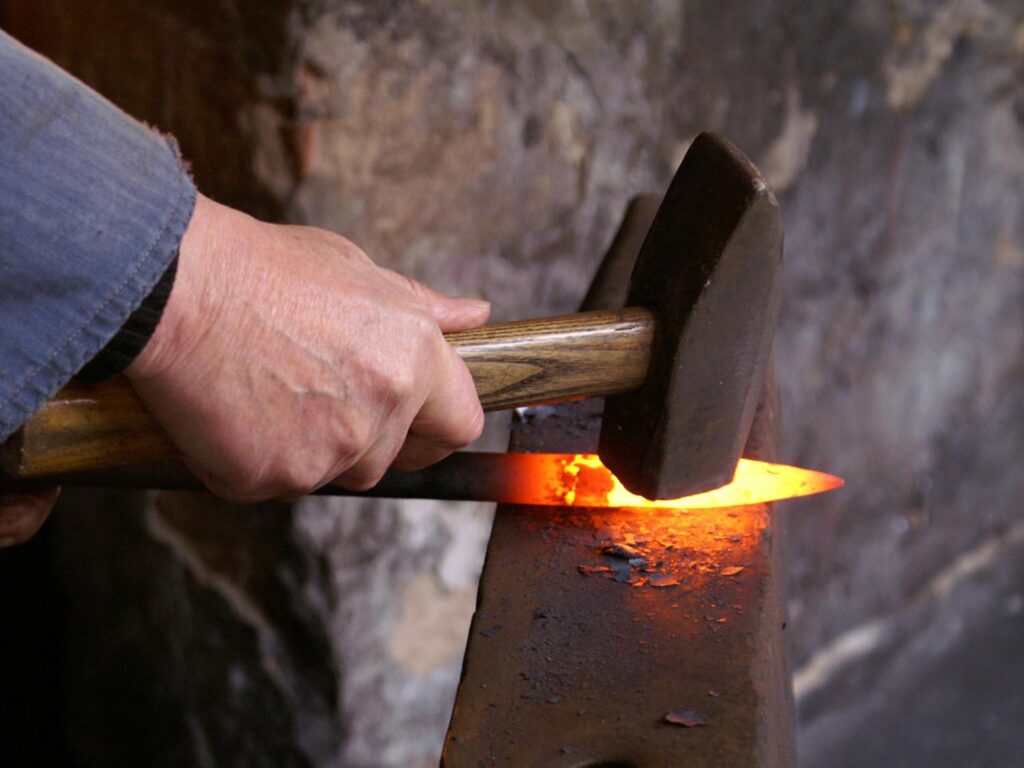
While forged production1 creates a premium product, it's essential to understand the trade-offs, which I am always transparent about with my clients. The most significant drawback is undoubtedly the price. A single forged fork might pass through twice as many steps and skilled hands in my factory as a stamped one. The process involves heating, hammering, multiple grinding stages, and precision finishing, all of which add to the labor cost2. The other main factor is weight. The same design made with forging will be noticeably heavier than its stamped counterpart because it starts as a solid block of steel. While many chefs and home cooks love that substantial, hefty feel, it's a matter of personal preference. Some people find a heavier knife or fork tiring to use for long periods, preferring the nimbleness of a lighter, stamped piece for quick jobs. Finally, the thick spine on a forged knife is excellent for durability but makes the blade more rigid. For delicate tasks like filleting a fish, a thinner, more flexible stamped blade can sometimes perform better.
What are the advantages of forged cutlery?
You want to buy cutlery that feels solid, will stay sharp, and will last for decades. You see the term "forged" on high-end sets and want to know what makes them so much better.
The advantages of forged cutlery are superior strength, balance, and durability. The forging process creates a stronger piece of steel, and features like a full tang and a bolster provide excellent balance and control, making the cutlery feel like a natural extension of your hand.
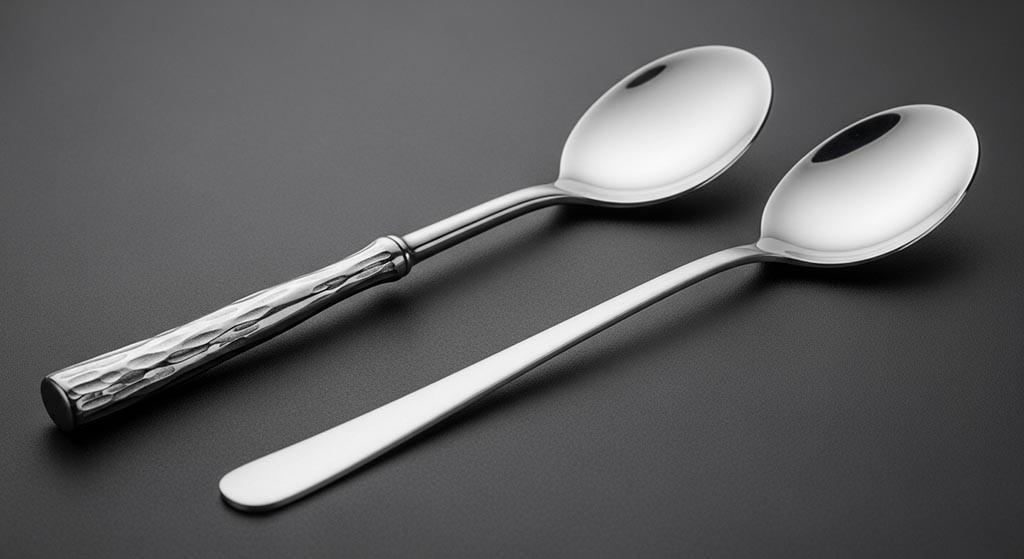
When a brand wants to create a "heritage" line of cutlery that can be passed down for generations, forging is the only way to go. The benefits are tangible the moment you pick a piece up. First is the strength. The process of heating and hammering the steel realigns its internal grain structure, making it much denser and more resilient than a simple piece of stamped steel. This is why a forged knife's edge will stay sharp much longer. The second, and perhaps most important, advantage is the balance. Forging allows us to create a bolster—the thick band of steel between the blade and the handle—and a full tang, where the steel extends all the way to the end of the handle. This construction adds weight to the handle, perfectly counterbalancing the blade or the head of a fork. When an experienced buyer like Jacky picks up a sample, the first thing he does is check this balance. It's the unmistakable sign of quality construction and what gives forged cutlery its premium, comfortable feel.
| Advantage | Why it Matters |
|---|---|
| Strength & Durability | The process makes the steel denser and more resilient to bending. |
| Balance & Control | The bolster and full tang provide weight for a balanced feel. |
| Edge Retention (Knives) | Forged steel can be hardened more, so it holds a sharp edge longer. |
| Longevity | Built to be a long-term investment that can last a lifetime. |
What is stronger, stainless steel or forged steel?
You see the terms "forged steel" and "stainless steel" used in descriptions. You assume they are two different types of metal, which makes it very confusing to figure out which one is the strongest.
This question is based on a common misunderstanding. "Stainless steel" is the material, while "forged" is the manufacturing process. Most high-quality forged cutlery is made from stainless steel. A forged piece of stainless steel is significantly stronger than a stamped piece of the same stainless steel.
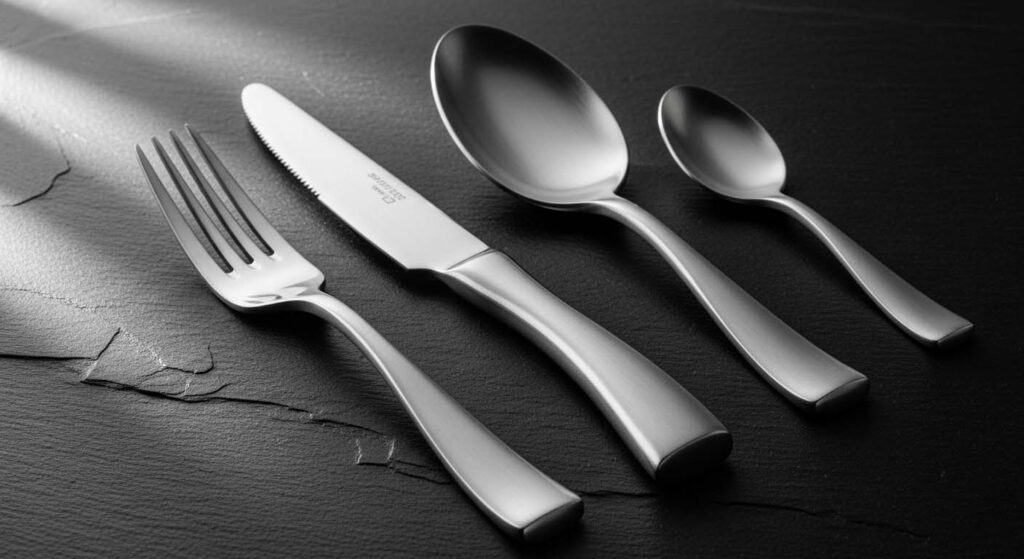
This is one of the biggest points of confusion in the cutlery world. Asking which is stronger is like asking "what's heavier, a brick or something that is red?" The two things aren't comparable alternatives. In my factory, we use premium high-carbon stainless steel alloys for both our stamped and our forged products. The material is the same. The difference in strength comes from what we do to that material.
Imagine you have a piece of steel. When we make a stamped utensil, we simply cut the shape out. The internal grain structure of the steel remains random and unchanged.
When we make a forged utensil, we take that same steel, heat it until it's red-hot, and then use immense pressure to hammer and press it into shape. This process forces the molecules in the steel closer together and aligns the grain structure, making the metal much denser and tougher. All the microscopic voids are eliminated. So, when you compare two forks made from the exact same 18/10 stainless steel alloy, the one that has been forged will be stronger, more rigid, and more durable every single time.
Conclusion
Stamped cutlery is an affordable, lightweight option for everyday use. Forged cutlery is a premium, balanced, and highly durable investment. Your choice depends on your budget and desire for quality feel.