
What Are the Top Considerations for Purchasing Stainless Steel Flatware in Bulk?
You're tasked with sourcing flatware for a restaurant, hotel, or retail chain. Beyond just the price per fork, what truly matters when making a large-volume purchase?
When buying stainless steel flatware in bulk, your top considerations should be material grade, weight and finish consistency, supplier reliability, and customization options. These factors directly impact durability, customer experience, and your long-term costs.
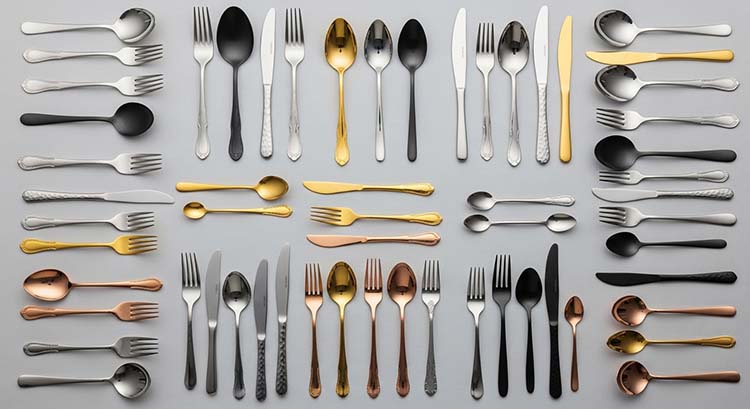
As a manufacturer that supplies B2B clients globally, I've seen firsthand what separates a successful purchase from a costly mistake. It's rarely about finding the absolute cheapest option. Instead, it's about finding a partner who understands that consistency is king. Your customers expect the fork they use today to look and feel identical to the one they use six months from now. Achieving that level of consistency across tens of thousands of pieces requires a deep focus on the details, from the raw steel that enters the factory to the way the final product is packaged. Let's break down the most critical factors you should evaluate.
How Does Steel Grade Impact Long-Term Quality?
Not all "stainless steel" is created equal. The grade of the steel is the foundation of the flatware's durability, shine, and resistance to rust and corrosion.
The material grade, primarily determined by nickel content, is the single most important factor for long-term quality. 18/10 (304) stainless steel offers superior rust resistance and a lasting shine, making it ideal for commercial use.

Understanding the common grades is crucial for any bulk buyer.
- 18/10 (304 Stainless Steel): Contains 18% chromium and 10% nickel. The high nickel content provides the best protection against corrosion and rust, maintaining a high-luster finish even after countless washes. This is the premium choice for high-end restaurants and hotels.
- 18/8 (Also 304): Very similar to 18/10, with slightly less nickel but still excellent durability.
- 18/0 (430 Stainless Steel): Contains 18% chromium but virtually no nickel. It's more affordable but is also more susceptible to staining and rust over time. It's often used for budget-friendly or high-volume institutional settings.
At XR Cutlery, we lock in the material standard for each model. We don't switch steel suppliers between batches to cut costs, because we know that consistency starts with the raw material. Always ask your supplier for a material test report to verify the grade you're paying for.
Why is Batch-to-Batch Consistency So Important?
You place a reorder for your best-selling fork, but the new shipment feels lighter and looks slightly different from your existing stock. For a distributor or chain, this inconsistency is a major problem.
For B2B buyers, batch-to-batch consistency is more important than single-batch perfection. Your business relies on the ability to replenish stock with a product that is identical in weight, thickness, and finish to the previous order.
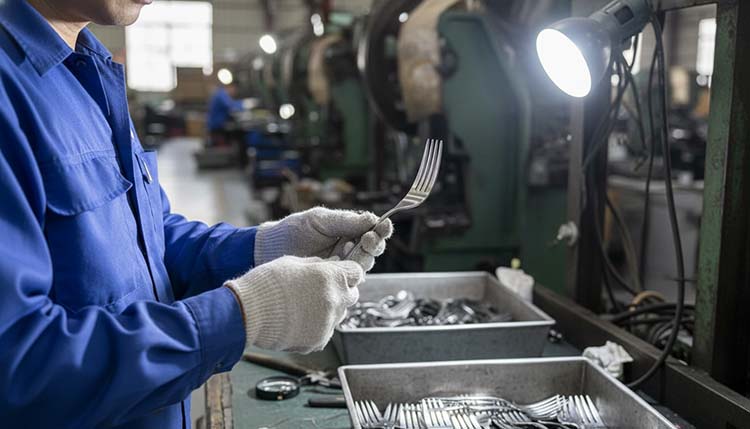
End-users notice these small differences. It undermines brand trust and creates logistical nightmares. So, what should you look for?
- Thickness & Weight Consistency: A common complaint in wholesale is the "heavy sample, light bulk" problem. Specify the exact thickness and weight as a required production parameter, not a flexible range.
- Surface Finishing Quality1: Whether it's a mirror polish or a brushed finish, the look must be uniform across every piece. Uneven polishing is magnified when you have thousands of items.
- Stable Tooling: Ask if the supplier frequently changes their production molds. Consistent use of the same high-quality molds is key to maintaining the exact same shape and feel over the years.
How Do Production Capacity and MOQs Affect Your Business?
A great product is useless if it's not available when you need it. A supplier's production stability and ordering flexibility are just as critical as the product itself.
A reliable supplier provides stable lead times based on real production capacity and offers flexible replenishment options. High MOQs on reorders can kill your cash flow by forcing you to carry excess inventory.
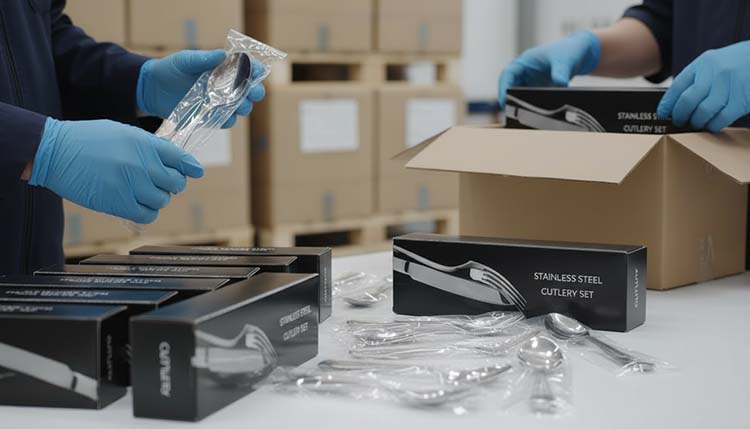
This is a core operational concern for any wholesaler or distributor.
- Production & Lead Time Stability: Are their delivery dates based on actual production schedules or just sales promises? A factory that controls key processes in-house, like XR Cutlery, has a much lower risk of uncontrolled delays.
- MOQ & Replenishment Flexibility: While a Minimum Order Quantity (MOQ) for a new product is standard, a good partner will support lower-MOQ rolling replenishments for established clients. This prevents you from tying up capital just to restock a popular item.
- Supplier Communication: A transparent supplier will keep you informed about your order's progress and notify you of potential delays in advance. Being the last to know puts your reputation with your own customers at risk.
What Should You Look for in Customization and Compliance?
Branding your flatware with a logo or creating a custom design can elevate your brand. At the same time, ensuring the product meets international safety standards is non-negotiable.
Effective customization requires a supplier who can consistently replicate your design, from laser-engraved logos to custom shapes. Furthermore, for international trade, compliance with food safety standards like FDA and LFGB is a mandatory requirement.

When considering customization, think about scalability. It's not just about whether they can add a logo; it's about whether they can do it perfectly ten thousand times.
- Customization Capability2: Do they support logo engraving? Can they develop custom molds? Can they match the customization to your brand's positioning (e.g., subtle and high-end vs. bold and economical)?
- Compliance & International Standards: If you are importing, ensure your supplier can provide documentation for compliance with food safety standards relevant to your market, such as FDA (USA), LFGB (Germany/EU), or REACH. This is a baseline requirement that protects your business from legal and safety issues.
- Packaging Options: A good supplier can also accommodate your packaging needs, whether it's bulk packing for food service or custom retail boxes for distribution. This directly impacts your operational efficiency and costs.
Conclusion
Purchasing flatware in bulk is a strategic decision that goes far beyond unit cost. By focusing on material quality, batch consistency, supplier reliability, and compliance, you can forge a partnership that supports your business's long-term growth and protects your brand's reputation.