
How do factories polish stainless steel cutlery?
Ever admire the brilliant, mirror-like shine of brand-new cutlery? Then you watch it fade at home, wondering if that perfect finish was just a temporary trick you can't replicate.
Factories use a multi-stage mechanical process, moving from coarse grinding to fine buffing with specialized wheels and compounds. The highest quality cutlery receives a final, meticulous hand-polish to perfect hard-to-reach areas and achieve a flawless, deep mirror shine.
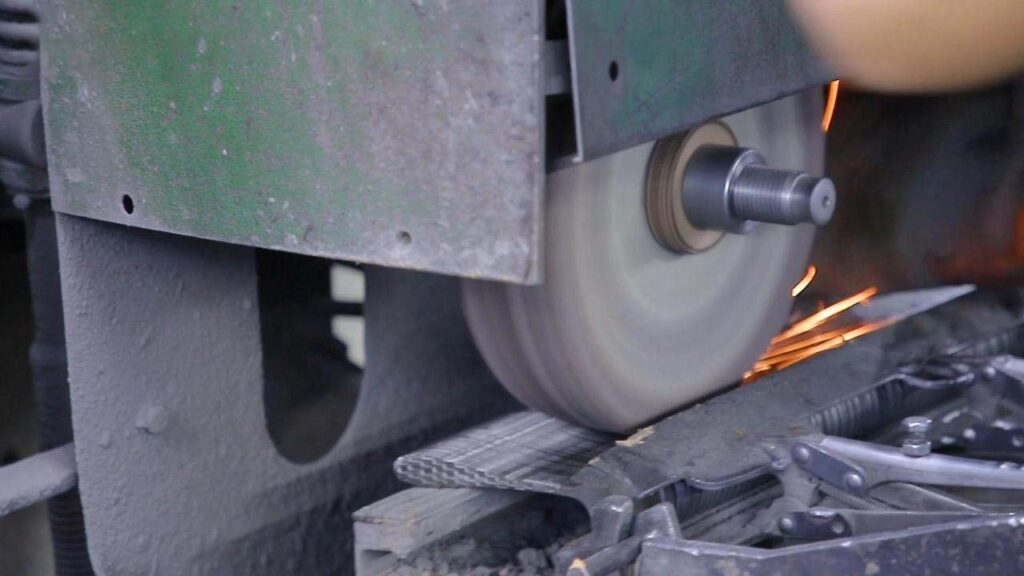
A beautiful shine on cutlery isn't a coating; it's the actual surface of the steel, refined to a microscopic level of smoothness. When I walk a professional buyer like Jacky through my factory, he can spot the difference between a quick, superficial polish and a deep, multi-stage polish in seconds. It's a difference in labor, time, and machinery that is invisible to most but is the true mark of quality. The good news is that understanding this process helps you know what to look for and how to care for your investment at home.
What is the difference between hand polish and machine polish?
You see "hand polished" on luxury sets, but machine polishing sounds more modern. You're not sure if there is a real difference, or if "hand polished" is just a marketing term you're overpaying for.
Machine polishing provides the initial, overall shine with high consistency for mass production. Hand polishing is a skilled, final step to perfect hard-to-reach areas like between fork tines, creating a superior, truly flawless mirror finish on high-end cutlery.

In my factory, we use both methods, and they serve very different purposes. One is about bulk efficiency, and the other is about artisanal perfection. A great piece of cutlery actually needs both to be considered top quality.
The Machine: The Foundation of Shine
Machine polishing is the workhorse of the cutlery industry. After a fork or spoon is stamped or forged1, it has a rough, dull surface. We put these pieces through a series of automated polishing processes. This can involve tumbling them in large drums with abrasive media or putting them on automated lines with a series of polishing wheels. These machines are excellent at creating a uniform, bright finish on the large, flat surfaces of the cutlery, like the back of a spoon bowl or the handle. This is the baseline level of shine.
The Hand: The Mark of Quality
This is where true craftsmanship separates a good set from a great one. A machine cannot easily polish the narrow space between fork tines or the sharp curve where a spoon bowl meets the handle. These areas are often left with a duller, rougher finish on cheap cutlery. For our premium lines, a skilled worker takes each piece to a buffing wheel. They manually manipulate the fork or spoon at precise angles to ensure these intricate parts are just as flawlessly polished as the rest of the piece. This is a slow, expensive process, but it's a detail that a professional buyer like Jacky always looks for first.
| Polishing Method | Best For | Key Advantage | Result |
|---|---|---|---|
| Machine Polish | Overall surfaces, mass production | Speed and consistency | A good, bright commercial shine. |
| Hand Polish | Fork tines, intricate areas | Perfection, attention to detail | A flawless, deep mirror finish. |
Why is my cutlery not shiny?
Your once-gleaming cutlery now looks dull and cloudy, even right out of the dishwasher. You're starting to think it's poor quality, but the truth is often much simpler and easier to fix.
Your cutlery most likely loses its shine due to a buildup of mineral deposits from hard water or a film left by dishwasher detergents. Fine micro-scratches from improper storage can also diffuse light, making the surface appear dull.

This is one of the most common complaints I hear from end-users, and 99% of the time, the cutlery itself is not the problem. The issue is what gets left on the cutlery after washing. That beautiful mirror finish is still there, it's just being hidden under a microscopic film.
The Primary Culprits: Water and Detergent
- Hard Water: If you live in a hard water area, your water contains a high level of dissolved minerals like calcium and magnesium. When the water evaporates, it leaves these minerals behind as a chalky, white film. We call this limescale. It builds up over time and completely masks the shine of the steel beneath.
- Detergent Film: Some dishwasher detergents, especially powders, may not rinse away completely in every cycle. This can leave a slightly cloudy, chemical residue on the surface of your cutlery, which also makes it look dull.
The Hidden Damage: Micro-Scratches
Think about your cutlery drawer. If all your forks, knives, and spoons are tossed into one compartment, they are constantly rubbing and scraping against each other. Each collision creates thousands of tiny, invisible scratches. Individually, they do nothing. But collectively, they disrupt the smooth surface, scattering light instead of reflecting it back at your eye. This diffusion of light is perceived as a loss of shininess. This is why proper storage is so important.
How to get stainless steel cutlery to shine?
You want that brilliant showroom shine back on your cutlery but are afraid to use harsh chemicals. You don't need expensive, specialized cleaners; the best solutions are probably already in your kitchen pantry.
To restore shine, gently rub your cutlery with a paste of baking soda and water using a soft cloth. Alternatively, soaking the cutlery in a solution of one part white vinegar to four parts water can dissolve mineral deposits.

You can easily restore the shine to your stainless steel cutlery with simple, non-toxic household items. These methods work by either gently abrading away the film or chemically dissolving it without harming the steel itself.
Method 1: The Gentle Baking Soda Buff
This is my preferred method because it is so effective and gentle.
- Create a Paste: In a small bowl, mix a few tablespoons of baking soda with just enough water to form a thick paste, like wet sand.
- Apply and Buff: Take a soft cloth (microfiber is perfect) and apply a small amount of the paste to your cutlery. Gently rub the surface in the direction of any visible grain in the metal. Don't scrub hard.
- Rinse and Dry: Rinse the paste off completely with warm water. Most importantly, dry the piece immediately with a clean, dry cloth. This prevents new water spots from forming.
Method 2: The Dissolving Vinegar Soak
If your issue is primarily hard water spots, this method is very effective.
- Prepare the Soak: Fill a basin or bowl with one part white vinegar and about four parts hot water.
- Soak the Cutlery: Place your cutlery in the solution and let it soak for 15-20 minutes. The acetic acid in the vinegar will break down the alkaline mineral deposits.
- Rinse and Dry: Remove the cutlery, rinse thoroughly under warm water to remove any vinegar residue, and dry immediately and completely with a soft cloth.
How to stop cutlery tarnishing in the dishwasher?
You pull your cutlery from the dishwasher only to find ugly rust spots or a cloudy film clinging to it. It feels like your machine is ruining your expensive cutlery with every single wash cycle.
Prevent "tarnishing" by using a rinse aid to stop water spots, avoiding overcrowding in the cutlery basket, and drying pieces immediately after the cycle. Placing a wadded ball of aluminum foil in the basket also helps prevent corrosion.

First, it's important to know that stainless steel doesn't "tarnish" like silver. Those spots you are seeing are small specks of surface rust or corrosion, and they are preventable. The inside of a dishwasher is a very harsh environment: hot, wet, and full of salts and chemicals. Here is how you protect your cutlery.
Best Practices for Your Dishwasher
- Use a Rinse Aid: This is the most crucial step. Rinse aid works by breaking the surface tension of the water, so it sheets off your cutlery instead of forming droplets that leave mineral deposits when they dry.
- Don't Overcrowd: Give your cutlery space. If pieces are nested together, water and detergent can get trapped, leading to poor cleaning and spotting.
- Remove and Dry Promptly: Don't leave your cutlery sitting in a wet, steamy dishwasher overnight. The prolonged exposure to moisture is the primary cause of rust spots. Open the door and let the steam out, or better yet, take the cutlery out and dry it by hand.
The Aluminum Foil Trick Explained
This might sound like an old wives' tale, but there is real science behind it. Sometimes, tiny rust spots can form due to a process called galvanic corrosion2, especially if a cheap, non-stainless steel item is in the same wash. To prevent this, simply take a piece of aluminum foil, crumple it into a loose ball, and toss it into the cutlery basket. The aluminum is more reactive than the components in your stainless steel. The dishwasher's detergent salts create a kind of "salt bridge," and the aluminum foil gets oxidized (corrodes) instead of your cutlery. It acts as a sacrificial protector.
Conclusion
A factory's multi-stage polish creates the initial shine. You can maintain it at home with gentle cleaning, a good rinse aid, and immediate drying after washing.