
What are the Common Quality Problems in Stainless Steel Flatware?
Sourcing stainless steel flatware seems simple, but hidden defects can quickly turn a profitable order into a costly problem. These issues often lead to customer complaints, product returns, and lasting damage to your brand's reputation. Understanding the common quality problems in stainless steel flatware is the first step toward choosing a reliable manufacturer and protecting your investment.
The most common quality problems in stainless steel flatware include uneven polishing, surface scratches, rust or corrosion, PVD coating defects like peeling or uneven color, sharp edges, and inconsistencies in weight and size. These issues often stem from poor material control, rushed production processes, and inadequate quality inspection.
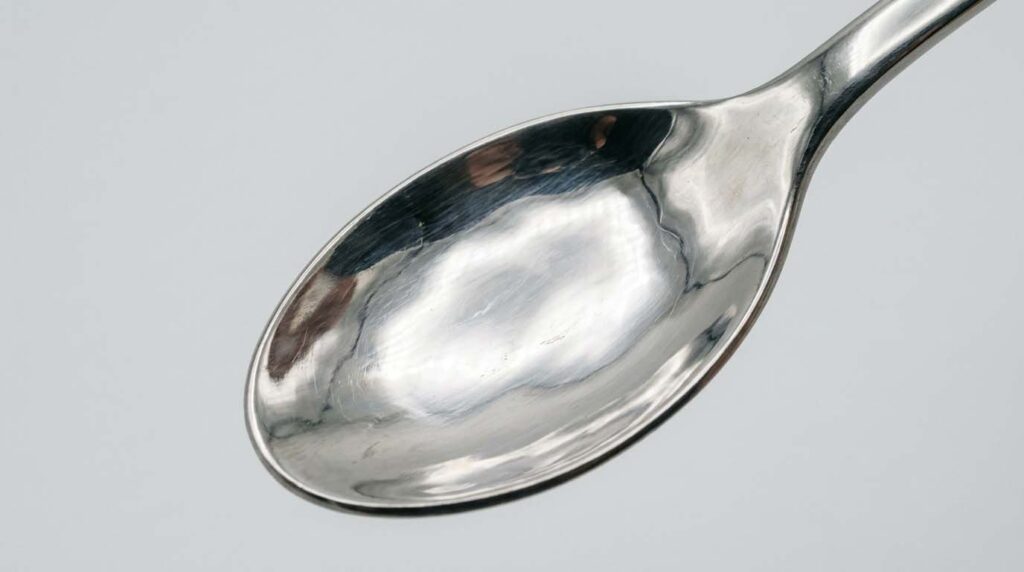
While some of these issues are merely cosmetic, others can impact the safety and long-term durability of the product. Let's break down each category of flatware defects so you know exactly what to look for during procurement and factory inspections.
What are the Most Common Surface and Finish Defects in Flatware?
The final finish is often what attracts a customer, whether it's a brilliant shine or a trendy matte color. When that finish is flawed, it immediately signals poor quality. This can frustrate customers and cheapen your product's perceived value. A professional manufacturer prevents these surface defects through meticulous polishing and coating preparation.
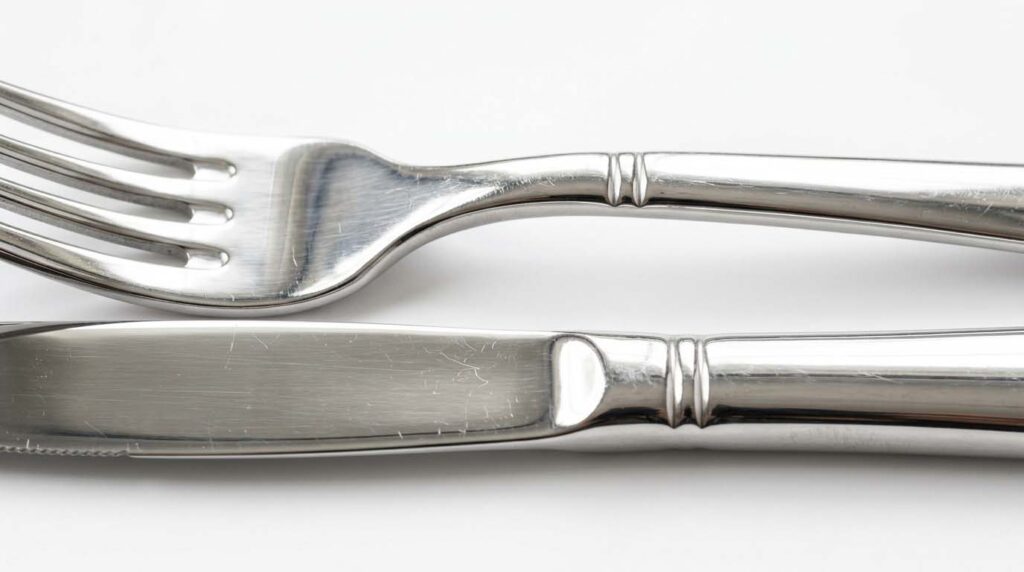
Common surface and finish defects include uneven polishing, visible scratches, cloudy areas on a mirror finish, and PVD coating issues like inconsistent color, peeling, or spots. These are typically caused by insufficient polishing stages, poor surface cleaning before coating, or incorrect PVD application parameters.
Polishing and PVD Coating
A flawless surface is not an accident; it's the result of a controlled, multi-step process. Here at XR Cutlery, with over two decades of experience, we've learned that you cannot rush the finishing stage.
Uneven Polishing and Surface Defects
This is one of the most frequent issues we see from less experienced factories.
-
Common Problems:
- Scratches: Fine lines or deep gouges left over from the stamping and grinding stages.
- Cloudy Surfaces: A dull or hazy appearance on what should be a mirror-polished product.
- Uneven Mirror Finish: Some parts of the flatware are shiny while others are dull, creating a "wavy" look.
- Polish Marks: Swirls or circular patterns left by polishing wheels, indicating an incomplete or rushed job.
-
Causes and Prevention:
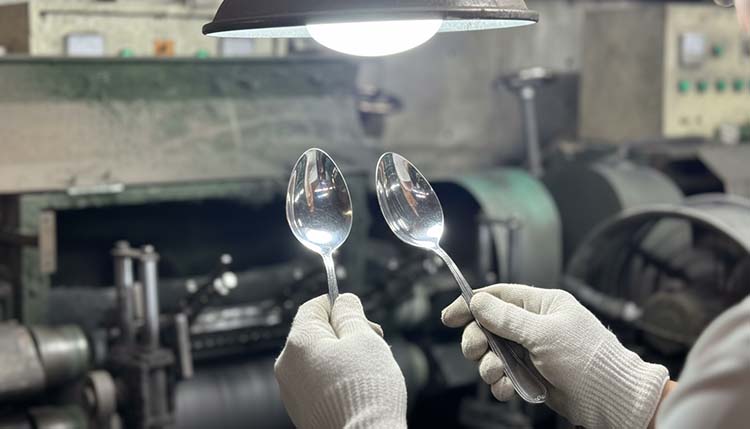
These defects are almost always caused by cutting corners in the polishing process. Professional factories use multiple polishing stages, starting with coarse abrasives and moving to progressively finer ones. At XR Cutlery, we combine automated grinding for consistency with semi-automated and manual polishing. This hybrid approach allows our skilled technicians to meticulously refine edges and surfaces, ensuring a uniform and brilliant finish that automated-only factories often miss. A final visual inspection under proper lighting before packing is non-negotiable.
PVD Color Coating Problems
Physical Vapor Deposition (PVD) creates durable and beautiful coatings in colors like gold, black, and rose gold. However, if not done correctly, the results can be disastrous.
-
Common Issues:
- Uneven Color: Blotchy or inconsistent shades across a single piece or between pieces in a set.
- Color Difference: Batches produced weeks apart may have noticeable color variations.
- Coating Peeling: The colored layer flakes or chips off, especially after a few dishwasher cycles.
- Surface Spots: Small dots or blemishes under or on the coating.
-
Causes and Prevention:
The golden rule of PVD is that the final coating is only as good as the surface underneath. Before any flatware enters the PVD chamber, it must have a perfect, defect-free polish. The pieces must then be ultrasonically cleaned to remove all microscopic dust, oils, and residues. A quality-focused stainless steel cutlery factory will have strict pre-treatment protocols and use advanced machinery with precise coating parameters. We also conduct adhesion tests (like the cross-hatch test1) to ensure the coating is durable enough for its intended market.
Why Do Structural and Material Issues Cause Common Quality Problems in Stainless Steel Flatware?
You've approved a beautiful design, but the production batch feels flimsy, has sharp edges, or starts rusting after a few uses. These structural flaws not only cheapen the product but can also be a safety hazard, leading to serious customer complaints. This is why addressing potential common quality problems in stainless steel flatware starts with the raw material itself.
Structural and material flaws include rust spots from using the wrong stainless steel grade, sharp edges from poor finishing, inconsistent weight and size from worn-out molds, and weak connections on welded handles. These defects directly impact the product's safety, durability, and perceived value.
From Steel Grade to Final Form
These issues are often invisible at a glance but become apparent with use. For brand owners, importers, and wholesalers, they represent a significant risk to brand reputation.
Rust Spots or Corrosion Problems
This is a major red flag for any stainless steel product. The most common cause is the selection of an inappropriate steel grade for the target market or price point.
- 18/10 (304) Stainless Steel: Contains 18% chromium and 10% nickel. The high nickel content provides superior rust and corrosion resistance, making it ideal for high-end retail, hotel use, and markets where dishwashers are common.
- 18/0 (430) Stainless Steel: Contains 18% chromium but little to no nickel. It's still durable and food-safe but more susceptible to corrosion over time, especially in humid or salty environments.
- 13/0 (410/420) Stainless Steel: Often used for knives due to its hardness, which allows it to hold a sharp edge. It has less chromium and requires proper care to prevent rust.
Another cause is manufacturing contamination, where iron particles from machinery or a dirty environment embed in the surface and later rust. A proper ultrasonic cleaning and passivation process after manufacturing is crucial to prevent this.
Sharp Edges and Poor Finishing
This is a critical safety and comfort issue. Sharp edges on the side of a spoon can cut a user's mouth, and rough fork tines feel unpleasant and can trap food particles. We've seen instances where there are gaps between the handle and the head of a knife, creating a weak point. This is a result of poor deburring and finishing after the stamping process. At our facility, every piece goes through a manual edge-smoothing step to ensure a comfortable and safe user experience.
Weight, Size, and Design Inconsistency
For brand customers, consistency is key. A customer buying a 24-piece set expects every fork to feel and look identical.
| Defect Type | Common Problem | Cause |
|---|---|---|
| Weight | Pieces in the same batch have noticeably different weights. | Poor raw material thickness control; production process variation. |
| Size | Handle thickness is uneven; overall dimensions don't match specs. | Worn-out or poorly made production molds. |
| Design | Embossed patterns are blurry; logos are off-center. | Incorrect tooling; lack of pre-production sample approval. |
A professional OEM flatware manufacturer mitigates this by using high-precision molds and conducting random weight and dimension checks throughout the production run. Before any mass production begins, we always confirm engineering drawings and provide physical pre-production samples for client approval.
How Do Top Flatware Manufacturers Ensure Quality Control?
Finding defects in a finished order sitting in your warehouse is too late and incredibly costly. The real risk lies with suppliers who only check for problems at the end, after thousands of units are already made. A truly reliable partner integrates stainless steel flatware quality control into every single step, from raw material delivery to final shipment.
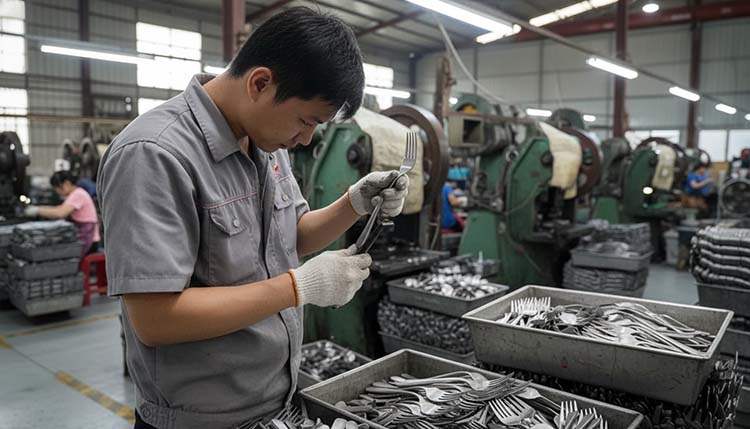
A professional flatware manufacturer controls quality through a multi-stage inspection process. This includes incoming material inspection for steel grade and thickness, in-process checks during forming and polishing, and a comprehensive final inspection for appearance, function, quantity, and packaging integrity before shipment.
The Proactive QC Framework
A robust quality system is about prevention, not just detection. After over 20 years of focusing on the B2B export market, we've refined our flatware inspection process to catch issues early.
The Multi-Stage Inspection Process
A product moves through multiple hands and machines, each presenting a risk for defects. Our QC team is present at each critical transition.
- Incoming Material Inspection (IQC): Before a single piece is stamped, we verify the raw materials. This includes testing the stainless steel composition to confirm the grade (e.g., 304 vs. 201), measuring coil thickness and hardness, and visually inspecting for surface defects. This step prevents material-related problems like rust down the line.
- In-Process Quality Control (IPQC): Our inspectors monitor the factory floor. They check products coming off the stamping machines for correct dimensions and shape. After polishing, they check for surface uniformity and luster. For PVD items, they check color consistency against the master sample. This catches process errors before they affect the entire batch.
- Final Quality Control (FQC): This is the comprehensive final check before packing. Every item is inspected for appearance, but it goes further. We check for function (e.g., knife sharpness), dimensions, weight, and overall feel. This is where we ensure everything aligns with the client's approved pre-production sample.
Key Quality and Compliance Tests
Beyond visual inspection, we perform quantitative tests to guarantee performance and safety. As a buyer, you should always ask a potential supplier about their testing capabilities.
- Material Testing: Using an XRF spectrometer to verify the percentages of chromium, nickel, and other elements in the stainless steel.
- Salt Spray Test2: This accelerated corrosion test is crucial for evaluating the rust resistance of the material and the durability of PVD coatings. The flatware is placed in a chamber with a salt mist for a set number of hours (e.g., 24 or 48) to simulate long-term exposure.
- Dishwasher Safety Test: Products are run through multiple cycles in a consumer or commercial dishwasher to check for coating adhesion, rust formation, and general durability.
- Food Safety Compliance: We ensure our products can pass certifications required by different markets, such as FDA (USA), LFGB (Germany/EU), and REACH (EU). It's always a good practice for buyers to request copies of these test reports and verify their validity for the specific materials being used in their order.
Why Is Packaging Inspection an Overlooked but Crucial Final Step?
You've spent months perfecting your product, and the bulk production has passed all quality checks. It's easy to think the job is done. However, many brands neglect the final, critical stage: packaging. Poor packaging can lead to products arriving scratched, broken, or in disarray, ruining the customer's unboxing experience.
Packaging inspection is a crucial final quality check that ensures products are protected from damage during shipping, quantities are correct, and all labeling (like barcodes and FBA labels) is accurate. It prevents scratches, breakage, and costly logistical errors, protecting both the product and the brand's reputation.
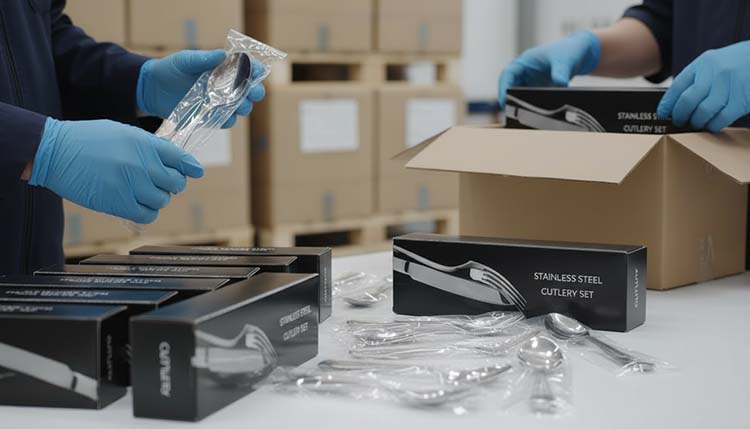
The Last Line of Defense
As a wholesale flatware supplier that services everyone from large importers to Amazon sellers, we know that the journey doesn't end at the factory gate. Damage during transit is just as bad as a production defect.
Common Packaging and Shipping Problems
Even with a perfect product, these issues can lead to financial losses and unhappy end-customers:
- Scratched Products: Flatware pieces rubbing against each other in a box without individual protection (like polybags or paper sleeves). This is especially common with mirror-polished and PVD-coated items.
- Mixed Quantities: A 24-piece set accidentally packed with 23 pieces, or incorrect numbers of forks, knives, and spoons. This is a common result of manual packing without a final verification step.
- Damaged Gift Boxes: Flimsy retail boxes getting crushed inside the master carton because the carton wasn't designed properly or lacked sufficient internal support.
- Incorrect Labeling: Wrong barcodes, missing "Made in China" labels, or improperly placed FBA labels can cause massive headaches at fulfillment centers, leading to delays and penalties.
How Professional Suppliers Prevent These Issues
A proactive approach to packaging is a key differentiator of an experienced stainless steel cutlery supplier. Our process includes:
- Individual Protection: Every single piece of flatware, especially high-end finishes, is placed in its own protective sleeve before being assembled into sets.
- Custom Carton Design: We work with clients to design master cartons that are strong enough for international sea or air freight. This includes specifying the cardboard grade (e.g., 5-ply) and conducting drop tests if required.
- Final Packaging Inspection: Before sealing the master cartons, our QC team does a final check. They open random sets to verify quantities are correct, check that the retail box is flawless, and confirm all shipping marks and labels match the client's specifications. For our Amazon and e-commerce clients, we are meticulous about FBA label placement to ensure smooth receiving at Amazon's warehouses.
This final check is your last line of defense against problems that can arise long after the goods have left the factory.
Frequently Asked Questions
What's the main difference between 18/10 and 18/0 stainless steel for flatware?
The main difference is corrosion resistance. 18/10 stainless steel contains 10% nickel, which provides excellent protection against rust and acids, making it ideal for premium flatware. 18/0 contains no nickel, making it more affordable but also more susceptible to rust over time, requiring more careful handling.
How can I test the PVD coating quality on my flatware samples?
A simple at-home test is to try scratching the coating firmly with a coin. A good PVD coating should resist minor scratches. For a more formal evaluation, you can ask your manufacturer to perform a "cross-hatch adhesion test," where the coating is scored in a grid and tested with adhesive tape to see if it peels.
Is a heavier flatware set always better quality?
Not necessarily. While a good heft often signifies higher quality and durability, the most important factor is balance. A well-designed piece should feel comfortable and balanced in your hand, not just heavy. Quality is more about the material grade, finish, and consistency than weight alone.
What documents should I ask for from a potential stainless steel cutlery supplier?
You should request their Business License, any factory audit reports (like BSCI), and material-specific food safety compliance reports (like FDA or LFGB). Asking for these documents helps you verify that they are a legitimate and compliant stainless steel cutlery factory. Always ensure the reports are recent and relevant to the products you intend to buy.
Conclusion
Sourcing high-quality stainless steel flatware requires looking beyond the initial price and appearance. The most significant risks often lie in the hidden details: the uniformity of the polish, the grade of the steel, the consistency of the weight, and the precision of the finish. Understanding these common quality problems in stainless steel flatware empowers importers, distributors, and brand owners to ask the right questions and properly evaluate potential manufacturing partners. A supplier's commitment to a multi-stage quality control process is the single greatest indicator of their reliability.
If you are looking for a trusted OEM flatware manufacturer with over 20 years of experience managing complex quality requirements for global brands, we can help. Contact XR Cutlery today to discuss your project and learn how our rigorous quality control can protect your brand and delight your customers.
-
The cross-hatch test is a widely recognized method for assessing the adhesion of coatings to substrates, providing critical insights into their durability. ↩
-
The Salt Spray Test is widely recognized in material science for its role in assessing corrosion resistance and the performance of protective coatings. ↩