
What Is Salt Spray Testing for Stainless Steel Flatware?
Are you sourcing stainless steel flatware and worried about potential rust or corrosion issues down the line? The fear of customer complaints and brand damage from a poorly performing product is real, creating significant risk for importers and private label brands. The solution lies in a proactive quality control process that simulates harsh conditions, allowing you to partner with a manufacturer who truly understands material performance.
Salt spray testing is a standardized, accelerated corrosion test used to evaluate the resistance of materials and surface coatings to a corrosive environment. For stainless steel flatware, it simulates long-term exposure to salt and humidity, revealing potential weaknesses in the material, finish, or PVD coating before the product ever reaches your customers.
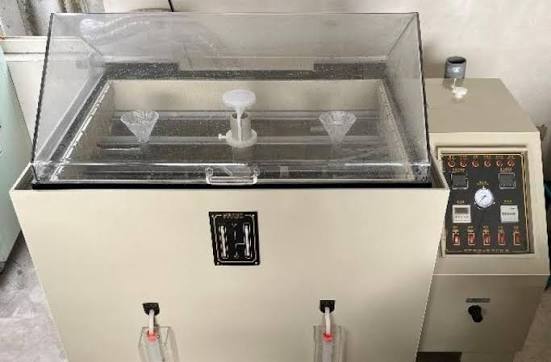
This testing isn't just a technical detail; it's a critical tool for risk management. It gives you, the buyer, confidence that the flatware you're investing in is built to last. Now, let's explore exactly how this process works and what the results tell us about the quality of your future products.
How Does Salt Spray Testing for Flatware Actually Work?
Wondering what happens inside that testing chamber? It’s a controlled process designed to stress the material in ways that mimic years of real-world use, but in a fraction of the time. The goal is to find failure points before your customers do.
The test places stainless steel samples inside a sealed chamber that maintains a continuous mist of a salt solution, typically sodium chloride. By controlling the temperature and humidity, we create an aggressive corrosive environment and monitor how the flatware responds over a set period.
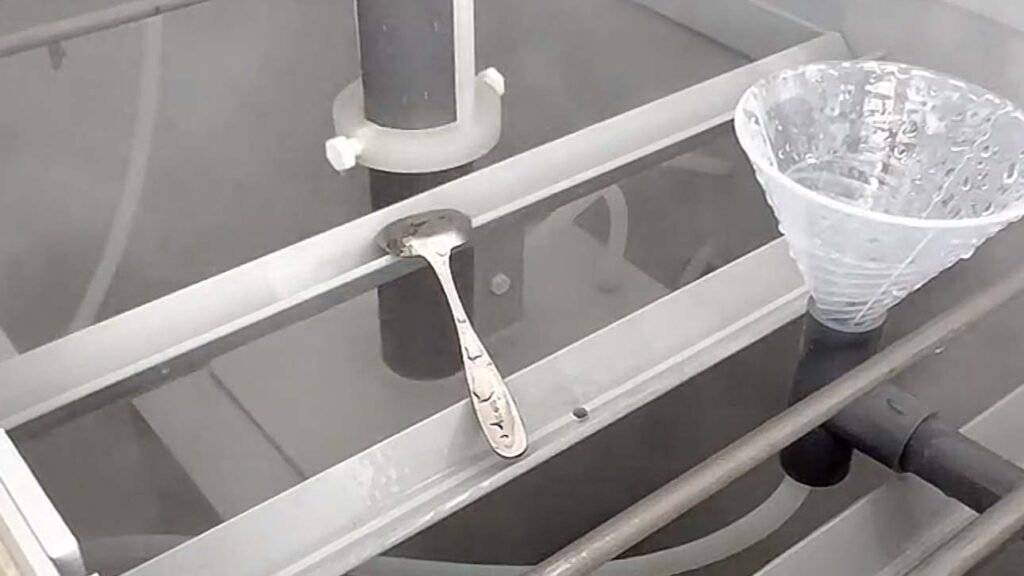
The Three Key Areas of Evaluation
During a salt spray test, we're not just looking for one thing. We are evaluating three critical aspects of the flatware's construction. This multi-faceted approach ensures a comprehensive understanding of the product's long-term durability.
1. Stainless Steel Corrosion Resistance
The most fundamental goal of salt spray testing is to verify the inherent corrosion resistance of the base material. Different grades of stainless steel contain varying levels of chromium and nickel, which directly impacts their ability to resist rust. The test quickly exposes whether the raw material used meets the specified grade. For example, a batch of 201 stainless steel will show signs of corrosion much faster than a batch of 304 stainless steel under the same conditions. This check confirms that the material itself is suitable for the product's intended application.
2. Surface Finish Quality
Two forks made from the exact same 304 stainless steel can perform very differently in a salt spray test. Why? The answer lies in the manufacturing process, especially polishing. A perfectly smooth, non-porous surface provides a much stronger defense against corrosion. This test can reveal manufacturing flaws like:
- Poor Polishing: Leaves microscopic scratches or pits where salt and moisture can accumulate, initiating rust.
- Surface Contamination: Residual chemicals or tiny iron particles from machinery can embed in the surface and become corrosion hotspots.
- Improper Cleaning: If the flatware isn't thoroughly cleaned before packaging, residues can compromise its passive layer.
A well-finished piece will resist corrosion evenly, while a poorly finished one will show localized rust spots, highlighting inconsistencies in production quality.
3. PVD Coating Durability
For colored flatware with Gold, Black, or Rose Gold PVD finishes, salt spray testing is essential for evaluating coating adhesion and resilience. A PVD coating isn't just for aesthetics; it adds a protective layer. The test helps us check for:
- Peeling or Blistering: Indicates poor adhesion between the coating and the steel substrate.
- Color Change: Shows that the coating itself is chemically unstable.
- Corrosion Around Edges: Weak points in the coating process often appear at the edges or in detailed patterns first.
By stressing the coating, we ensure it can withstand repeated washing and contact with acidic foods without failing.
How Do Stainless Steel Grades Affect Salt Spray Testing Results?
Is a more expensive stainless steel grade always necessary? Not always. The right choice depends on your product's target market, intended use, and price point. Understanding how different grades perform in testing is key to making a cost-effective decision.
The results from a salt spray test are directly tied to the grade of stainless steel used. Materials with higher chromium and nickel content, like 304 stainless steel, will withstand the corrosive environment for significantly longer than budget-friendly options like 201 stainless steel.

Comparing Common Flatware Materials
Choosing the right material is a balance between performance, application, and cost. A luxury hotel in a coastal city has very different requirements than a high-volume fast-casual restaurant. Over my 20+ years in this industry, I've seen clients succeed by matching the material to the use case. Here’s a breakdown of how common grades compare.
| Material | Corrosion Resistance | Typical Flatware Application | Salt Spray Performance Insights |
|---|---|---|---|
| 316 | Excellent | Luxury projects, marine environments | Highest resistance; specified for extreme conditions. |
| 304 (18/8, 18/10) | Excellent | Premium retail & hotel collections | The gold standard for high-quality, durable flatware. |
| 430 (18/0) | Good | Commercial and wholesale flatware | A great balance of cost and performance; nickel-free. |
| 420 | Medium | Knife blades | Hardened for a sharp edge; balances cutting ability with rust resistance. |
| 410 | Lower | Economy knife applications | A cost-effective choice for knives where hardness is prioritized. |
| 201 | Lower | Budget-sensitive products | Contains less nickel, making it more prone to corrosion in harsh tests. |
-
304 (18/8 or 18/10) Stainless Steel: This is the most popular choice for premium flatware for a reason. Its high nickel content (8-10%) provides excellent protection against rust and corrosion from acids found in food. In a salt spray testing scenario, 304 steel will show minimal to no signs of rust for extended periods, proving its suitability for both high-end restaurants and daily home use.
-
430 (18/0) Stainless Steel: This grade contains no nickel, making it ferromagnetic (magnets will stick to it). While its corrosion resistance is lower than 304, it is still very good and offers a significant cost advantage. It's a workhorse material for large-scale commercial channels, casual dining, and wholesale distribution where durability and value are paramount.
-
420 and 410 Stainless Steel: These grades are primarily used for knife blades. They can be heat-treated to a high hardness, which is essential for maintaining a sharp cutting edge. This hardness comes at the cost of some corrosion resistance. Testing helps us ensure the heat treatment process is optimized to provide the best possible balance of sharpness and durability.
-
201 Stainless Steel: This is a lower-cost alternative to 304, achieved by replacing some of the expensive nickel with manganese. While it looks identical, its corrosion resistance is notably lower. It's a viable option for dry environments or cost-driven markets, but it will show signs of stress much earlier in a salt spray test.
What Other Factors Influence Flatware Corrosion Resistance?
Have you ever seen two identical-looking products perform differently over time? The raw material is only part of the story. The true quality of stainless steel flatware is determined by the manufacturing process, where hidden flaws can compromise an otherwise great material.
Beyond the grade of stainless steel, several manufacturing factors critically affect corrosion resistance. Things like the quality of the polish, how the steel is treated, and even how it's cleaned and packaged can create vulnerabilities that a salt spray testing process is designed to uncover.
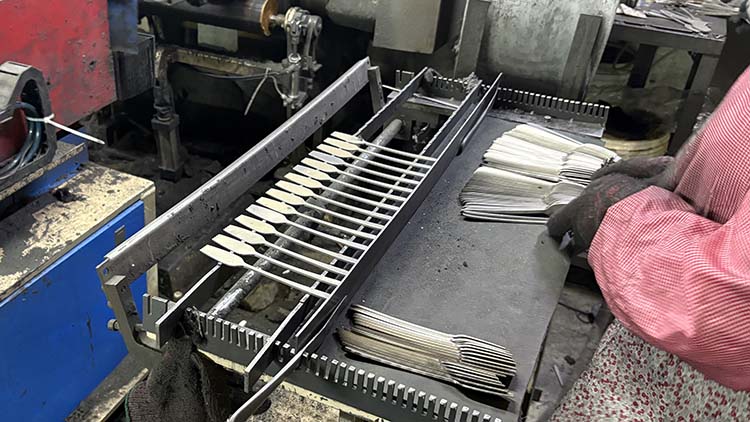
The Hidden Details That Matter
A reliable manufacturer manages every step of production with corrosion resistance in mind. I recall a case where a client was seeing issues, and it turned out the problem wasn't the steel, but tiny iron particles left on the surface from a worn-out polishing wheel. These are the details that separate average producers from expert partners.
Polishing Quality
A mirror-like polish isn't just for looks; it creates a smoother, less porous surface that is inherently more resistant to corrosion. Poor polishing can leave behind:
- Micro-scratches: These tiny grooves can trap food particles, detergents, and moisture, creating a perfect environment for rust to begin.
- Surface Contamination: If polishing equipment isn't properly maintained, it can embed microscopic particles of lesser metals onto the stainless steel surface, which then act as initiation points for corrosion.
- Uneven Finish: Inconsistent polishing can lead to areas that are more vulnerable than others, resulting in spotting and an uneven appearance over time.
Heat Treatment1
This factor is most critical for knife blades, which are made from hardenable grades like 420 stainless steel. The goal of heat treatment is to make the blade hard enough to hold a sharp edge. However, if this process is done improperly (e.g., at the wrong temperature or for too long), it can alter the steel's microstructure and reduce its chromium effectiveness, thereby lowering its corrosion resistance. A master manufacturer must strike the perfect balance between hardness for cutting performance and resilience against rust.
Cleaning and Packaging
The final steps of production are just as important as the first. Even the best stainless steel can be compromised if not handled correctly before shipping.
- Residual Chemicals: If harsh cleaning agents aren't completely rinsed off, they can attack the passive layer of the stainless steel.
- Improper Storage: Storing finished flatware in a humid or contaminated environment before packaging can lead to surface issues.
- Trapped Moisture: Packaging flatware while it is still slightly damp is a guaranteed recipe for "tea staining" or surface rust, especially during long sea freight journeys. A thorough drying and inspection process is non-negotiable.
How Does a Manufacturer Use Salt Spray Testing to Ensure Quality?
So, how does this testing translate from a lab report to a better product for you? For a dedicated manufacturer, testing isn't a one-time event. It's an integrated part of the development and quality control process, used to validate materials, refine processes, and guarantee final product reliability.
We use salt spray testing as a tool for verification and improvement. It helps us confirm that our raw materials meet specifications, validates that our polishing and PVD coating processes are optimized, and provides concrete data to help clients make informed decisions about materials for their specific market needs.

From Test Results to Reliable Products
At XR Cutlery, quality control goes far beyond a simple visual check. We use data from processes like salt spray analysis to ensure the products we ship are ready for the real world.
Corrosion resistance is not created by stainless steel grade alone. A high-quality flatware product requires the right material, proper forming, professional polishing, controlled finishing processes, and strict quality inspection. For global buyers, choosing a manufacturer with strong process control is just as important as choosing the right stainless steel.
A perfect example of this is a project we handled for a Middle Eastern distributor developing a premium gold PVD flatware line for hotels.
- The Challenge: During initial prototype testing, minor coating inconsistencies were detected around the handle edges after a 48-hour salt spray test. While small, this was unacceptable for a premium hotel product.
- Our Process: Instead of just changing the material, our engineering team reviewed the entire production flow. We identified that the pre-coating surface preparation could be enhanced.
- The Solution: We implemented a more rigorous multi-stage cleaning protocol before the PVD process and adjusted the parameters within the PVD chamber to ensure more uniform coating deposition on complex shapes.
- The Result: The improved samples passed the salt spray test with no issues. The coating was more stable, and the adhesion was significantly stronger. The client was able to proceed with mass production confidently, knowing their product was built to withstand the demanding environment of a commercial hotel.
This is how we control corrosion performance at every stage:
- Material Control: We source materials from trusted suppliers and verify specifications to ensure the base material is correct for the application.
- Production Control: Our automated forming and semi-automated polishing processes are calibrated to minimize surface defects from the start.
- Finishing Control: We monitor our PVD coating quality and cleaning processes to ensure finishes are applied perfectly for maximum durability.
- Final Inspection: Every batch is inspected for appearance and surface condition before shipment, backed by the data from our internal testing protocols.
Frequently Asked Questions
Does passing a salt spray test mean flatware will never rust?
No. Salt spray testing is an accelerated laboratory simulation. It proves that the material and manufacturing process meet a high standard of corrosion resistance, but it cannot guarantee against all real-world conditions. Actual performance will always depend on the steel grade, usage environment, and cleaning and care habits.
Why is PVD coating durability so important to test?
For colored flatware (gold, black, etc.), the PVD coating is the primary visual element. If it peels, blisters, or discolors, the product's value is lost. Salt spray testing helps verify the coating's adhesion and chemical stability, ensuring it can withstand dishwashing, detergents, and daily use without failing.
What's the main difference between 304 and 430 stainless steel in a salt spray test?
In a typical test, 304 stainless steel will last significantly longer without showing any signs of rust due to its nickel content, which enhances corrosion resistance. 430 steel will also perform well but may begin to show minor spotting earlier. This makes 304 ideal for premium applications, while 430 is a robust, cost-effective choice for commercial use.
How long does a salt spray test for flatware usually last?
The duration depends on the standard being followed and the product's requirements. Common test cycles for flatware range from 24 hours to 48 hours or even longer (72+ hours) for high-performance or marine-grade applications. The goal is to run the test long enough to reveal meaningful differences between samples.
Conclusion
Understanding salt spray testing is crucial for any brand, importer, or distributor serious about sourcing high-quality stainless steel flatware. It's more than a technical procedure; it's your assurance that a manufacturer is committed to durability. The test reveals not only the quality of the raw material but also the integrity of the entire manufacturing process—from polishing to PVD coating. By evaluating how a product withstands this accelerated corrosive environment, you can mitigate the risk of customer complaints, returns, and brand damage.
At XR Cutlery, our 20+ years of export experience are built on a foundation of rigorous quality control. We use processes like salt spray testing to validate our production and help you select the perfect combination of materials and finishes for your target market. We don't just sell flatware; we provide reliable, long-lasting products that build your brand's reputation.
Ready to develop a flatware collection with proven corrosion resistance? Contact XR Cutlery today to discuss your project requirements.
-
Research indicates that heat treatment is essential for optimizing the hardness and corrosion resistance of stainless steel knife blades. ↩