
Why Do So Many European Flatware Brands Still Manufacture in China?
You see a premium European brand on the shelf, but you suspect it's made in China. This confusion makes it hard to know if you're paying for true origin or just marketing.
Many European flatware brands manufacture in China to leverage its unmatched cost efficiency, mature supply chain, and massive production scale. This strategic decision allows them to maintain competitive pricing and protect profit margins while focusing on design and marketing.
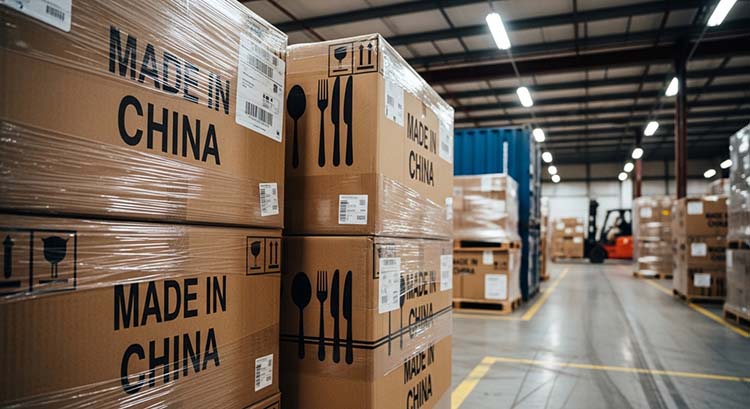
As a factory owner in the heart of China's flatware industry, I see this every day. This isn't a contradiction; it's a smart business strategy. From the outside, a product carries a European brand name. But from the inside, the real questions are: Can it be produced consistently? Can it be delivered on time? Can it be scaled across global markets? This is where manufacturing decisions are truly made, and why China remains the world's flatware factory.
How Big is the Cost Difference Between Manufacturing in China vs. Europe?
You know China is cheaper, but you don't know by how much. Without understanding the real cost breakdown, you can't make an informed sourcing decision. This gap in knowledge can lead to overpaying.
China's manufacturing cost advantage is massive, driven by lower labor, raw material, and regulatory costs. Overall, producing flatware in China can be 3-4 times cheaper than in Europe, giving brands an undeniable financial incentive to outsource.
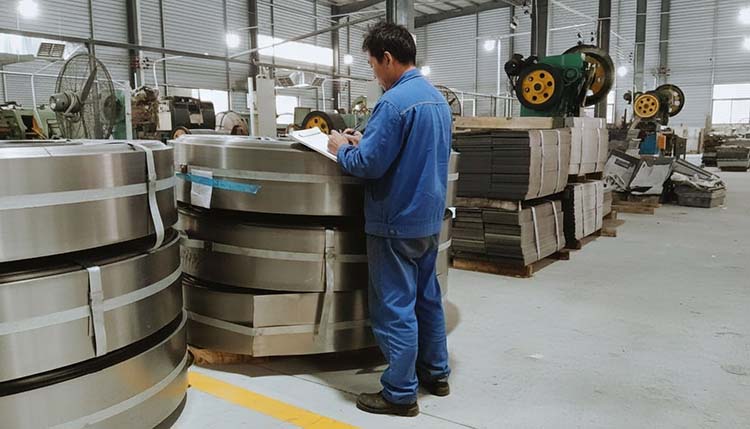
The cost difference isn't just a few percentage points; it's a fundamental gap that shapes the entire global industry. Let's break it down based on my factory's experience.
| Cost Factor | China | Europe (e.g., Germany) | Impact |
|---|---|---|---|
| Labor Cost | ~$4–5 / hour | ~$30–35 / hour | 6-8x higher in Europe, affecting polishing, inspection, packaging. |
| Raw Material Cost | Low (local supply) | High (often imported) | China's material cost is typically 15–20% lower. |
| Compliance Cost | Lower (meets export stds) | High (strict local laws) | Adds significant overhead to European production. |
| Customization Cost | Low (flexible OEM) | High (long lead times) | China offers faster, cheaper mold development and changes. |
For a large order of 10,000 sets, the production cost in China might be around $6,000. The same order in Europe could easily exceed $20,000. Even after adding shipping and tariffs, the total landed cost from China is still 15–25% lower. This isn't just about saving money; it's about making a product economically viable for most markets.
Isn't a European Supply Chain More Reliable?
You might think that a local European supply chain is faster and more reliable. But this ignores the reality of modern manufacturing ecosystems. A dispersed supply chain often leads to higher costs and coordination errors.
China offers a complete and highly concentrated manufacturing ecosystem. In regions like Jieyang, the entire supply chain—from steel mills to mold makers to polishers and packagers—exists in one area. This integration dramatically reduces lead times and costs, something difficult to replicate in Europe.

Reliability isn't just about geographic distance; it's about supply chain integration. In Jieyang, where XR Cutlery is based, I can source raw stainless steel, commission a new mold, and coordinate with specialized polishing workshops all within a few square kilometers. This tightly-knit ecosystem means problems are solved faster and production moves more efficiently.
A European brand might have its design studio in Milan, its steel sourced from Sweden, and its factory in Portugal. Coordinating this fragmented chain is complex and expensive. The Chinese model allows for incredible scalability and flexibility. We can ramp up production for a large order or quickly replenish stock for a popular model. This is essential for brands selling through large retail chains or global e-commerce platforms, where stable and responsive supply is critical. This is why brands value a stable manufacturing partner that can ensure consistency across multiple production batches, avoiding the risks of quality differences that come from switching suppliers.
Don't Brands Lose Control by Outsourcing to China?
It seems like outsourcing production would mean giving up control over design and quality. You worry that your vision will be lost in translation or compromised to cut costs.
Brands don't lose control; they gain a manufacturing partner. Chinese OEMs provide the engineering and process optimization to make a brand's design suitable for mass production. This collaboration ensures a product is both beautiful and consistently manufacturable at scale.

The relationship is not about a brand simply handing over a drawing. It's a partnership. A European brand focuses on what it does best: product design, branding, and market positioning. They rely on an experienced OEM like XR Cutlery for manufacturing feasibility.
A design that looks great on paper may be impractical or too expensive for mass production. We often work with brands to make crucial adjustments. For example, we might recommend a slight change in thickness to improve the weight balance or a different polishing technique to achieve the desired finish within budget. This expertise doesn't compromise the design; it makes it a reality. Furthermore, modern Chinese cutlery factories1 are not just cost-driven; they are compliance-driven2. We regularly produce for markets where standards like FDA, LFGB, and REACH are mandatory, ensuring the final product is safe and legal for sale worldwide.
Conclusion
European brands manufacture in China for strategic reasons: cost, scale, and supply chain maturity. They partner with OEMs to turn innovative designs into globally competitive and consistently high-quality products.