
What Types of Stainless Steel Are Used in Flatware?
Confused by steel grades like 18/10 or 304? The wrong choice for your flatware leads to rust and unhappy customers. Let's decode these numbers together.
Flatware commonly uses 304 (18/10) stainless steel for high quality and rust resistance, or 430 (18/0) for a budget-friendly option. Knives often use a harder 420 (13/0) steel to hold a sharp edge. The best choice balances cost, durability, and shine.
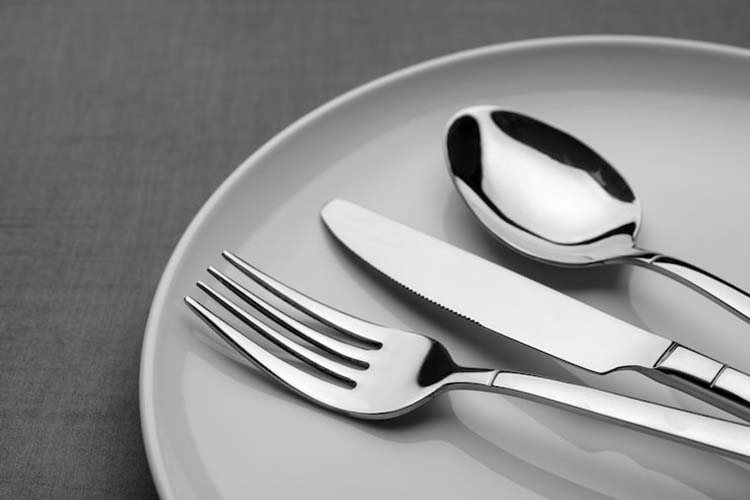
I've seen many buyers get lost in these numbers. As someone who has run a flatware factory for years, I want to simplify this for you. The choice you make impacts the look, feel, and lifespan of your product.
Which Steel Is Best for Forks and Spoons?
You want shiny, durable flatware that won't rust. But high-end options can seem too expensive. How do you find the right balance for your business needs?
For forks and spoons, 304 (18/10 or 18/8) stainless steel offers the best mix of shine, durability, and corrosion resistance. 430 (18/0) is a more affordable alternative with solid performance.
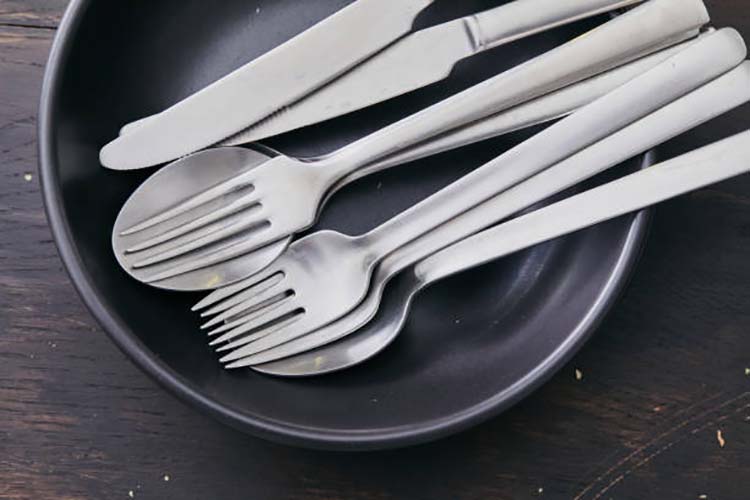
Most of the time, the body of a fork or spoon is made from austenitic stainless steel1. This type is great at resisting rust and has a good shine. The numbers like 18/10 tell you what is inside the steel. It's about the percentages of chromium and nickel, which are key ingredients.
The Premium Choice: 18/10 (304) Stainless Steel
This is considered the best choice for high-quality flatware. "18/10" means it has about 18% chromium and 10% nickel. The nickel is important. It gives the steel its superior rust resistance and high luster. At xrcutlery, our premium custom flatware for high-end restaurants and brands is almost always made from 304 steel. It's the standard for durability.
The Budget-Friendly Workhorse: 18/0 (430) Stainless Steel
Here, "18/0" means there is 18% chromium but zero nickel. This makes it more affordable. It is still stainless steel, so it resists rust, but not as well as 18/10. It also has a little less shine. We offer this option for clients with a tighter budget. It is very popular for high-volume places like cafeterias.
| Steel Grade | Common Name | Key Feature | Best For |
|---|---|---|---|
| 304 | 18/10, 18/8 | High rust resistance, bright shine | Fine dining, hotels, quality retail |
| 430 | 18/0 | Affordable, magnetic | Budget-conscious, high-volume use |
| 201 | - | Low cost | Specific markets like the Middle East |
Some of my clients in regions like the Middle East prefer 201 stainless steel. It is another low-cost alternative to 304. We keep stock in both 304 and 430 for many of our popular designs. This gives my clients flexibility.
Why Do Knives Use a Different Type of Steel?
Your forks and spoons are perfect. But the knives get dull or bend easily. Why can't they be made from the same strong, shiny steel?
Knives need a harder steel to hold a sharp edge for cutting. They often use 420 (13/0) grade stainless steel, which is easier to harden than 304 but has less corrosion resistance.
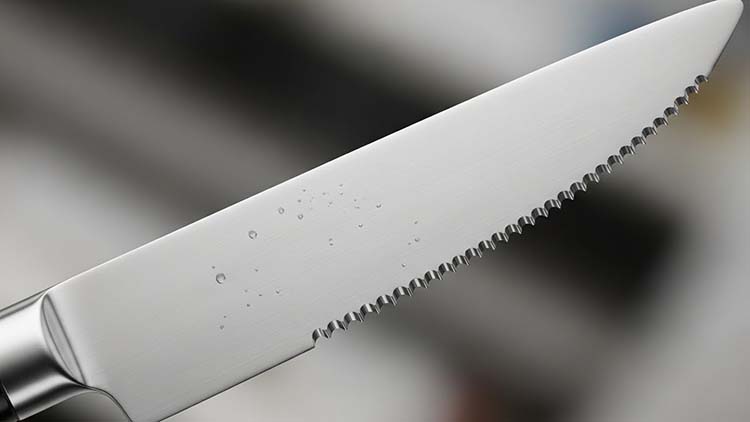
If you made a knife from the same 304 steel as a fork, it would be too soft. It would not hold a sharp edge for very long. That is why knife blades need a different kind of steel, usually a martensitic type2.
The Choice for Sharpness: 13/0 (420) Stainless Steel
The name "13/0" tells you it has about 13% chromium and no nickel. This type of steel, like AISI 420, is much harder than 304. This hardness allows us to create a sharp, serrated edge that lasts. It is perfect for cutting steak or other foods.
However, there is a trade-off. Without nickel and with less chromium, 13/0 steel is not as good at resisting rust. You might sometimes see a small rust spot on an old knife blade, even when the fork and spoon next to it look perfect. This is normal. It is the price for having a blade that actually cuts well. For most flatware sets, the handles of the knives are made from the same steel as the forks and spoons to match, but the blade is made from this harder 420 steel. This gives you the best of both worlds: a matching set with a functional knife.
Conclusion
Choosing the right steel depends on balancing cost, durability, and use. Use 304 for high-end quality, 430 for budget needs, and 420 for sharp, effective knife blades.