
What Key Factors Should You Consider When Choosing a Flatware Supplier for Bulk Orders?
Choosing the wrong bulk supplier can lead to inconsistent quality, missed deadlines, and damaged brand reputation. It's a costly mistake that many businesses make by focusing only on price.
When choosing a flatware supplier for bulk orders, focus on five key factors: consistent material quality, reliable production capacity, a robust quality control system, proven customization capabilities, and long-term supply stability.

As a factory founder, I've spoken with countless importers and distributors like Jacky. Their biggest frustration isn't usually the unit price; it's the risk that comes with an unreliable partner. A shipment that's late, inconsistent, or a different quality from the last order can cause massive problems down the line. For distributors, the goal isn't just to buy a product. It's to secure a supply chain that is predictable and trustworthy. The cheapest option often becomes the most expensive one in the long run. Let's look at the factors that truly matter.
How Can You Guarantee Consistent Material Quality?
You approved a beautiful, rust-resistant sample, but the bulk order starts to show spots after a few washes. This common problem can destroy your customers' trust in your brand.
To guarantee material quality, you must specify the exact stainless steel grade (e.g., 304/18-10) in your contract and confirm that your supplier uses a stable, long-term source for their raw steel.
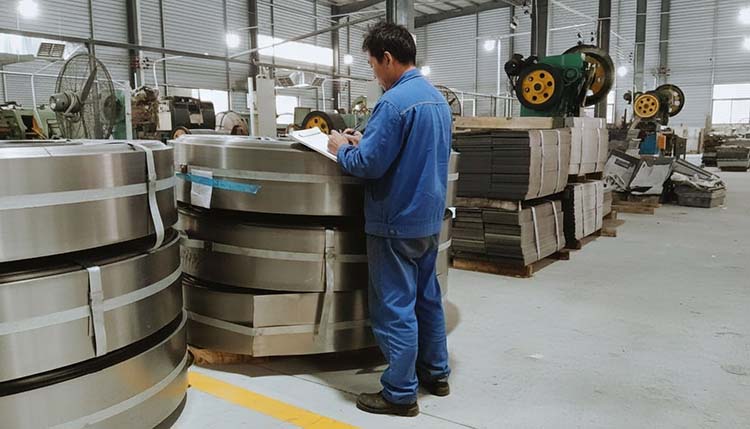
The grade of stainless steel is the foundation of your product's quality. A supplier who switches materials to save a few cents puts your entire investment at risk.
- 304 (18/8 or 18/10): High corrosion resistance and lasting shine. The standard for quality commercial flatware.
- 430 (18/0): Lower cost and decent quality, but less resistant to corrosion. Suitable for budget-conscious lines.
- 201: Very low cost, but also very low corrosion resistance. We generally advise against it for any product that needs to last.
I remember a distributor who came to us after his previous supplier sent him a bulk order made from a different steel than the 304 sample he approved. The color was off and customers complained about rust. When he started working with us, we locked in the 304 material source and thickness standard for his account. This ensured every replenishment order he placed was identical to the last.
Is Your Supplier's Lead Time Actually Reliable?
Your supplier promises a 45-day lead time, but your order is delayed by weeks, causing you to miss a key sales season. This can cripple your business and strain your cash flow.
A reliable lead time is backed by stable, in-house production capacity and a transparent scheduling system. Ask potential suppliers how they manage peak season demand and if they control key processes themselves.
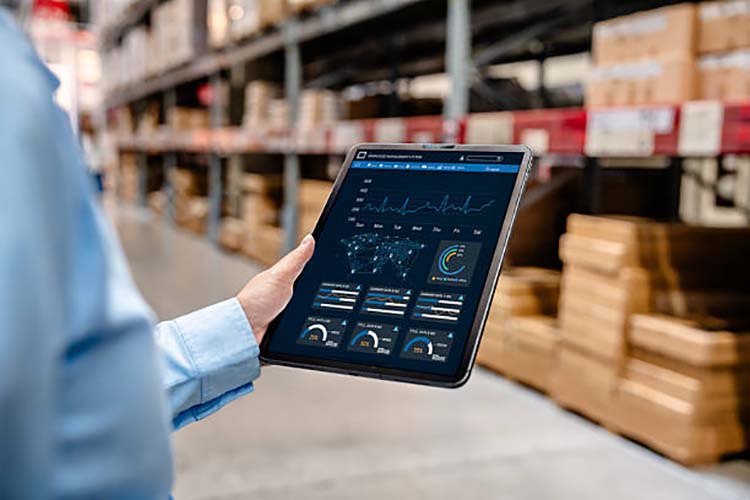
Many suppliers give optimistic lead times to win an order, especially if they rely heavily on outsourcing. This creates a high risk of delays. We once worked with a European wholesaler who was constantly frustrated by his previous supplier's unpredictable delivery schedule. He couldn't plan his inventory, and it hurt his sales. After he switched to XR Cutlery, we established a production rhythm1 for his regular models. By having key processes like stamping and polishing2 in our own factory, we can provide a much more stable and predictable replenishment cycle, even during peak season. A reliable lead time isn't a promise; it's a result of a well-managed production system.
Does the Supplier Have a Truly Effective Quality Control System?
You receive a bulk order where the weight of the forks varies, and the polishing on the spoons is inconsistent. These "small" defects get magnified in a retail setting and make your product look cheap.
An effective QC system is a multi-stage process. It includes raw material inspection, first-article confirmation before mass production, in-process checks, and a final inspection of the finished, packaged goods.
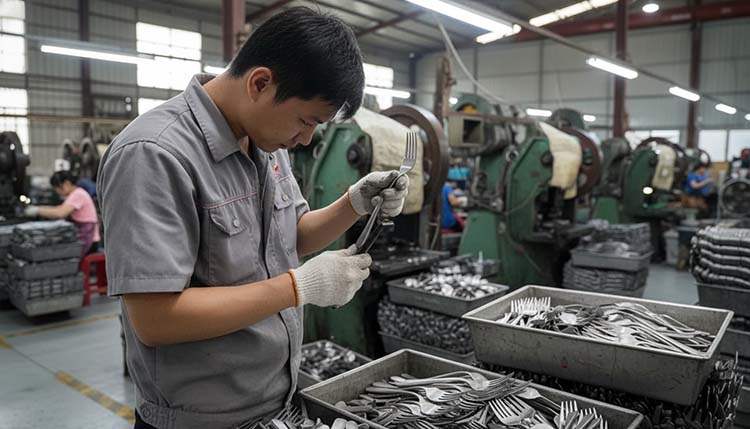
Quality isn't just about checking the final product; it's about building it in at every step. A client once showed me samples from another factory where the polishing quality was all over the place. Some were brilliant, others were dull. This happens when there's no "golden sample" or first-article confirmation to set the standard for the production line. At our factory, before we run a full batch, a "first piece" must be inspected and signed off for weight, dimensions, and finish. Our inspectors then use this approved sample as the benchmark for their in-process checks. This simple procedure ensures that the 10,000th piece looks just as good as the first.
Can They Handle Your Customization Needs at Scale?
A supplier makes a beautiful sample with your laser-engraved logo, but in the bulk order, the logos are crooked, faint, or in slightly different positions on each piece.
True customization capability isn't just about making a perfect sample. It's about having the systems, like custom jigs and fixed parameters, to replicate that perfection consistently across thousands of units.
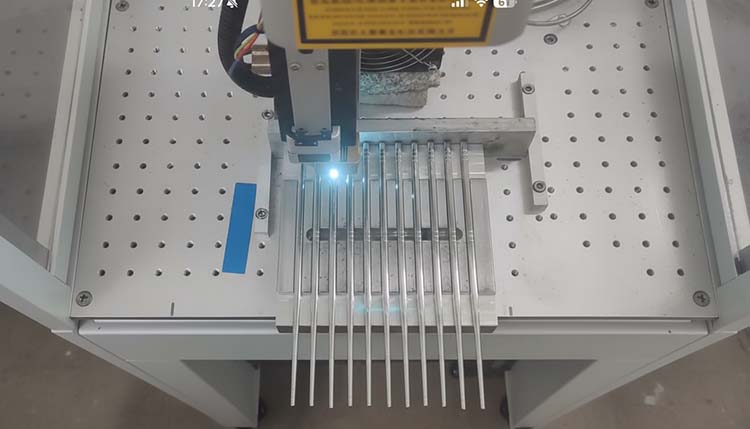
Many factories can handle customization. The real question is whether they can do it with consistency. We had a wholesale client from the Middle East who wanted to add his brand's logo to a popular flatware model. During the sampling phase, we didn't just engrave the logo; we documented the exact laser parameters3 (power, speed) and built a custom fixture, or "jig," to hold the handle in the perfect position. We save that jig and those parameters specifically for his account. Now, every time he reorders, the logo placement is identical. This is the difference between simply offering a service and delivering a reliable, scalable solution.
How Can You Ensure Supply Stability for Long-Term Business?
You've built your retail business around a best-selling flatware set. Two years later, you place a reorder, but the new stock is slightly different, causing issues with your existing customers and marketing.
Long-term supply stability comes from a supplier who commits to using fixed molds and consistent production processes for your models. This guarantees that the product you sell today will be available and identical years from now.

For distributors and retailers, product consistency over time is essential for brand building. A client of ours was expanding their retail channel and needed an uninterrupted supply of their top-selling flatware model. Their biggest fear was that a future batch wouldn't match the current inventory. We addressed this by dedicating a specific set of production molds just for their model and locking in the manufacturing process. By ensuring the tools and methods don't change, we guarantee that the product they ordered three years ago is the same as the one they'll get three years from now. This provides the stability they need to grow their brand with confidence.
Conclusion
Choosing the right supplier is about building a reliable partnership. By prioritizing material consistency, production reliability, and quality systems, you secure a supply chain that strengthens your business and builds customer trust.
-
Exploring production rhythm can reveal strategies for enhancing efficiency and stability in manufacturing processes. ↩
-
Explore this resource to understand effective techniques that enhance quality and efficiency in stamping and polishing processes. ↩
-
Learn about the impact of laser parameters on engraving quality, ensuring precision and consistency in your projects. ↩