
What is the Step-by-Step Process for a Custom Cutlery Order?
Starting a custom cutlery order feels complex. You have a vision but worry about mistakes in production. Get the process right from the start to avoid costly errors.
The process is: define your product specs, confirm the design, approve a physical sample, and then move to mass production, quality control, and shipping. Clear communication with your manufacturer at each stage is the key to success and avoiding costly mistakes.
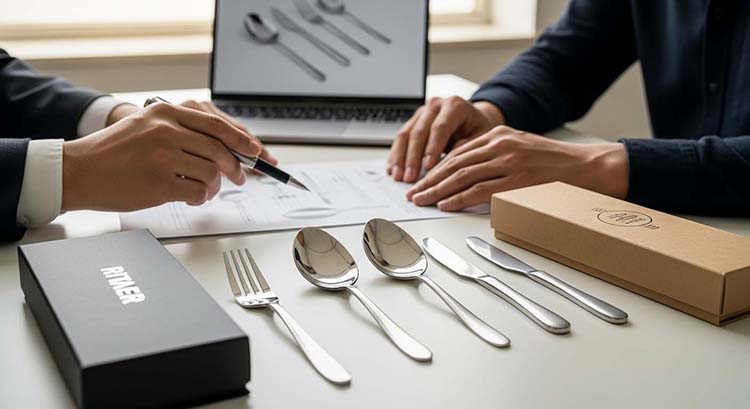
I've guided countless clients through this journey at XR Cutlery. In my experience, problems rarely happen during production itself. They almost always start at the very beginning, when the initial requirements aren't perfectly clear. A successful custom order is built on a solid foundation of clear communication and a structured process. Let's walk through the exact steps we use to guarantee a smooth and predictable outcome for our partners.
How Do You Define Your Custom Cutlery Requirements for Manufacturing?
A great idea for cutlery can fail if it's not designed for manufacturing. Unclear specs lead to production delays and disappointing prototypes. You need to provide clear, producible details from the start.
Clearly define the product type, material (e.g., 304/430 stainless steel), dimensions, weight, and finish. Provide detailed drawings or reference images and work with the factory to confirm the design is practical for mass production.
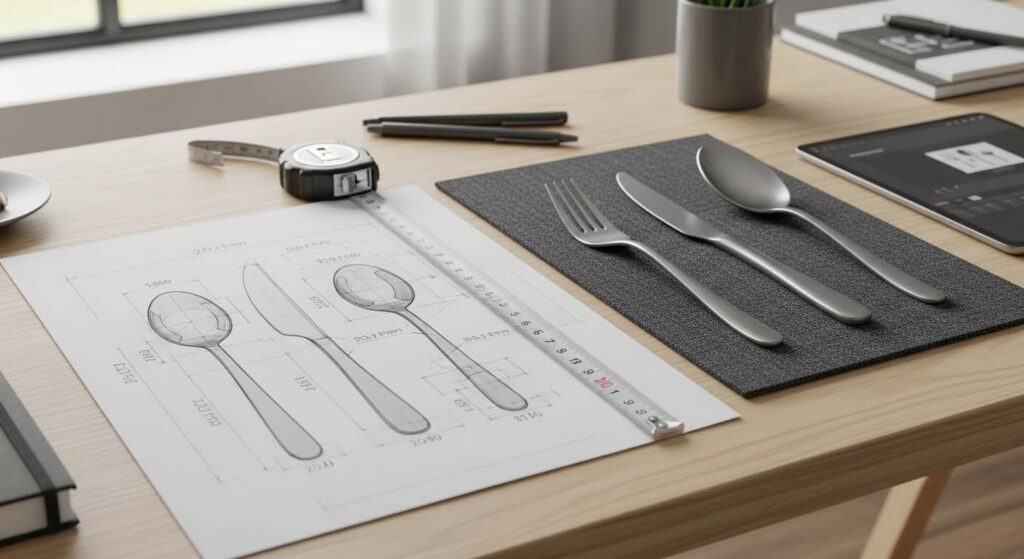
This initial planning phase is the most important. Everything that follows depends on getting this right. We start by discussing your goals. Who is your end customer? Is this order for a wholesale channel, a retail brand, or an e-commerce store? The answer helps us recommend the right materials and finishes. For instance, 18/10 (304) stainless steel is ideal for high-end brands, while 18/0 (430) offers a great balance of quality and cost for high-volume wholesale.
You must provide clear specifications for every detail:
- Dimensions: The exact length, thickness, and width of each piece.
- Weight: A target weight is crucial for the "in-hand feel" of quality.
- Design: The handle shape, style, and overall proportions.
- Logo & Finish: The logo placement, application method (e.g., laser engraving), and surface finish (e.g., mirror or matte polish).
The goal is to ensure the design is "producible." My team works with you to refine your concept, making sure it is both beautiful and practical to manufacture at scale.
Why is the Sampling and Approval Stage So Critical?
You approved a design on paper, but what if the final product feels wrong? Moving to mass production without testing a physical sample is a huge financial risk and can lead to unsellable inventory.
The sampling stage allows you to hold a physical prototype to verify the weight, balance, feel, and craftsmanship. This is your final chance to make adjustments before committing to a large production run, preventing costly errors.
A 3D drawing cannot tell you how a fork feels in your hand. This is why we always move to a physical sample. This prototype is your opportunity to check everything. Does it have the right weight? Is the polishing effect what you expected? Does it feel balanced?
I remember a distributor client who received a sample and thought it looked perfect. However, I advised them to test it in a real-world setting. They realized the pieces were slightly too light for their target market's expectations of a premium feel. We were able to adjust the specifications and increase the weight before mass production began. This simple check saved them from a potentially huge problem.
Once you approve the sample, we lock in the production standard. This sample becomes the benchmark against which every single piece in the mass production run will be measured. After this approval, major changes are difficult and costly, as molds and tooling have been finalized.
What Happens During Mass Production and Delivery?
You've approved the sample, but now you're worried about consistency across thousands of pieces. A lack of control during production can lead to quality issues, delays, and shipping problems.
Mass production involves scheduling materials, manufacturing, and continuous quality control. It's not just a final check; it's a process of inspection at every stage, followed by optimized packaging, final inspection, and tracked shipment to ensure consistency.
This is where a reliable factory partner shines. Our process is designed for consistency and transparency, especially for our wholesale partners who depend on stable supply.
The process is a well-oiled machine:
- Mass Production Planning: We schedule the raw materials, tooling, and production lines to meet your delivery deadline. For key partners, we often pre-schedule capacity to ensure their supply is never interrupted.
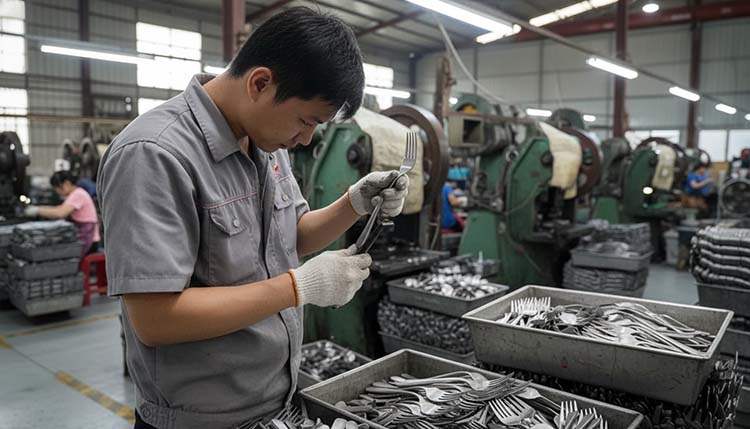
- Production & In-Process QC1: Manufacturing begins. This includes stamping, shaping, and polishing. Crucially, quality control happens at every step, not just at the end. We constantly check for visual defects, and monitor dimensions and weight.
- Final Inspection2: Before anything is packed, a final inspection is performed to check for any scratches or imperfections and to ensure the batch matches the approved sample.
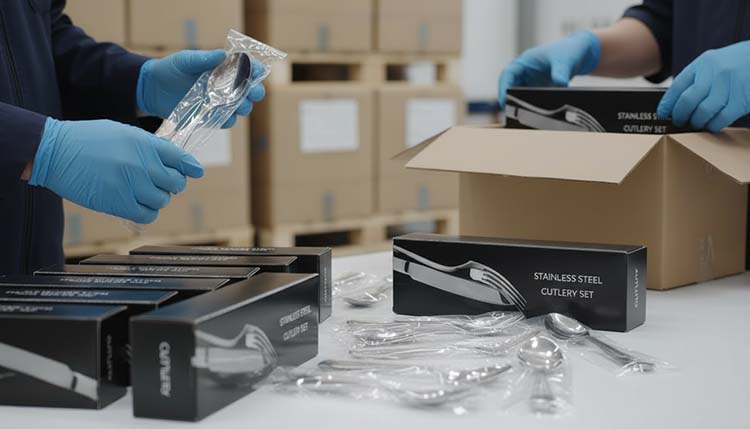
- Packaging & Export: We pack the order according to your needs. For one wholesale client, we optimized their carton size, which increased the number of units per shipping container and directly lowered their logistics costs.
- Shipment & After-Sales: We arrange shipping and provide all necessary documents. Importantly, we save all your production data, molds, and process details. This makes reordering fast, easy, and perfectly consistent every time.
Conclusion
Custom cutlery3 is not just about making a product once. It is about creating a repeatable system that ensures a stable, long-term supply for your business, batch after consistent batch.
-
Explore this link to learn about effective quality control methods that enhance manufacturing efficiency and product quality. ↩
-
Discover the importance of final inspections in ensuring product quality and customer satisfaction before shipping. ↩
-
Explore how custom cutlery can enhance your brand and ensure consistent quality for your products. ↩