
What Is the Process of Laser Engraving Logos on Cutlery?
You've seen it on restaurant flatware and branded cutlery sets—a crisp, permanent logo that looks incredibly precise. How exactly is it created?
Laser engraving a logo on cutlery is a digital process where a high-energy laser beam is precisely controlled by a computer to either remove a tiny amount of metal (engraving) or heat the surface to change its color (annealing), creating a permanent mark.
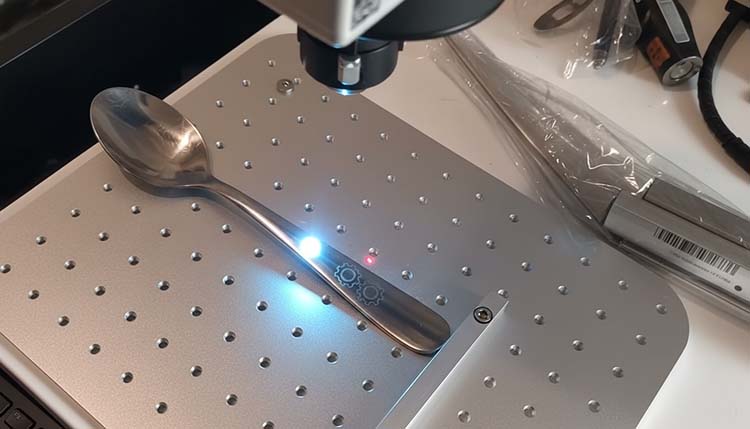
As a factory that produces custom-branded flatware for clients worldwide, we perform this process daily. While the technology seems complex, the concept is simple: the laser is a tool for hyper-precise drawing with heat and light. It's not just about turning on a machine and hitting "print." The real challenge, and where true expertise lies, is ensuring that the logo on the first spoon and the ten-thousandth spoon are absolutely identical in clarity, position, and depth. It's a game of precision, and it starts long before the laser is even turned on.
What Happens Before the Engraving Begins?
Many people think the process starts with placing a spoon under the laser, but the most critical work happens before that. The initial setup determines the success of the entire batch.
The first step is design file confirmation and material testing. The logo's line thickness and position must be optimized for the laser, and a test sample must be created to confirm the final look on the specific steel and finish.
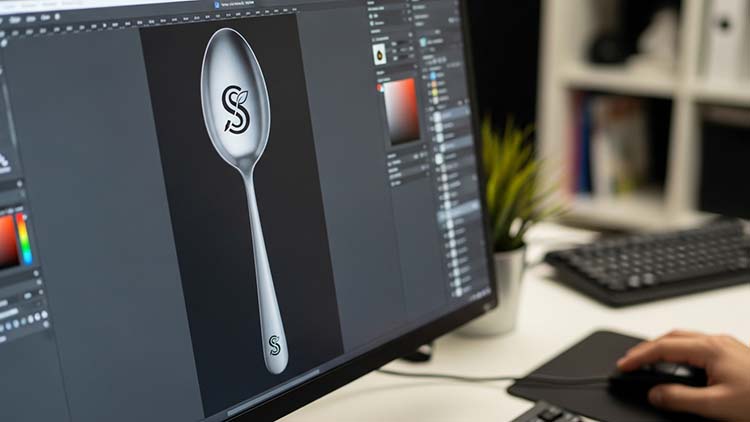
You can't just take any image file and expect a perfect result. The process requires careful preparation.
- Digital File Preparation: We start with a high-resolution vector file of the logo. We check that the line thickness and smallest text are suitable for laser engraving—if lines are too thin, they won't show up clearly.
- Material and Finish Considerations: Different types of stainless steel (like 304, 430, or 201) react differently to the laser. The surface finish also plays a huge role. A mirror polish will produce a different contrast and edge sharpness compared to a brushed or matte finish.
- Physical Sampling: A computer preview is never enough. We always run a test engraving on a spare piece of the exact same flatware model. This allows us and the client to approve the final look and feel before committing to the entire batch. This single step is crucial for avoiding costly rework.
How Is the Cutlery Prepared and Positioned?
Once the design is approved, the next challenge is ensuring every single piece is engraved in the exact same spot. Even a one-millimeter difference is noticeable in a set.
To ensure consistency across thousands of pieces, each spoon, fork, or knife is cleaned and placed into a custom fixture, or "jig." This jig holds the cutlery in a precise, repeatable position under the laser beam.
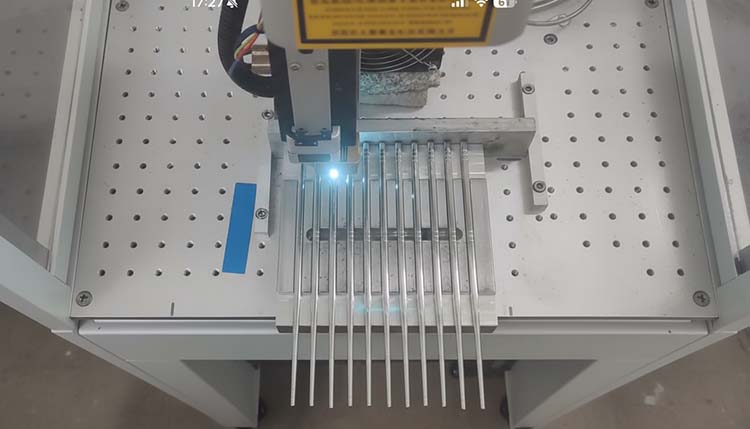
This is the secret to batch consistency. Without a proper jig, it's nearly impossible to maintain the same logo position manually.
- Cleaning the Surface: First, we clean the surface of the cutlery, usually with alcohol, to remove any oils or residues. A clean surface ensures a uniform and consistent mark.
- Creating the Jig: For each specific flatware model, we create a custom jig. This can be a precisely cut piece of acrylic, wood, or even 3D-printed plastic that holds one or more pieces of cutlery securely.
- Aligning the Jig: The jig is then fixed to the bed of the laser machine. The operator aligns the digital logo file in the software to match the position of the cutlery in the jig.
Once this is set up, the operator can simply place new pieces into the jig, run the job, and be confident that every logo will be in the exact same location. For our long-term clients at XR Cutlery, we save these jigs and the specific laser parameters, so their logo looks identical on every reorder, year after year.
How Does the Laser Actually Create the Mark?
With the cutlery in position, it's time for the magic to happen. The laser machine is configured with specific settings to achieve the desired effect on the metal.
The operator sets the laser's power, speed, and frequency based on the type of steel and the desired mark. The laser beam then either vaporizes metal to create depth (engraving) or heats it to create a smooth, dark mark (annealing).
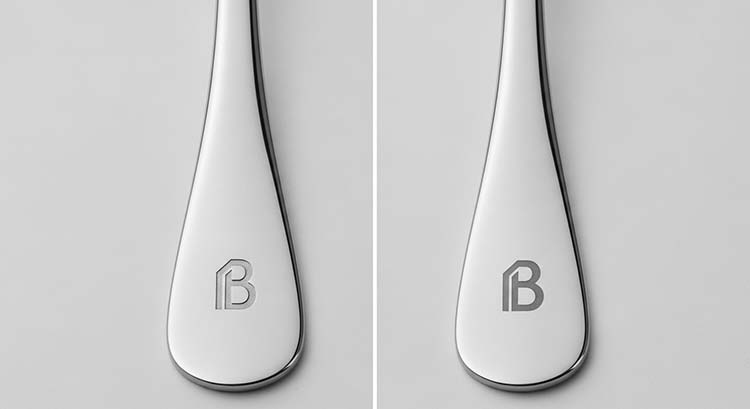
There are two main methods used for cutlery, each with a different purpose:
| Method | Process | Result | Best For |
|---|---|---|---|
| Engraving | The laser uses high power to vaporize a thin layer of the metal. | A recessed mark with a slight texture that you can feel. | Maximum durability, branding on heavy-use items. |
| Annealing | The laser uses lower power to heat the steel, causing a chemical change. | A smooth, dark, permanent mark with no change in depth. | Restaurant cutlery, as the smooth surface is food-safe and easy to clean. |
The choice between engraving and annealing1 depends on the client's needs. After the laser does its work, the piece is wiped clean to remove any dust from the process. Each piece is then inspected for clarity and consistency before being packaged. Laser engraving2 is a finishing step, so it has to be planned into the production schedule, especially for large quantities.
Conclusion
Laser engraving a logo is more than just a quick zap of light. It's a multi-step process that demands careful design preparation, precise material handling, and expert machine operation to achieve a consistent, high-quality result across an entire production run.