
What is the best way to find flatware wholesale suppliers?
You found dozens of flatware suppliers online. But how do you know which ones are actually reliable? The secret is to stop just searching and start qualifying them correctly.
The best way to find wholesale flatware suppliers is not about discovering more sourcing channels, but about developing a framework to vet them. This means verifying they are a real factory, asking process-oriented questions to gauge their quality, and matching their capabilities to your specific business model.
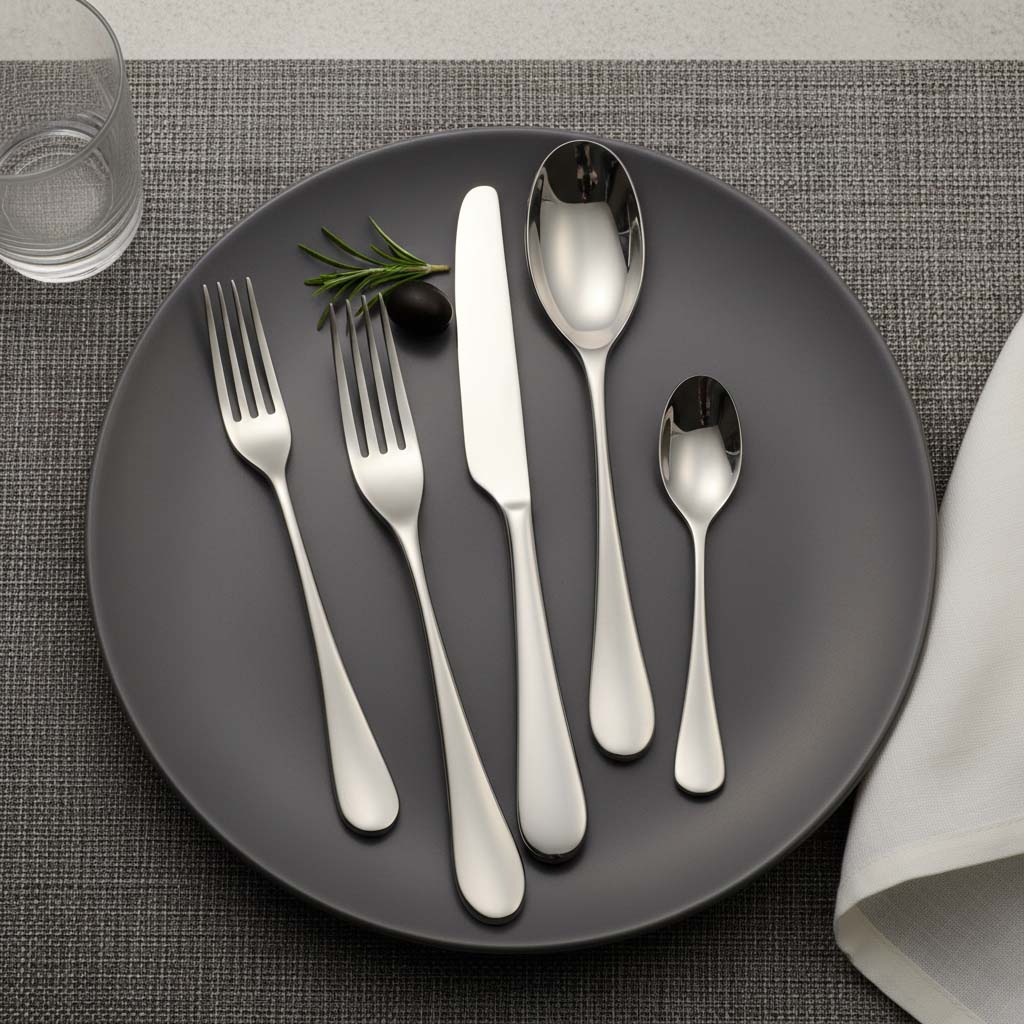
Finding a long list of potential partners is the easy part. I see so many buyers get stuck here, comparing prices without looking deeper. From my 20 years of experience on the factory floor, the real work is filtering that list to find a partner who will help you succeed long-term. Let's walk through the exact steps to separate the great partners from the risky choices, so you can build a reliable supply chain for your business.
How do you tell a real factory from a trading company?
Your list of suppliers looks promising on the surface. But some are just middlemen who add cost and risk. You need to learn how to spot a true manufacturer.
Ask for factory videos, production capacity details, and information about their mold development. A real manufacturer can give specific details about their production lines, while a trading company's answers will be vague. Factories invest in their own assets, not just a flashy website.
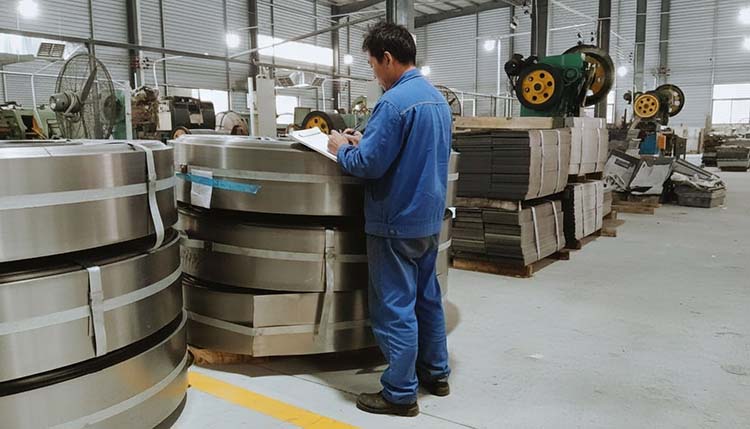
Many buyers start and end their search on B2B marketplaces like Alibaba. These are good starting points, but you have to dig deeper. A professional supplier invests in their own website, showcasing their facilities and processes, not just an endless gallery of products. When we talk to a potential client, they can see our workshops, our teams, and our equipment. This transparency is a key sign. A trading company often has a massive, unfocused catalog with everything from flatware to textiles because they don't make anything themselves. They are just a sourcing office. To get clarity, you must ask direct questions that a simple reseller can't answer properly.
Factory vs. Trading Company: What to Ask
| Question | ✅ A Factory's Answer | ❌ A Trading Company's Answer |
|---|---|---|
| Can I see your facility? | "Yes, here is a video walkthrough of our polishing and packing workshops. We have 120 staff." | "We work with several partner factories. We can show you product photos." |
| What is your monthly capacity? | "We produce over 5 million pieces of flatware per month." | "It depends on the product. What do you need?" |
| Can you develop a new design? | "Yes, we have an in-house team for ODM projects and can create a new mold in 3-4 weeks." | "Yes, we can do that. Let me check with our supplier." |
What questions reveal a supplier's true quality standards?
All suppliers will promise "good quality." But these are just empty words without proof. You need to ask specific, process-oriented questions to see their real standards in action.
Instead of just asking for the price, ask "How do you ensure consistency in mirror polishing across a 50,000-piece order?" Their detailed answer about process reveals their true quality control depth and expertise, something a simple price list can't show.
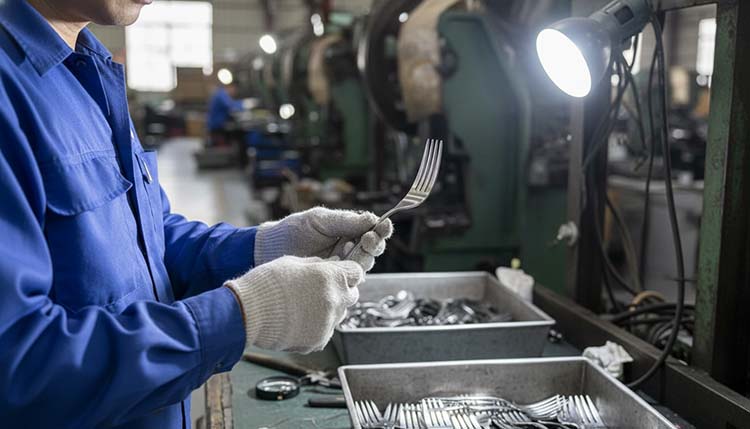
Product photos can be deceiving. True quality is found in the details of production. From our experience, buyers who focus only on the final photo often face issues with consistency later. A credible manufacturer will welcome questions about their process. For example, when you ask about polishing, a good factory will talk about their multi-step process, from rough grinding to fine buffing, and the specific compounds they use. They can explain how they train workers to ensure the edges are smooth and the surface is free of waves. We once worked with a European kitchenware importer who was struggling with inconsistent quality from their previous supplier. The price was low, but customer complaints about uneven weights and poor finishing were high. After they switched to us, we walked them through our QC checklist.
A Manufacturer's Quality Control Checklist:
- Raw Material Inspection1: We test the composition of every steel coil to confirm it's the correct grade (e.g., 18/10, 18/0) before it even enters our production line.
- In-Process Checks: Our teams check dimensions, weight, and shape after stamping and during polishing.
- Final QC Verification: A dedicated QC team inspects every batch for surface defects, polish uniformity, and packaging accuracy before it ships.
This structured system is what separates a reliable manufacturer from a low-cost assembler.
How can you match a supplier's capabilities to your brand's needs?
You may have found a high-quality factory. But they might be the wrong fit for your business model. You must define your own needs first, then find a supplier who aligns with them.
An Amazon seller needs flexibility and FBA prep support. A large importer needs massive capacity and supply chain stability. Before talking to suppliers, know your annual volume, target market, and if you need OEM/ODM services.
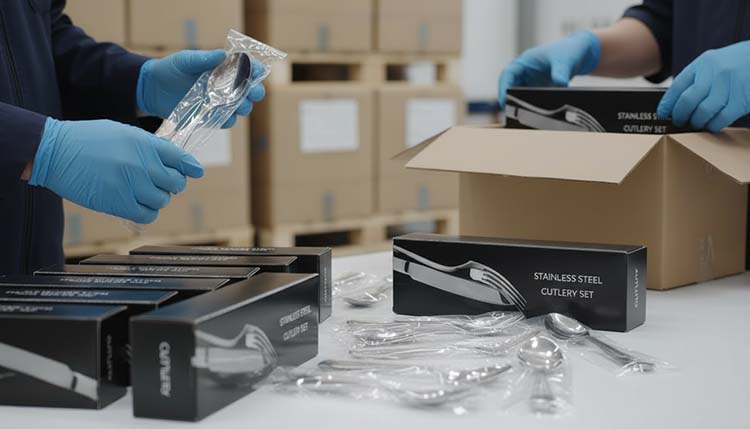
The "best" supplier is relative. It depends entirely on your business. We serve a wide range of clients, from large retail chains to growing e-commerce brands, and their needs are completely different. A large chain store ordering millions of pieces needs a factory with proven capacity and an audited supply chain. An Amazon seller launching a new product needs a partner who understands FBA labeling, offers flexible customization on smaller batches, and can recommend popular designs. Before you even send that first email, you should have a clear idea of what you want to achieve. This helps you filter out suppliers who can't meet your core requirements, saving you weeks of back-and-forth communication. For example, a North American brand we work with started with one collection. As they grew, they needed custom PVD colors and branded gift boxes. Because we have strong ODM capabilities, we grew with them, simplifying their supply chain.
What Does Your Business Need?
- For Amazon & E-commerce sellers: Look for OEM flexibility (logo engraving, custom packaging), experience with FBA requirements, and recommendations for trending designs.
- For Large Importers & Wholesalers: Prioritize production capacity, supply stability for repeat orders, and compliance certifications (FDA, LFGB)2.
- For Brand Owners: Focus on ODM capabilities, mold development, unique finishes (like stone wash or hammered), and a willingness to sign exclusivity agreements.
Are you choosing a supplier based on price or real value?
It is always tempting to pick the cheapest quote you receive. But a low price often hides costs like delays, returns, and poor communication. You have to evaluate the total value, not just the unit price.
A good partner offers more than a low price. They provide responsive communication, stable lead times, and proactive problem-solving. These factors prevent hidden costs and protect your brand’s reputation, delivering better long-term value.

In my two decades in this industry, the most common mistake I see buyers make is choosing a supplier on price alone. This often leads to disaster. The "lowest cost" supplier can quickly become the most expensive one when you factor in the hidden costs of poor quality. Think about the money you lose from customer returns, the sales you miss because of production delays, and the hours you waste managing a supplier who doesn't communicate. A reliable partner acts as an extension of your team. They ask questions to understand your market. They give you realistic lead times. They notify you of potential issues before they become problems. This is the difference between a simple transaction and a true partnership. Look for these signals.
Green Flags vs. Red Flags
| ✅ Green Flags (Credibility Signals) | ❌ Red Flags (Warning Signs) |
|---|---|
| Asks questions about your market and target customer. | Says "yes" to everything without asking for details. |
| Provides a clear production schedule. | Gives vague or constantly changing lead times. |
| Has a detailed QC process they can explain. | Simply says "we have QC" with no specifics. |
| Communicates proactively about progress and issues. | Is slow to respond or difficult to reach. |
| Website and documents are professional and detailed. | Website shows a mix of unrelated products. |
Conclusion
Finding the right supplier is not about the lowest price. It is about finding a reliable partner who ensures quality, offers stability, and helps your business grow successfully.
-
Quality management systems like ISO 9001 emphasize the importance of verifying purchased materials. This process, often called Incoming Quality Control (IQC), ensures that raw materials meet specified requirements before they are used in production, preventing defects at the earliest stage. ↩
-
Regulations for food-contact materials are critical for market access. In the United States, the Food and Drug Administration (FDA) sets these standards, while in the European Union, Regulation (EC) No 1935/2004 is the framework. The German LFGB is a well-known national regulation within the EU that is often used as a high-quality benchmark. ↩