
What are the raw materials of flatware?
You see flatware made of steel, silver, plastic, and even wood. It’s overwhelming trying to figure out which material is safe, durable, and won't be a pain to maintain.
The most common raw material for modern flatware is stainless steel. Other materials include sterling silver for high-end sets, and plastic, wood, or paper for disposable or specialized cutlery. For durability and everyday use, stainless steel is the superior choice.
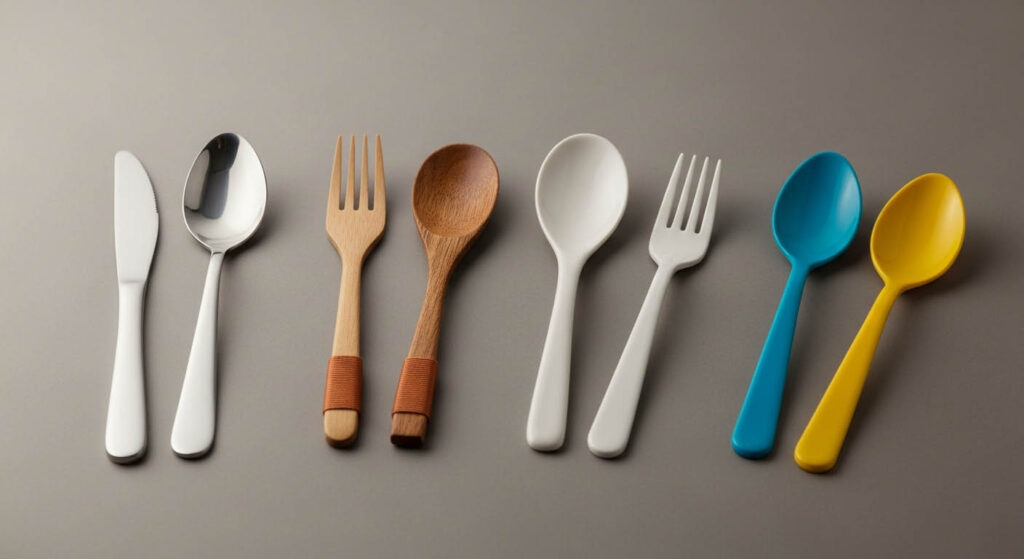
When buyers like Jacky, a seasoned pro from a big US brand, visit my factory, their first question isn't about style, it's about the metal. "What grade are you running?" he'll ask. He knows that the raw material is the foundation of quality. Everything else—the shine, the weight, the longevity—starts with the type of steel we put into the machine. While many materials can be shaped into a fork, only a few can withstand the test of a family dinner year after year. Let’s look at what works best.
What is the best material for everyday flatware?
You need a cutlery set that can handle daily abuse. It must survive the dishwasher, kids, and hasty meals without scratching, bending, or demanding constant polishing.
Without question, the best material for everyday flatware is stainless steel. It provides the perfect combination of strength, rust resistance, affordability, and low maintenance. It's designed to be used, washed, and used again without any special care.

When we talk about "everyday" use, we're talking about practicality. You want something that looks good but doesn't create more work. Stainless steel is the clear winner here. I've made flatware from many things, but for home use, the choice becomes very clear when you look at the pros and cons side-by-side. Sterling silver is too soft and needs constant polishing. Plastic is for single use. Wood can't handle the dishwasher and can absorb flavors or bacteria. Stainless steel is the only material that scores high marks across the board.
Comparing Everyday Materials
| Material | Durability | Maintenance | Cost | Vibe |
|---|---|---|---|---|
| Stainless Steel | Excellent | Very Low | $$ | Versatile |
| Sterling Silver | Low (Soft) | Very High | $$$$$ | Heirloom, Formal |
| Plastic | Very Low | None (Disposable) | $ | Casual, Temporary |
| Wood/Bamboo | Low | High (Hand-wash) | $$ | Rustic, Natural |
What is modern cutlery made of?
You see beautiful, minimalist flatware in design magazines. The sleek black, gold, or matte gray finishes make you wonder if it's made from some advanced new material.
Almost all modern, high-quality cutlery is made from a stainless steel core. The contemporary look comes from the minimalist patterns and advanced finishes applied to the steel, like PVD coatings for color or fine brushing for a matte texture.
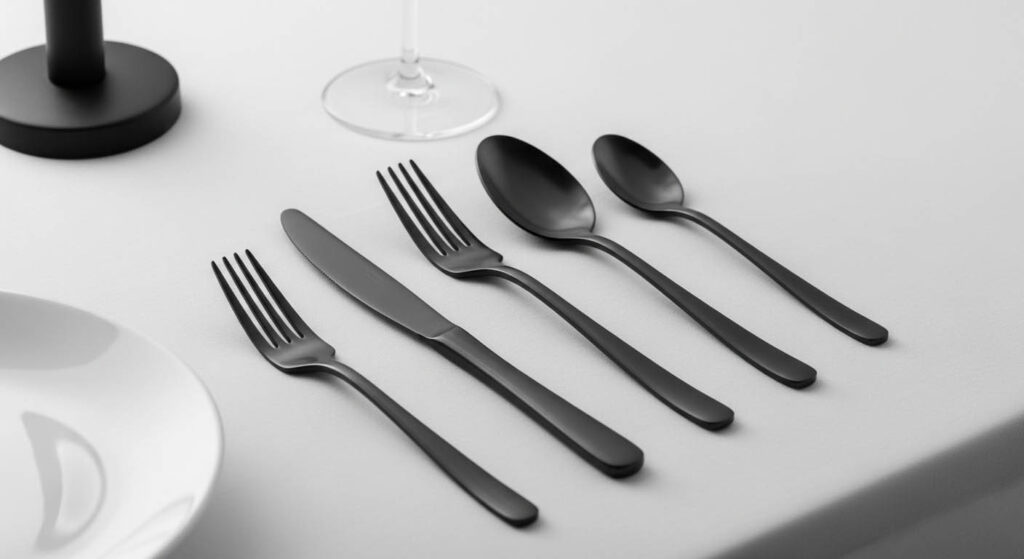
The secret to modern cutlery isn't a new space-age material; it's the innovative ways we shape and finish a classic one: stainless steel. As a manufacturer, I can confirm that the foundation for those striking designs is almost always high-grade steel. Its strength and versatility allow designers to push the boundaries of style. They can create ultra-thin handles, sharp geometric shapes, or ergonomic curves that wouldn't be possible with softer materials.
Form and Finish
What makes it look "modern" are two things:
- Form: Modern patterns move away from ornate details like flowers and scrolls. They favor clean, simple silhouettes like teardrop, square, or completely straight handles. The focus is on the object's pure shape.
- Finish: This is where the real innovation happens. Instead of just a classic mirror polish, we use techniques to change the steel's surface. A brushed finish creates a soft, satin look. And Physical Vapor Deposition (PVD)1 bonds a super-hard ceramic layer to the steel, allowing for stunning, durable colors like black, gold, and copper.
What is the highest quality flatware?
You want to invest in the absolute best. But "high quality" is a vague term. Is it about the weight, the brand name, or the material itself?
The highest quality flatware is made from either sterling silver or 18/10 stainless steel. Sterling silver is the traditional, heirloom choice for its intrinsic value. For practical luxury and performance, 18/10 stainless steel is the undisputed king, offering maximum durability and shine.
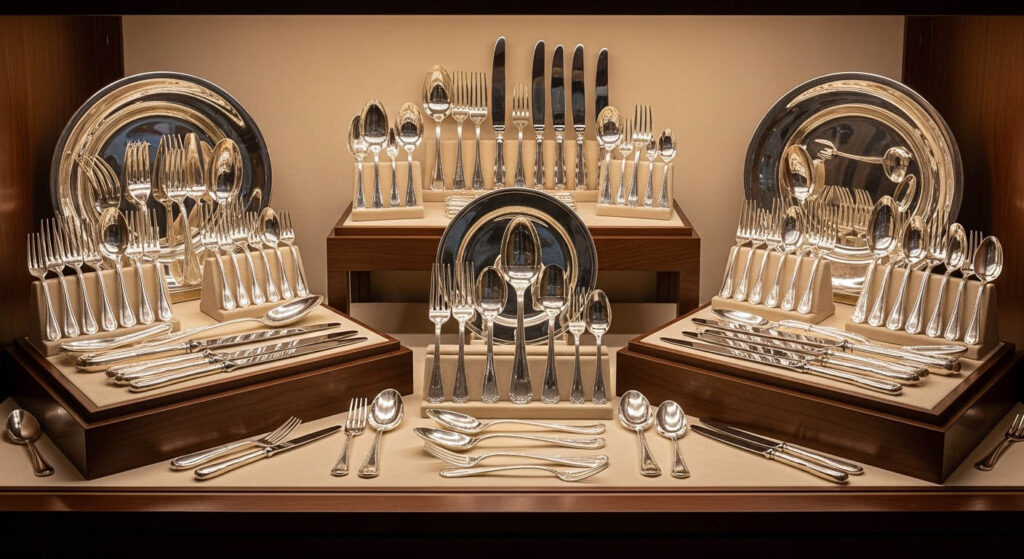
When a client asks for "the best," my first question is, "Best for what?" The definition of quality changes based on your purpose. There are two peaks on the mountain of flatware quality.
Heirloom Quality vs. Performance Quality
-
Heirloom Quality: Sterling Silver
This is the classic definition of luxury. Sterling silver is an alloy made of 92.5% pure silver and 7.5% other metals for strength. It's beautiful, carries significant prestige, and holds its value. However, it's also very soft, scratches easily, and tarnishes, requiring regular polishing. It's the highest quality for a formal dining room used sparingly. -
Performance Quality: 18/10 Stainless Steel
This is the modern definition of luxury. For high-end restaurants, hotels, and anyone who wants beautiful flatware without the maintenance, 18/10 stainless steel is the top choice. The "10" signifies 10% nickel, which provides superior shine, weight, and the highest resistance to rust. It feels heavy and balanced in the hand and will withstand decades of daily use. For buyers like Jacky, this is the only grade they consider "highest quality."
What type of stainless steel for flatware?
You know stainless steel is best, but the numbers—18/10, 18/8, 18/0, 201—are confusing. Choosing the right grade is the most important decision for ensuring longevity and preventing rust.
The best all-around stainless steel for forks and spoons is 18/10 (304 grade). For knife blades, harder 420 steel2 is used to hold a sharp edge. More economical options include 18/0 (430 grade)3 and 201 steel4, which have lower corrosion resistance.

In my factory, we use different types of steel for different products and price points. The grade of steel is the single biggest factor in the cost and quality of the final product. Understanding these numbers is like learning the language of flatware quality. One key detail is that in a high-quality set, the forks and spoons are a different grade of steel than the knives. The forks need maximum rust resistance, but the knives need hardness to hold a cutting edge.
Common Steel Grades and Their Uses
| Grade Name | Technical Grade | Key Characteristics | Common Use Cases |
|---|---|---|---|
| 18/10 or 18/8 | 304 | The best. Superior rust resistance, bright shine, heavy feel. | Premium brands, hotels, fine dining. |
| 18/0 | 430 | Good. Decent rust resistance, magnetic, economical. | Everyday cutlery, promotions. |
| 201 | 201 | Fair. Lower rust resistance (uses manganese instead of nickel). | Cost-effective sets for specific markets. |
| N/A | 420 / 410 | Very hard and strong. Can be heat-treated to hold an edge. | Used exclusively for knife blades. |
Conclusion
The best flatware starts with the right raw material. For most people, high-grade stainless steel like 18/10 offers the perfect blend of beauty, strength, and easy care for a lifetime.
-
Explore this link to understand how PVD technology enhances durability and aesthetics in various industries. ↩
-
Learn about 420 steel's hardness and edge retention, crucial for knife blades, by visiting this resource. ↩
-
Explore this link to understand the benefits and limitations of 18/0 stainless steel for cutlery. ↩
-
Explore this link to understand 201 steel's characteristics and its role in cutlery manufacturing. ↩