
What Are the Most Common Mistakes Importers Make When Sourcing Flatware?
Sourcing flatware seems simple, but hidden pitfalls can turn a profitable import into a costly disaster. From rusting steel to surprise tariffs, importers often learn these lessons the hard way.
The most common mistakes importers make are skipping physical samples, ignoring material grades and weight tolerances, misunderstanding total landed cost, and failing to secure a repeatable, long-term supply standard from their factory.
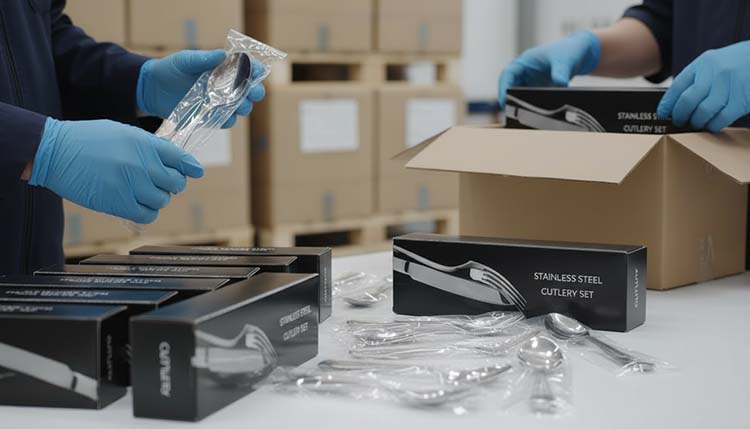
At XR Cutlery, we've guided countless importers and distributors through the complexities of sourcing. We've seen firsthand where things can go wrong. I recall a client from Eastern Europe who supplied local wholesale and retail channels. For their first order, they were laser-focused on getting the lowest possible unit price and chose a cheaper material option. The samples looked great. But 6-8 months after the products hit the market, complaints started rolling in about rust spots and a loss of shine. The problem wasn't the factory's workmanship; it was that the material specifications were too loose. This experience highlights a critical lesson: a successful import isn't about one cheap order; it's about building a profitable, long-term product line.
Are You Relying on Samples and Pictures Too Much?
Did you approve an order based on a perfect sample or a beautiful photo? This is a huge gamble, as mass-produced goods rarely match the quality of a hand-picked, individually polished sample.
Relying solely on samples without locking in technical specifications is a recipe for disputes. You must define and document the acceptable tolerance for weight and thickness to ensure the bulk order matches the sample's feel.

A sample is a promise, but a technical specification is a contract. A common complaint we hear from importers who've had bad experiences elsewhere is, "The bulk order felt lighter and thinner than the sample." This happens because "feel" is subjective, but data is not. A factory can easily produce a flawless, heavy sample by using select materials and giving it extra polishing time. The real test is whether they can replicate it 100,000 times.
Here’s the correct way to lock in quality:
- Approve the Sample: Confirm the design, finish, and ergonomics of the physical sample.
- Convert "Feel" to "Data": Don't just approve the look. Demand the technical sheet. The key is to document its exact weight and thickness.
- Define Tolerances: Your purchase order should not just say "2.0mm thickness." It should say "Thickness: 2.0mm ±0.1mm" and "Weight: 45g ±2g."
This simple step transforms a subjective expectation into a measurable quality standard that the factory must meet, protecting you from the "it feels different" problem.
Are You Looking at the Wrong Price Tag?
Are you choosing your supplier based on the lowest unit price? This narrow focus often leads to selecting factories that cut corners on quality, resulting in high return rates that destroy your profit margins.
Focusing only on the ex-factory or FOB price is a classic mistake. Importers must calculate the total landed cost, which includes freight, duties, and handling fees, and understand how packaging choices impact this final number.
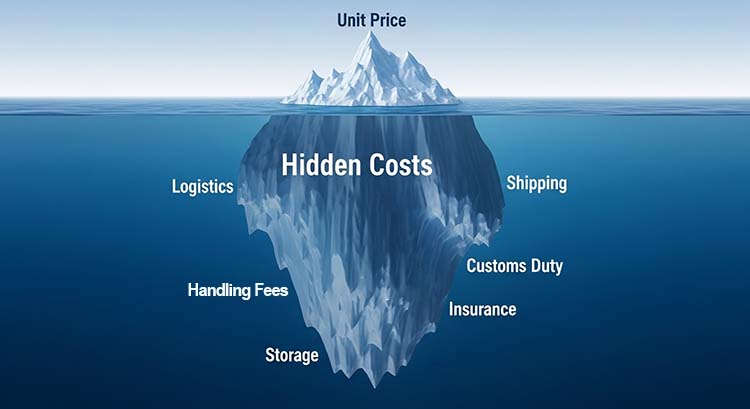
The cheapest unit price is often a trap. The true cost of your product is what it costs to get it into your warehouse, ready to sell. Flatware is heavy and bulky, which means logistics costs are a significant part of your total investment. One of the biggest mistakes we see is importers designing packaging for retail shelves, not for shipping containers. Individual color boxes look great, but they waste a tremendous amount of space. This lowers your container loading rate and drives up the per-set shipping cost. For a wholesaler or distributor, packaging's primary job is to be efficient for logistics. Simple, sturdy, bulk-packed cartons will always be more profitable. Furthermore, misclassifying your goods with the wrong HS code1 or being unaware of anti-dumping tariffs can lead to catastrophic, unexpected fees at customs.
Is Your "304 Stainless Steel" Really 304?
You ordered "304 stainless steel," assuming it guarantees quality. But without a material composition report, "304" is just a label, and its anti-rust properties can vary wildly.
The name of the steel grade isn't enough; you need to verify its chemical composition. The percentages of nickel and chromium can fluctuate, and these variations directly impact the flatware's resistance to rust and corrosion.
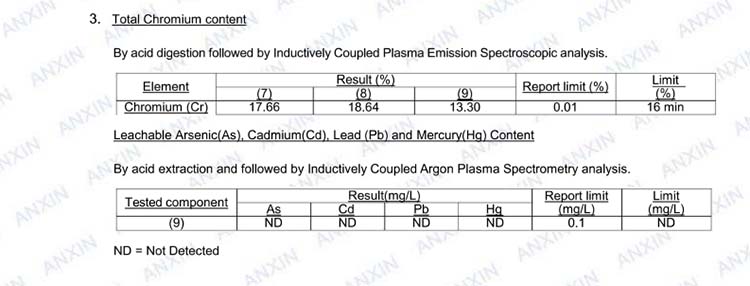
This is a technical but crucial point that many importers miss. A steel grade like 304 (or 18/8) is defined by a range of chemical components. For example, it should contain between 8% and 10.5% nickel. A factory using steel at the low end of this range can still legally call it "304," but its performance will be noticeably worse than steel at the higher end. This is exactly what happened to our Eastern European client. Their first supplier likely used a low-end 304 steel to achieve a lower price. When we took over their supply, our first step was to lock in the material source with our trusted steel mill and specify a narrow, high-quality composition range for the nickel and chromium content. We provided a material test report2 to prove it. Yes, this made the unit cost about 10% higher, but it eliminated the quality complaints and turned the product into a long-term bestseller for them.
Are You Planning for One Order or a Five-Year Business?
Are you sourcing a complex, custom-designed product from a new factory? This can be risky, as it makes it nearly impossible to ensure quality consistency or find an alternative supplier if your first one fails.
The smartest importers prioritize a supplier's ability to deliver consistent quality over the long term, not just their ability to produce one complex order. A standard, repeatable specification is more valuable than a unique but unreliable design.

Many importers fall in love with a unique design, only to find that it's difficult to produce consistently. They spend months developing it with one flatware factory3, and if that factory's performance drops or their prices rise, the importer is trapped. They can't easily move production elsewhere because the specific tooling and know-how are unique to that one supplier. A much safer and more profitable strategy for distributors is to focus on a standardized, high-volume specification that is easy to replicate.
When we worked with the Eastern European client for their second order, we kept their successful design but optimized the thickness and weight for long-term wholesale. The result? The product became their core, high-volume item. They have been reordering it consistently for two years without a single quality complaint. The client later told us something that stuck with me: "You weren't just selling me a container of flatware; you were helping me build a product I could sell for years." That’s our core philosophy.
Conclusion
At XR Cutlery, we believe that helping an importer avoid a costly mistake is more important than just taking another order. True success in importing comes from building a stable, repeatable, and profitable product line.
-
Learning about HS codes can help you avoid costly customs fees and ensure compliance in international trade. ↩
-
Understanding material test reports is crucial for ensuring quality and compliance in manufacturing, making this resource invaluable. ↩
-
Finding a reliable and capable stainless steel flatware factory is very important. ↩