
PVD vs Spray Coating for Cutlery: Which Finish Is Right for Your Brand?
Struggling to choose the right finish for your new colored cutlery line? The debate over PVD vs spray coating for cutlery can be confusing, with conflicting information about durability, appearance, and cost. Choosing the wrong one can lead to customer complaints, returns, and damage to your brand's reputation.
Physical Vapor Deposition (PVD) is a vacuum deposition process that applies a thin, durable metallic or ceramic film to the cutlery surface. Spray coating, on the other hand, involves spraying a liquid coating that cures to form a colored layer. PVD is generally preferred for premium, high-use cutlery due to its superior hardness and adhesion, while spray coating offers more color flexibility and can be a cost-effective solution for decorative or lower-intensity use cases.
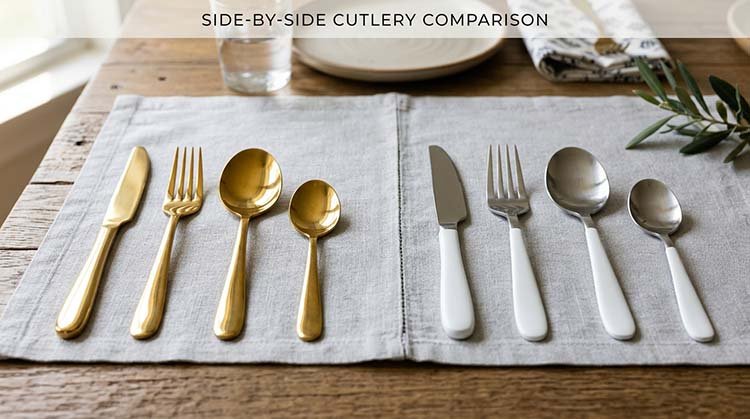
This surface-level answer is just the beginning. The best choice depends on your specific product, target market, and quality standards. Let's explore the critical differences, performance factors, and quality control steps that every wholesale buyer needs to understand.
What’s the Difference Between PVD and Spray Coating for Cutlery?
Trying to decide on a finish for your bulk cutlery order? It’s easy to get lost in technical terms. Understanding the fundamental process behind each method is the first step toward making an informed procurement decision that aligns with your quality and cost targets.
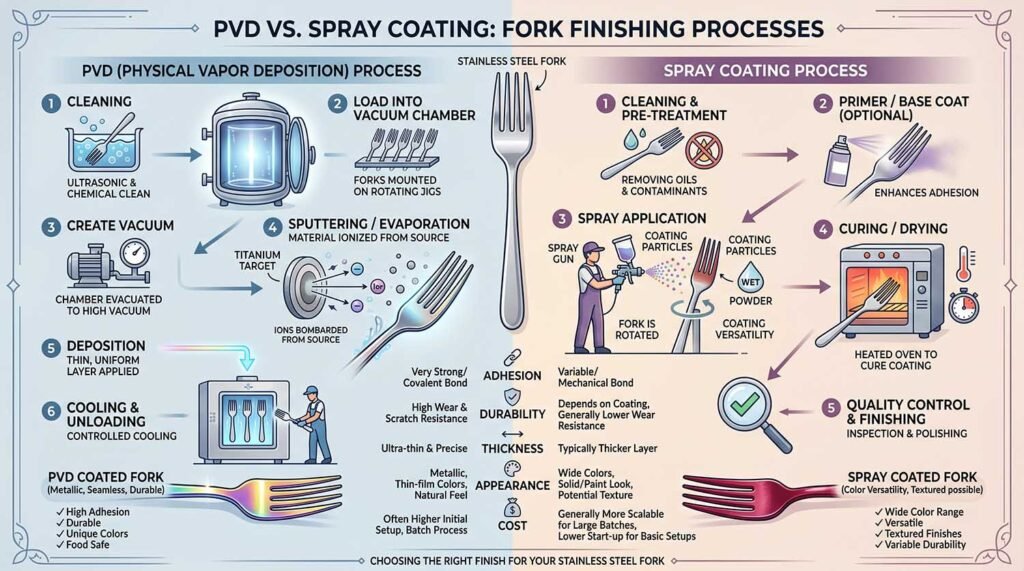
The primary difference lies in the application method and the nature of the resulting layer. PVD bonds a metallic film to the stainless steel in a vacuum, while spray coating applies a layer of paint-like material that dries on the surface.
Dive Deeper
Let's break down the processes, features, and ideal scenarios for both PVD and spray coating.
Understanding PVD (Physical Vapor Deposition)
PVD is not a type of paint. It's a high-tech vacuum coating process where a solid material—often a metal like titanium, chromium, or zirconium—is vaporized in a vacuum chamber and deposited onto the surface of the stainless steel cutlery atom by atom. This creates a very thin, hard, and biocompatible film that is metallurgically bonded to the substrate.
The final appearance of colors like gold, rose gold, black, or champagne isn't just from the PVD process itself. It's a combination of:
- The base stainless steel's quality.
- The pre-treatment and polishing of the surface.
- The specific coating material and process parameters used.
Because of its excellent wear and corrosion resistance, PVD is the go-to choice for premium tableware intended for hospitality, retail, and private label brands that prioritize longevity.
Understanding Spray Coating
Spray coating is a more traditional finishing method. It involves using a spray gun to apply a liquid coating (which can be organic or inorganic) onto the cutlery. After application, the pieces are typically heat-cured to dry and harden the coating, creating a colored surface.
The process offers immense flexibility in color and finish. You can achieve a vast range of Pantone colors, textures, and effects that might be difficult or impossible with PVD. However, the performance of spray-coated cutlery is highly dependent on several factors:
- The quality and type of coating material used.
- The thickness of the applied layer.
- The quality of the surface preparation.
- The precision of the curing process (time and temperature).
While it can be a viable option for certain decorative items or cost-sensitive projects, its suitability for high-use cutlery that undergoes frequent washing and abrasion must be carefully validated.
PVD vs. Spray Coating: Head-to-Head Comparison
For buyers, a direct comparison helps clarify where each method shines.
| Feature | PVD Coating | Spray Coating |
|---|---|---|
| Process | Vacuum deposition of a thin film | Surface spraying followed by curing |
| Coating Type | Thin-film surface treatment | Opaque, covering layer |
| Appearance | Strong metallic luster and feel | Wide range of colors and sheens |
| Wear Resistance | Generally excellent, but depends on coating composition and process | Highly variable; depends on paint quality, thickness, and curing |
| Typical Use | Premium cutlery, hotels, restaurants, high-end brands | Decorative items, specific color requests, cost-driven projects |
| Batch Consistency | Requires tight control of vacuum, parameters, and racking | Requires control of spray thickness, gun settings, and curing conditions |
| Cost | Higher initial equipment and process costs | Process can be more flexible and potentially lower cost |
| Color Customization | Achievable through different target materials | Typically more flexible and extensive color options |
Does PVD Coating for Cutlery Always Last Longer?
You might hear a supplier promise that "PVD never fades," but is that realistic? It's a common misconception that PVD is indestructible, leading to unrealistic expectations. The truth is, no coating is permanent, and its lifespan depends on many variables beyond just the coating name.
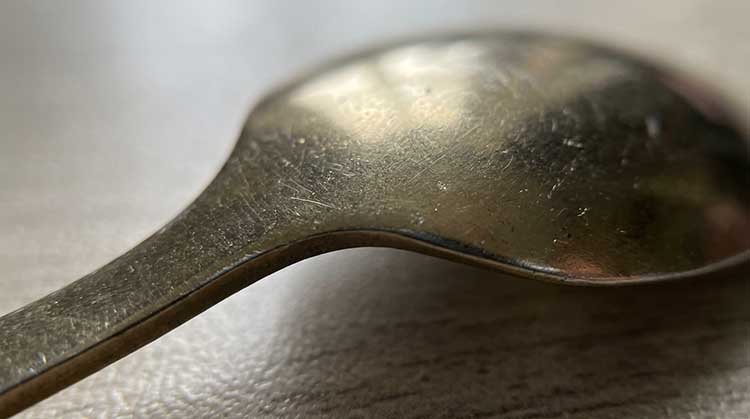
While a well-executed PVD coating is generally more durable than a standard spray coating for cutlery applications, its longevity is not guaranteed. A poorly applied PVD finish can fail sooner than a high-quality, properly cured spray coating designed for performance.
Dive Deeper
The idea that "PVD is permanent" and "spray coating peels easily" is an oversimplification. As a buyer for a brand, an importer, or a hospitality chain, you need to look past the marketing terms and focus on the factors that truly determine performance.
Factors Influencing Coating Lifespan
In my 20+ years of manufacturing experience, I've seen that the durability of any coated cutlery—whether PVD or sprayed—comes down to a combination of factors. A failure in any one of these can compromise the final product.
- Stainless Steel Grade: A stable, high-quality base like 304 (18/8) stainless steel provides a better foundation for any coating than a lower-grade alternative.
- Surface Preparation: This is arguably the most critical step. The cutlery must be flawlessly clean and free of oils, dust, or polishing residues. Any contamination will compromise adhesion.
- Polishing Quality: The smoothness of the underlying surface affects both the final look and the coating's bond. A mirror finish will have different adhesion characteristics than a matte or brushed finish.
- Coating Composition & Thickness: For PVD, different materials (like Titanium Nitride vs. Zirconium Nitride) have different hardness and color properties. For both methods, the thickness of the coating is a critical factor in its wear resistance.
- Process Parameters: For PVD, this includes vacuum level, temperature, and deposition time. For spray coating, it involves spray uniformity, viscosity, and curing temperature/duration.
- Usage & Washing Conditions: A piece of cutlery used in a high-volume restaurant and washed in a commercial dishwasher will face much more abrasion than one used occasionally at home and hand-washed.
The Critical Role of the Base Material
A coating is only as good as the steel underneath it. No finish, no matter how advanced, can fix problems with a poor-quality base material. When sourcing colored cutlery, your specification should always start with the steel itself. Insist on clarity for:
- Stainless Steel Grade: 304, 430, 410, etc.
- Thickness and Weight: These impact the perceived quality and durability.
- Surface Finish: Mirror, matte, brushed, or hammered.
A specification that just says "gold stainless steel fork" is incomplete and invites quality problems.
How Surface Finish Affects the Final Look
The same PVD color can look dramatically different depending on the underlying finish. This is a crucial detail to confirm with physical samples.
- Mirror Finish + Gold PVD: Results in a bright, highly reflective, classic metallic look.
- Matte Finish + Gold PVD: Creates a softer, more contemporary, and less reflective satin appearance.
- Brushed Finish + Black PVD: Lends an industrial or commercial feel with visible texture lines.
Never approve a 50,000-piece order based on a digital render. The interplay between light, finish, and coating color can only be judged with a physical pre-production sample in hand.
How Can You Ensure Quality in Bulk Coated Cutlery Orders?
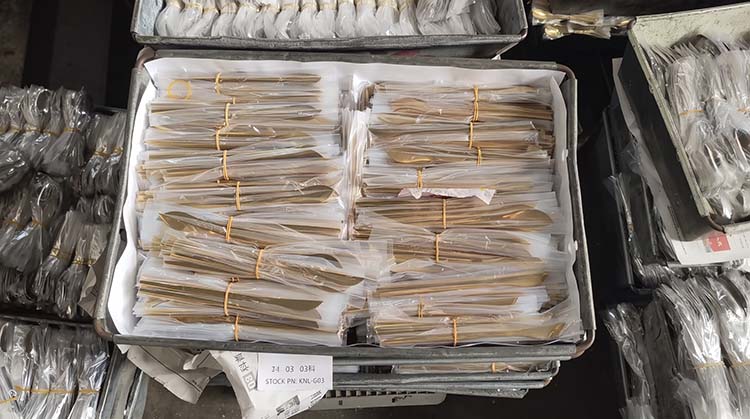
You've approved a beautiful "gold PVD" sample, but now you're worried. How can you be sure that the 100,000th piece will look and perform just like the first? This is the core challenge in sourcing colored cutlery, and where a supplier's experience truly shows.
Ensuring quality isn't about choosing a coating name; it's about establishing clear standards, understanding potential failure points, and implementing a rigorous testing protocol. Your focus should be on verifiable specifications and test results, not just the marketing claims.
Dive Deeper
Achieving consistency across a massive production run of 20,000, 50,000, or more pieces is incredibly difficult. It requires deep process control. Here’s what can go wrong and how you, as a buyer, can protect your investment.
Why Do PVD Color Differences Occur in Bulk Orders?
Making one perfect gold spoon is easy. Making 50,000 identical ones is an art. In my factory, we manage this daily, and it comes down to controlling dozens of variables. Color variations can be caused by:
- Base Polishing Differences: Inconsistent polishing from piece to piece.
- Surface Cleanliness: Microscopic residues affecting the PVD film.
- Coating Parameter Drift: Minor changes in temperature or pressure in the PVD chamber.
- Product Position: Items placed in different locations within the PVD chamber can receive slightly different coating thicknesses, affecting the color.
- Batch-to-Batch Variation: Slight differences between production runs.
- Different Product Shapes: A fork, knife, and spoon have different geometries, which can lead to slight variations in how the coating is deposited, especially around tines and edges.
An experienced manufacturer will have systems to minimize these variations, but buyers should also define an acceptable range of color tolerance based on approved samples.
Common Quality Issues to Watch For
Beyond color, inspect your samples and production batches for these common defects:
- Uneven Coating: Lighter or darker spots.
- Poor Adhesion (Peeling/Flaking): The coating separates from the base steel.
- Scratches: The coating is not hard enough to resist normal handling.
- Surface Spots or Pits: Caused by dust or contamination during the process.
- Uneven Gloss: Differences in sheen across a single piece.
- Poor Coverage: Thin or missing coating around sharp edges or inside fork tines.
Essential Tests for Coated Cutlery
Don't just look at a sample; test it. Your quality assurance process should include specific, objective tests.
- Adhesion Test: The cross-hatch tape test (e.g., ASTM D3359)1 is a standard method to check if the coating is properly bonded to the steel.
- Abrasion Resistance: A Taber abrasion test or a custom test simulating repeated contact can help predict wear.
- Dishwasher/Washing Test: Run samples through a specified number of dishwasher cycles (e.g., 50 or 100 cycles) to check for fading, peeling, or corrosion.
- Food-Contact Compliance: This is non-negotiable. Require documentation proving the specific coating (not just "PVD") complies with regulations for your target market, such as FDA (USA), LFGB (Germany), or EU Framework Regulation (EC) 1935/2004.
How Should Buyers Specify Their Needs for PVD or Spray Coating for Cutlery?
You're ready to place a bulk order but want to avoid ambiguity and quality issues down the line. A vague request like "we need gold PVD cutlery" is a recipe for problems. To get what you want, you must provide your manufacturer with a detailed technical specification sheet.
The key is to move the conversation from a generic product name to a list of precise, measurable parameters. This document becomes the foundation of your contract and the benchmark for quality control for every piece in your order.
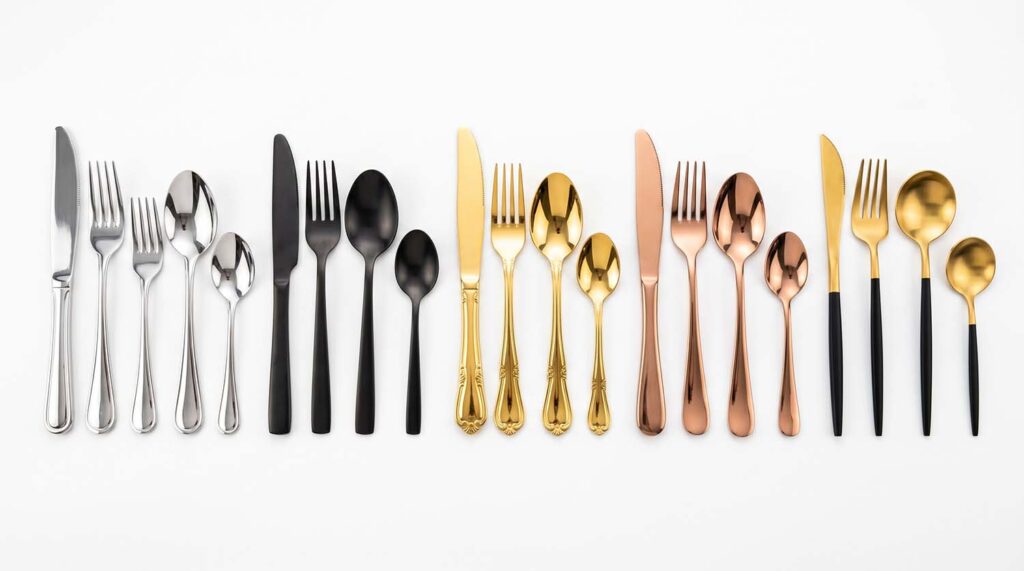
Dive Deeper
A detailed specification protects both you and the manufacturer. It ensures everyone is aligned on the final product's appearance, performance, and quality. Let's walk through what to include and how to apply it to a real-world order.
Building Your Technical Specification Sheet
For any coated cutlery order, your specification sheet should include, at a minimum:
- Base Product:
- Product Model Number/Name
- Stainless Steel Grade (e.g., 304, 18/8)
- Product Weight and Thickness
- Base Surface Finish (e.g., Mirror Polish, Matte Finish)
- Coating & Branding:
- Coating Method (e.g., PVD, Spray Coating)
- Coating Color Name (e.g., Champagne Gold, Matte Black)
- Color Reference (Provide a Pantone code or an approved physical sample)
- Coating Area (e.g., Full coverage, handle only)
- Logo Method and Position (e.g., Laser engraved on handle back)
- Performance & Quality:
- Expected Usage (e.g., Commercial restaurant use, retail gift set)
- Washing Requirements (e.g., "Must be dishwasher safe for 100 cycles")
- Quality & Testing Requirements (e.g., "Must pass cross-hatch adhesion test," "Color must match approved sample XYZ")
- Logistics:
- Packaging Requirements
- Quantity
- Sample Approval Clause (Stating that mass production cannot begin until a pre-production sample is approved)
A Realistic Bulk Order Example
Let's imagine you are a private label brand sourcing 50,000 pieces of a gold cutlery set.
An incomplete request looks like this:
"We want to order 50,000 pcs of your gold PVD cutlery set."
A professional specification looks like this:
- Product: Model XR-123, 4-piece set
- Material: 304 (18/8) Stainless Steel, Mirror Finish
- Weight: Fork: 55g, Knife: 90g, etc.
- Coating: Gold PVD, color to match approved pre-production sample #G-789.
- Logo: Laser engrave brand logo on the back of each handle.
- Testing: Must be dishwasher safe for residential use. Must pass ASTM D3359 adhesion test.
- Approval: Mass production to commence only after written approval of the final pre-production sample.
This level of detail eliminates guesswork and provides a clear basis for quality inspection.
Frequently Asked Questions
Is PVD coated cutlery dishwasher safe?
Generally, high-quality PVD cutlery is designed to be dishwasher safe. However, its lifespan depends on the specific PVD coating, the stainless steel quality, and the harshness of the dishwasher detergent. We always recommend confirming the manufacturer's specific care instructions and testing requirements.
Can you customize colors with PVD and spray coating?
Yes, both methods allow for customization. Spray coating offers a nearly unlimited palette, able to match most Pantone colors. PVD offers a range of durable metallic colors like gold, rose gold, black, blue, and rainbow. The choice depends on whether you need a specific brand color or a durable metallic finish.
What is the most durable color for PVD cutlery?
While all PVD coatings are hard, some compositions are tougher than others. Finishes based on Titanium Nitride (gold tones) and Chromium Nitride are known for their excellent hardness and wear resistance. However, true durability is a function of the entire manufacturing process, not just the color.
What stainless steel grade is best for coated cutlery?
For premium coated cutlery intended for frequent use, 304 stainless steel (18/8 or 18/10) is the preferred choice. It offers an excellent combination of corrosion resistance, durability, and a great surface for coating adhesion, ensuring the longevity of the PVD or spray finish.
Conclusion
When evaluating PVD vs spray coating for cutlery, it becomes clear that there is no single "best" answer. The right choice is the one that aligns with your product's intended use, aesthetic goals, and quality standards. PVD offers superior hardness and a premium metallic feel ideal for high-end hospitality and retail, while spray coating provides broader color flexibility for decorative or specific branding needs.
Ultimately, for wholesale buyers, importers, and private label brands, the discussion should move beyond the coating name. The real question is whether your manufacturing partner has the process control and quality systems to consistently reproduce the required color, finish, and durability across your entire bulk order. The most critical factors are a detailed technical specification, rigorous testing protocols, and the approval of a pre-production sample that sets the standard for everything that follows.
As a manufacturer with over two decades of experience in OEM/ODM cutlery production, we help buyers navigate these choices every day. If you're sourcing wholesale stainless steel flatware and need guidance on the right coating system for your project, contact our team to discuss your specifications and get a production-ready quote.
-
The ASTM D3359 standard provides guidelines for evaluating the adhesion of coatings to substrates, including steel, through the cross-hatch tape test. ↩