
OEM vs. Brand: What's the Real Difference in Flatware Sourcing?
Confused about sourcing from an OEM factory versus a big brand? This confusion can cost you money, control, and consistency. Understanding the difference is the key to unlocking a smarter supply chain.
An OEM (Original Equipment Manufacturer) is a factory that produces goods for other companies to sell. A brand designs, markets, and sells products, but often outsources production to an OEM. For wholesale, sourcing directly from an OEM offers significant advantages in cost, customization, and supply control.
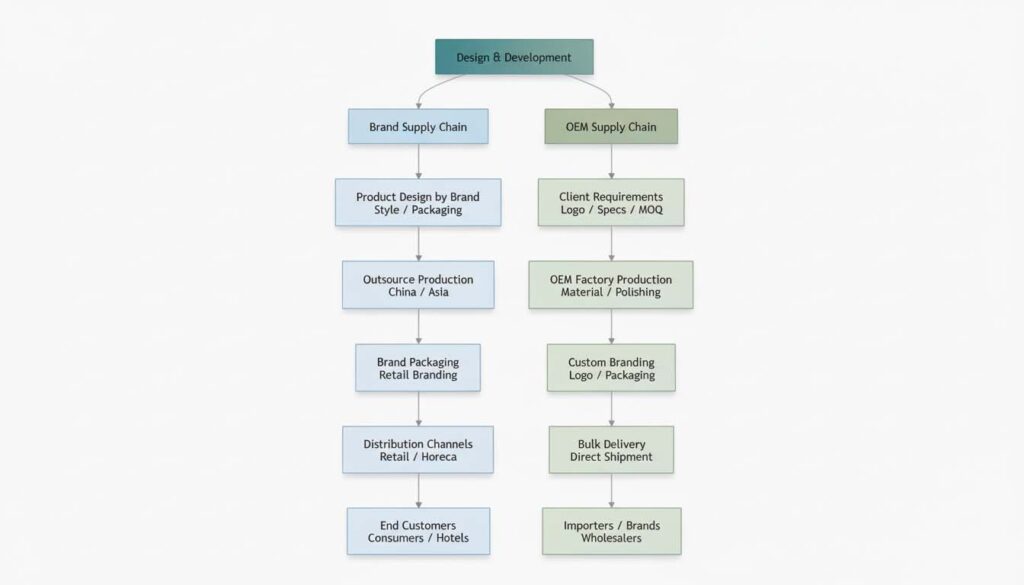
As the founder of XR Cutlery, I operate on the factory side of this equation. I've spent years working with global brands, importers, and distributors. I've seen firsthand how the most successful buyers leverage the strengths of different players in the market. The entire global flatware industry is built on a structure that isn't always obvious from the outside. Let's pull back the curtain and look at how it really works.
What's the Core Difference Between an OEM Factory and a Flatware Brand?
Struggling to get the price and customization you need from a brand? Their business model is built on marketing and retail, not manufacturing flexibility, which limits your options.
An OEM factory focuses on production, offering lower costs and high customization. A brand focuses on marketing and distribution, adding premiums for brand value and channel fees. This means for the same quality, OEM is almost always more cost-effective for bulk orders.
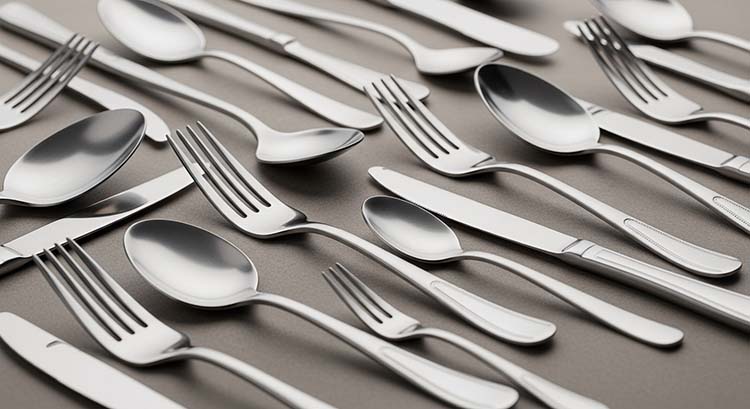
The fundamental difference comes down to their core business. An OEM factory like mine is a manufacturing expert. Our costs are concentrated in raw materials and the production process. A brand, on the other hand, is a marketing expert. Their costs include design, advertising, channel markups, and their brand premium. They usually outsource the actual manufacturing to an OEM.
This creates a clear choice for buyers. If you need a finished product with strong brand recognition for retail, you go to a brand. But if you are a wholesaler, distributor, or building your own private label, an OEM is your direct line to the source. You get more control over the final product—from the material and weight to the logo and packaging—without paying for the brand's marketing budget. It's a more transparent and direct way to procure goods.
How Does the Global Flatware Industry Structure Actually Work?
Feeling like you're not getting the full picture of the supply chain? The flatware market is divided into distinct tiers, and understanding them shows you where the real power lies.
The industry is in three tiers. Tier 1 is the OEM factories that make the products. Tier 2 is the global brands that control marketing and distribution. Tier 3 is the luxury design brands that influence trends. Brands control the market, but factories control the supply.
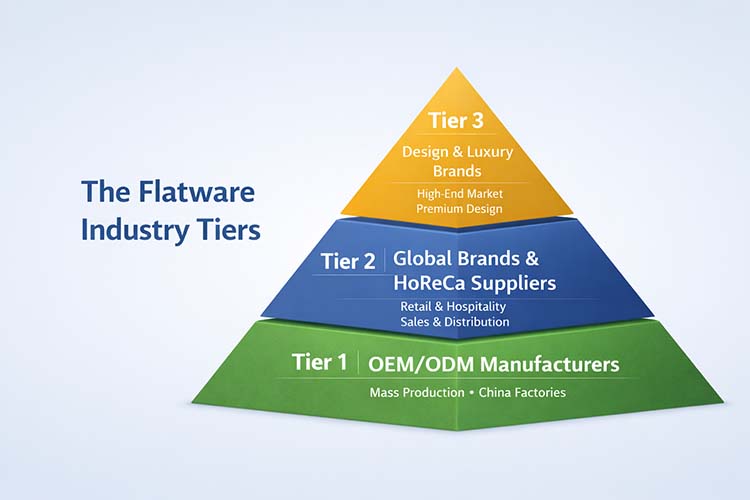
The global flatware market isn't a simple collection of competitors. It's a layered ecosystem. Once you see these layers, you can navigate it much more effectively.
Tier 1: Global OEM/ODM Manufacturers (The Supply Core)
These are the factories, the engine of the industry, located primarily in production hubs like Jieyang, China. We, XR Cutlery, are in this tier. We control cost, lead times, and customization capabilities. We are the partners for anyone who needs bulk, private label, or custom-manufactured flatware.
Tier 2: Global Brands & Commercial Suppliers (The Channel Controllers)
These are the famous names you see in stores and hotels—WMF, Oneida, Villeroy & Boch. They master marketing and have vast distribution networks. However, most of them do not manufacture their own flatware; they outsource it to Tier 1 factories.
Tier 3: Premium Design & Luxury Brands (The Trend Setters)
These brands, like Georg Jensen or Robert Welch, focus on high-end design and brand stories. They create beautiful, high-value products in smaller batches, influencing the aesthetic trends of the entire market.
| Tier | Primary Role | Key Focus | Representative Players |
|---|---|---|---|
| Tier 1 | Manufacturing | Cost, Capacity, Customization | XR Cutlery, Chinese Factories |
| Tier 2 | Marketing & Distribution | Brand Premium, Market Access | WMF, Oneida, Villeroy & Boch |
| Tier 3 | Design & Luxury | Aesthetics, Brand Story, High Value | Georg Jensen, Robert Welch |
Why is Choosing the Right Sourcing Strategy Crucial for Your Business?
Are unpredictable lead times and inconsistent products hurting your business? Relying on a brand's complex supply chain means you have little control, leaving you vulnerable to their problems.
A direct OEM strategy gives you control over your supply chain. You get stable lead times and can lock in materials and processes for long-term batch consistency, which is critical for wholesalers and distributors building a reliable business.
In today’s market, the real competition is between supply chains. A weak supply chain can ruin a business, no matter how good its sales team is. This is where choosing between an OEM and a brand becomes a critical strategic decision.
When you source from a brand, you are dependent on their supply chain. If they decide to switch factories, the product you receive next year might be different from the one you received this year. Lead times can be unpredictable because your order is just one part of their large, complex operation.
By partnering directly with an OEM factory1 like XR Cutlery, you take back control. We work with wholesalers and distributors to establish a stable, repeatable process. We can lock in the exact materials, molds, and polishing techniques to ensure every batch you order is identical. Because we focus on OEM/ODM, we aren't your competitor in the retail market. Our goal is to be a reliable part of your supply chain2, providing the consistent quality and stable supply you need to grow.
Conclusion
Understanding the difference between an OEM and a brand is key. The strongest buyers know how to leverage direct factory partnerships for cost, control, and consistency in their supply chain.