
Mirror Finish Flatware: How Stainless Steel Is Polished to a Mirror Shine?
Choosing a mirror finish flatware supplier is not simply about finding a product with a bright appearance. The quality of the final finish depends heavily on the surface preparation, polishing sequence, equipment, abrasive materials, and process control used during manufacturing.
A high-quality mirror finish is created through a multi-stage process. It starts with grinding to remove surface imperfections, followed by progressively finer polishing using different wheels and abrasive compounds. Each stage prepares the stainless steel surface for the next until the microscopic scratches are reduced enough to produce a smooth, highly reflective finish.
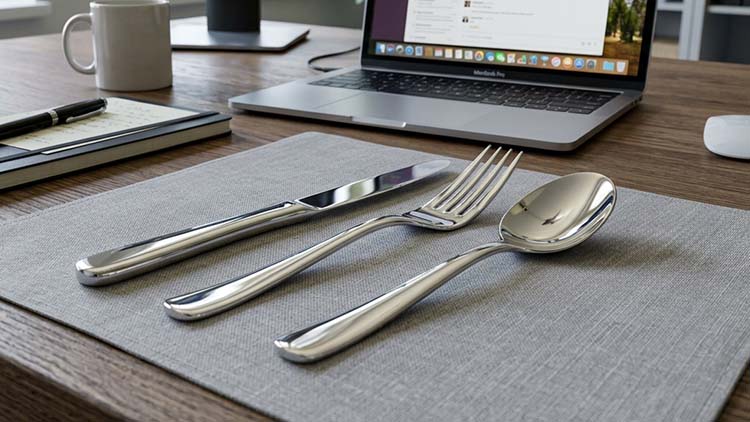
For wholesale and OEM buyers, understanding this process can help you evaluate a manufacturer's polishing capabilities and, more importantly, determine whether the supplier can maintain consistent quality across a large production order.
What Is Mirror Finish Flatware?
A mirror finish is a highly polished stainless steel surface with a bright, reflective appearance. Unlike PVD, a mirror finish is not a coating applied to the steel. It is created by mechanically refining and polishing the surface until it becomes smooth enough to reflect light with minimal scattering.
The final appearance depends on several factors, including:
- Stainless steel material and surface quality
- Initial grinding and preparation
- Abrasive selection
- Polishing wheels
- Polishing compounds
- Machine speed and pressure
- Processing time
- Operator experience
This is why two products made from the same stainless steel grade can still have noticeably different polishing quality.
How Is Mirror Finish Flatware Made?
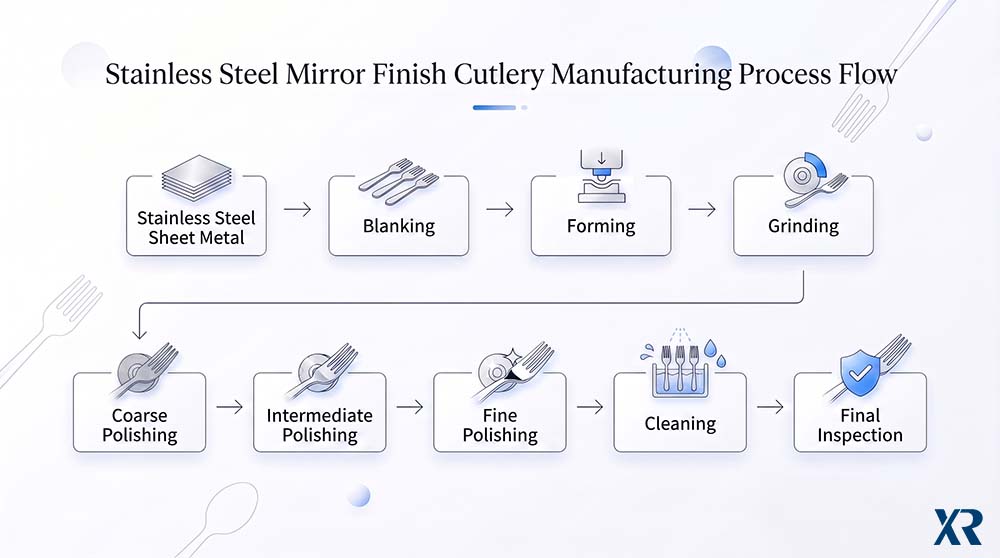
Creating a consistent mirror finish requires several stages rather than a single polishing operation. The exact sequence can vary depending on the product design, stainless steel grade, and required surface appearance, but the general process follows this progression:
Stainless Steel Sheet → Blanking → Forming → Grinding → Coarse Polishing → Intermediate Polishing → Fine Polishing → Cleaning → Final Inspection
Step-by-Step Mirror Polishing Process
Let's look at the key stages that transform a formed stainless steel component into a highly reflective piece of flatware.
Step 1 — Grinding and Surface Preparation
After stainless steel sheet is blanked and formed into a fork, spoon, knife, or other flatware shape, the surface may contain imperfections from cutting, forming, handling, and previous processing.
Common issues include:
- Pressing or forming marks
- Burrs and sharp edges
- Scratches
- Uneven surface areas
- Visible processing lines
Before polishing can begin, these imperfections need to be removed or reduced.
Grinding is usually performed with abrasive belts or grinding wheels. The purpose of this stage is surface correction rather than creating shine.
A properly prepared surface provides a consistent foundation for the subsequent polishing stages.
Step 2 — Coarse Polishing with Sisal Wheels
Once the surface has been prepared, the polishing process begins with sisal buffing wheels.
Sisal wheels are made from natural sisal fibers and are relatively firm compared with softer cloth wheels. When combined with an appropriate abrasive compound, they provide strong cutting action and are commonly used during the earlier polishing stages.
The main purposes of sisal polishing are to:
- Remove finer marks left by grinding
- Further level the stainless steel surface
- Reduce visible abrasive lines
- Prepare the surface for finer polishing
At this stage, the objective is not yet to produce the final mirror effect.
Instead, the goal is to create a more uniform surface with progressively finer polishing marks that can be removed during the following stages.
Step 3 — Intermediate Polishing with Cotton Cloth Wheels
After the coarse polishing stage, the process moves to cotton cloth buffing wheels.
Cotton wheels are softer than sisal wheels and are generally used with finer polishing compounds. They help refine the surface and reduce the microscopic imperfections left by the earlier stages.
Several factors influence the result at this stage:
- Cloth wheel construction
- Abrasive compound
- Wheel speed
- Contact pressure
- Polishing time
- Product positioning
As the surface becomes smoother, its ability to reflect light improves and the characteristic gloss of a mirror finish begins to develop.
Step 4 — Fine and Final Mirror Polishing
The final polishing stage uses finer abrasive compounds and softer polishing materials, which may include fine cotton or flannel wheels depending on the product and required finish.
The purpose is to reduce the remaining micro-scratches and further increase surface reflectivity.
A true mirror appearance does not come from one particular wheel or one machine. It is the result of the entire sequence:
- Proper surface preparation
- Controlled grinding
- Progressive abrasive refinement
- Appropriate polishing wheels
- Suitable polishing compounds
- Consistent machine parameters
- Skilled operator control
The final result should be a smooth stainless steel surface with bright, even, and highly reflective appearance.
Sisal Wheel vs. Cotton Cloth Wheel
The choice of polishing wheel is an important part of the manufacturing process.
| Feature | Sisal Wheel | Cotton Cloth Wheel |
|---|---|---|
| Material | Natural sisal fiber | Cotton cloth |
| Typical stage | Coarse / intermediate polishing | Intermediate / fine polishing |
| Cutting ability | Relatively high | Lower and more refined |
| Main purpose | Remove and refine surface marks | Improve smoothness and gloss |
| Surface effect | More aggressive refinement | Finer surface finish |
The exact polishing sequence can vary according to the flatware design, stainless steel grade, surface condition, and required finish.
Why Does Mirror Finish Quality Vary Between Suppliers?
A supplier may be able to produce an attractive mirror finish on a single sample, but maintaining the same appearance throughout a large production order is considerably more demanding.
Small variations in:
- Polishing pressure
- Processing time
- Wheel condition
- Abrasive compound
- Machine settings
- Raw material surface
- Operator handling
can affect the final appearance.
For B2B buyers, this means a single approved sample should not be the only measure of a supplier's manufacturing capability.
The more important question is:
Can the supplier reproduce the same finish across the entire production batch?
Common Quality Problems in Mirror Finish Flatware
During quality inspection, several defects can indicate problems with the polishing process.
Uneven Shine
Some areas may appear brighter while others look dull or cloudy. This can result from inconsistent polishing pressure, processing time, or surface preparation.
Visible Scratches
Fine lines or "ghost marks" may remain visible under direct lighting when earlier grinding or polishing marks have not been sufficiently removed.
Over-Polishing
Excessive polishing can affect defined edges, corners, or decorative details. This can be particularly noticeable around fork tines, handle patterns, or other detailed areas.
Burn Marks and Heat Discoloration
Excessive friction and heat during polishing can sometimes cause bluish, yellowish, or otherwise discolored areas on the stainless steel surface.
Inconsistent Gloss Between Batches
Different production batches may show variations in brightness if there are differences in raw material, polishing consumables, equipment settings, or process control.
How to Evaluate Mirror Finish Flatware from a Supplier
For importers, wholesalers, retailers, and brand owners, evaluating the polishing quality of a supplier is important before placing a large order.
1. Check the Reflectivity
A good mirror finish should have a bright and relatively uniform reflection across the main visible surfaces.
2. Inspect Under Direct Light
Strong lighting can reveal scratches, polishing lines, cloudy areas, and other surface imperfections that may not be obvious under normal lighting.
3. Check Curved and Detailed Areas
Pay particular attention to:
- Spoon bowls
- Fork shoulders
- Knife surfaces
- Handle edges
- Decorative patterns
These areas can be more difficult to polish consistently.
4. Compare Multiple Pieces
Do not evaluate only one sample. Compare several pieces from the same batch to check whether the gloss and surface appearance are consistent.
5. Inspect Production Samples
For large-volume orders, production samples or pre-shipment inspections provide a more realistic indication of how consistently the manufacturer can reproduce the approved standard.
A supplier's polishing capability should be evaluated across multiple pieces and production batches, not from a single showroom sample.
How Does XR Cutlery Control Mirror Finish Quality?
At XR Cutlery, mirror polishing combines production equipment, multiple polishing stages, process control, and experienced operators.
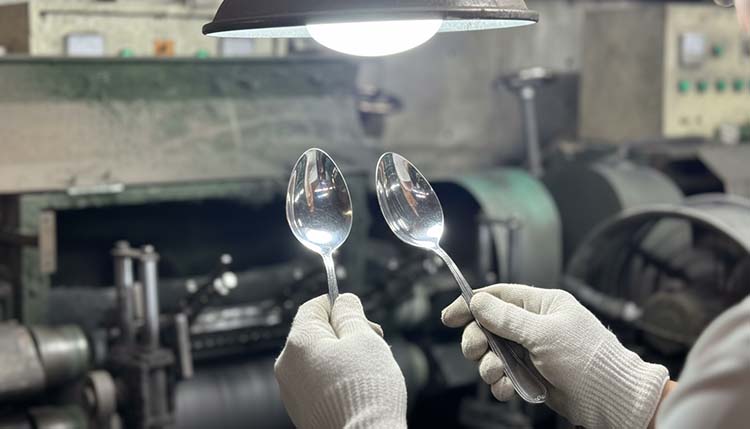
1. Automated and Semi-Automated Polishing
Automated and semi-automated equipment helps standardize important polishing parameters and improve consistency during production.
At the same time, operators monitor the process, adjust equipment when necessary, and handle product positioning and finishing requirements.
2. Multiple Polishing Stages
We maintain separate stages for grinding, coarse polishing, intermediate polishing, and fine polishing rather than relying on a single polishing operation.
This allows surface imperfections to be progressively reduced instead of being covered by a final polishing step.
3. Experienced Operators
Automation provides process consistency, while experienced operators are important for handling different product shapes, monitoring wheel conditions, and making adjustments when required.
Complex shapes and detailed designs may also require additional manual finishing.
4. In-Process and Final Inspection
Quality checks can be performed at different stages of production to identify surface problems before the products reach final packaging.
Inspection focuses on factors such as:
- Surface brightness
- Visible scratches
- Polishing marks
- Surface smoothness
- Shape and edge condition
- Batch consistency
For large-volume orders, maintaining consistent polishing quality throughout the production batch is one of the key requirements for successful flatware manufacturing.
Can Mirror Finish Flatware Be Customized for My Brand?
Yes. Mirror finish stainless steel flatware can be used as the basis for a wide range of wholesale and OEM/ODM projects.
Depending on the project, customization can include:
- Custom handle designs
- Product dimensions
- Weight and thickness
- Logo application
- PVD colors
- Surface finishes
- Product combinations
- Retail packaging
- Gift packaging
- Private label packaging
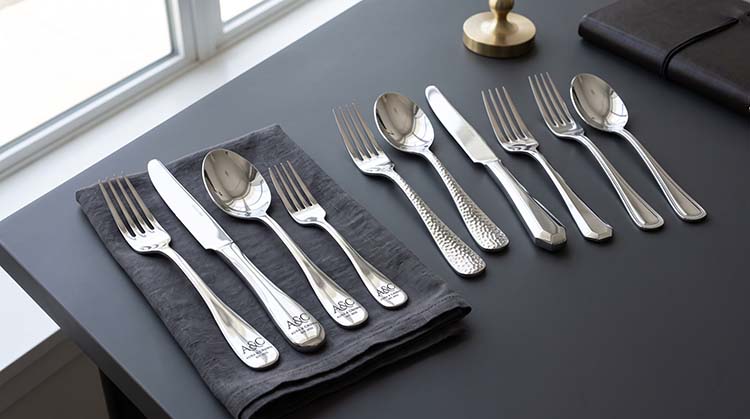
OEM Customization Options
For buyers who want to customize an existing XR design, OEM services can include:
Custom Logo
Brand logos can be applied through methods such as laser engraving or die stamping, depending on the design and required appearance.
Custom Surface Finishes
A mirror-polished surface can remain as the final finish or serve as a base for other treatments, including PVD colors such as gold, black, rose gold, or rainbow.
Custom Thickness and Weight
Different thicknesses and weights can be developed according to the intended market, product positioning, and desired hand feel.
Custom Packaging
Packaging can be developed for different sales channels, including retail boxes, gift sets, private-label packaging, and e-commerce requirements.
ODM Product Development
For buyers developing a completely new product, XR Cutlery can support ODM development based on:
- Sketches or drawings
- Product references or photos
- Physical samples
- Design concepts
The development process can include design optimization, tooling development, material selection, prototype production, and sample approval before mass production.
Mirror Finish for Wholesale and Large-Volume Orders
Mirror finish flatware is widely used in wholesale and commercial applications because of its classic appearance and versatility.
XR Cutlery supplies existing mirror finish designs for bulk orders while also supporting customized OEM/ODM projects.
Our manufacturing capabilities include:
- 20+ years of flatware manufacturing experience
- 8,000㎡ production facility
- 500+ existing flatware models
- Large-volume production capability
- Wholesale supply
- OEM/ODM development
- Private label support
- Custom logo and packaging
For buyers purchasing tens of thousands, hundreds of thousands, or millions of pieces, the focus is not only on achieving a bright finish but also on maintaining consistent quality throughout the production process.
Mirror Finish vs. Other Flatware Finishes
Mirror finish is only one of several surface options available for stainless steel flatware.
| Finish | Appearance | Typical Style |
|---|---|---|
| Mirror | Bright and highly reflective | Classic / Premium |
| Brushed | Matte with directional texture | Modern |
| Matte | Soft and low-reflective | Contemporary |
| Hammered | Textured and decorative | Luxury / Decorative |
| PVD | Colored and decorative | Modern / Premium |
It is also important to distinguish between surface finish and coating.
Mirror polishing is a mechanical surface-finishing process, while PVD is a coating process. This means a mirror-polished stainless steel surface can also be used as the base for certain PVD finishes.
For example:
Mirror Polishing → Cleaning → PVD Gold
Frequently Asked Questions
What's the best stainless steel for mirror finish flatware?
18/10 stainless steel is commonly used for premium flatware because of its corrosion resistance and suitability for polishing. Other stainless steel grades can also be polished to a reflective finish. The final result depends on the material quality, surface condition, and polishing process.
What is a sisal polishing wheel used for?
Sisal wheels are relatively firm and provide strong cutting action. They are commonly used during earlier polishing stages to refine the surface and remove marks left by grinding.
What is a cotton buffing wheel used for?
Cotton cloth wheels are softer than sisal wheels and are generally used with finer polishing compounds to further refine the stainless steel surface and increase gloss.
How do manufacturers achieve a mirror finish on stainless steel?
A mirror finish is created through a sequence of grinding and progressively finer polishing operations. The combination of surface preparation, abrasive compounds, polishing wheels, equipment settings, and operator control determines the final appearance.
Does a mirror finish wear off?
A mirror finish is not a coating. It is the polished surface of the stainless steel itself. However, everyday use can create fine scratches over time, which may gradually reduce the original level of reflectivity.
Is mirror polishing more expensive than other finishes?
Mirror polishing generally requires more processing stages, polishing consumables, equipment time, and labor than simpler surface finishes. The actual cost depends on the product design, material, order quantity, and required finish quality.
Conclusion
A high-quality mirror finish flatware product is the result of a controlled manufacturing process rather than a single polishing operation. From initial grinding and surface preparation to sisal wheel polishing, cotton cloth polishing, and final fine polishing, each stage contributes to the final appearance.
For B2B buyers, the key consideration is not simply whether a supplier can produce one attractive sample. The more important question is whether the manufacturer can maintain the same polishing quality across an entire production batch.
For more than 20 years, XR Cutlery has specialized in stainless steel flatware manufacturing for international wholesale and OEM/ODM customers. With large-volume production capabilities, multiple polishing stages, experienced operators, and quality control throughout production, we provide mirror finish flatware for wholesalers, importers, retailers, hospitality suppliers, and private label brands.
Looking for mirror finish flatware for wholesale or a custom OEM/ODM project? Contact XR Cutlery to discuss your product requirements.