
Magnetic vs Non-Magnetic Stainless Steel Flatware: Which Should You Source?
Struggling to decide between magnetic and non-magnetic flatware? This confusion can lead to costly sourcing mistakes. Let's clear this up so you can choose the right material with confidence.
The best stainless steel flatware isn't determined by whether it's magnetic. Magnetism simply indicates the steel's crystalline structure, not its quality or safety. Non-magnetic 18/10 (304) offers superior rust resistance for premium use, while magnetic 18/0 (430) provides a durable, cost-effective option for mass-market applications.
For over 20 years, I've helped international buyers navigate the world of stainless steel flatware. One of the most common questions I get is about magnetism. A client will often start the conversation with, "I heard good flatware shouldn't be magnetic. Is this correct?" It's a persistent myth that using a magnet is a good quality test. The reality is far more nuanced and important for your business. Let's move beyond the magnet test and look at what really matters when sourcing flatware: the material grade itself.
Which is better, magnetic or non-magnetic stainless steel?
You're trying to choose the right material for your product line, but the conflicting advice is confusing. Choosing wrong could mean customer complaints about rust or you overpaying for features you don't need.
Neither is universally "better." Non-magnetic steel like 304 (18/10) is better for high-end uses due to its superior corrosion resistance. Magnetic steel like 430 (18/0) is better for budget-conscious or high-volume products because it offers great performance at a lower cost.
At its core, the difference comes down to the steel's atomic structure, which is determined by its composition. We mainly deal with two types in flatware manufacturing:
- Austenitic Stainless Steel1 (Typically Non-Magnetic): Grades like 304 (also known as 18/8 or 18/10) contain chromium and a significant amount of nickel. The nickel alters the steel's crystal structure, making it non-magnetic and providing excellent resistance to corrosion from acids, salts, and moisture. This is why it’s the top choice for premium hotel and restaurant lines where flatware is washed constantly.
- Ferritic Stainless Steel2 (Magnetic): Grades like 430 (or 18/0) contain chromium but very little to no nickel. Its iron-based crystal structure makes it magnetic. While it doesn't have the elite rust resistance of 18/10, it's still highly durable, perfectly food-safe, and more affordable. This makes it an intelligent choice for casual dining, wholesale, and large-scale retail.
Interestingly, even non-magnetic 304 steel can become slightly magnetic through "cold-working"—the process of stamping and forming the steel into a fork or spoon. This proves that a simple magnet test is an unreliable way to judge overall quality.
What grades of stainless steel are non-magnetic?
You're sourcing for a premium brand and want to ensure you get the best non-magnetic option. Simply asking for "non-magnetic" isn't specific enough. An unscrupulous supplier could provide a lower-quality material that fits the description but fails in performance.
The primary non-magnetic grade for high-quality flatware is 304 stainless steel, commonly marketed as 18/8 or 18/10. This grade is the industry standard for premium, non-magnetic flatware due to its excellent rust resistance. Another non-magnetic grade, 201, should generally be avoided for flatware.
When buyers specify non-magnetic, they are usually looking for the performance of austenitic steels. However, not all austenitic steels are created equal.
- 304 (18/8 or 18/10): This is the champion of non-magnetic flatware. The numbers refer to its composition: 18% chromium and 8% to 10% nickel. That nickel content is the key ingredient that provides superior protection against rust and corrosion, justifying its higher price. It's the material we recommend to clients building a high-end hospitality or retail brand.
- 201: This is the cautionary tale. 201 grade is also austenitic and non-magnetic, but it achieves this by replacing most of the expensive nickel with cheaper manganese. While the price is attractive, its corrosion resistance is significantly lower than 304. We've seen buyers who sourced 201 flatware face issues with rust spots and staining, especially after repeated dishwasher cycles. As a professional, you should always specify "304" to avoid this.
- 316: Known as "marine grade," this steel contains molybdenum for ultimate corrosion resistance, even against saltwater. While it's an exceptional material, it is cost-prohibitive and complete overkill for flatware.
What food grade stainless steel is magnetic?
You need a cost-effective flatware solution for a large-volume order without compromising on safety. The myth that "magnetic is bad" might be pushing you towards expensive materials, unnecessarily shrinking your profit margins. Let's debunk that.
Many food-grade stainless steels are magnetic, and they are often the most practical choice. 430 (18/0) is a very common magnetic grade for everyday flatware. Furthermore, knives are almost always made from magnetic 420 or 410 steel to achieve necessary hardness and a sharp edge.
Magnetism is not a flaw; it's a property tied to function and cost-effectiveness. In our factory, we produce millions of pieces of magnetic flatware that meet stringent international safety standards like FDA and LFGB.
- 430 (18/0): This is the workhorse of the flatware industry. The "18/0" signifies 18% chromium and 0% nickel. Its ferritic structure makes it magnetic. For clients like large retailers, chain restaurants, or wholesalers, 430 is a fantastic choice. It offers good durability, a nice finish, and excellent value. Don't let its magnetic property fool you; it's a safe and reliable material.
- 420 / 410 (Martensitic Steel): This is where magnetism is directly linked to a critical function: hardness. You cannot make a good knife from soft, non-magnetic 304 steel. You need a hardenable, martensitic steel like 420. This allows us to heat-treat the blade to hold a sharp, durable edge. So, even in the most expensive 18/10 flatware set, the knives will be magnetic by design. This isn't a defect; it's a sign of proper engineering.
Comparison Between 316, 304, 430, 420, 410, and 201 Stainless Steel for Flatware
You're looking at spec sheets with a list of steel grades and need to make a smart business decision. Choosing based only on price or a single feature could result in a product that is wrong for your market.
For flatware, choose 304 (18/10) for premium, high-rust-resistance needs. Choose 430 (18/0) for the best balance of cost and performance in mass-market applications. Use 420 for all knives. Avoid 201 for its poor durability. 316 and 410 are less common for flatware.
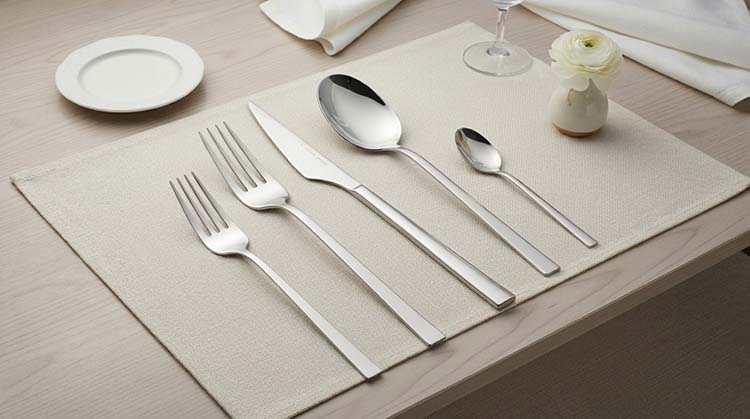
Let's put it all together. The right choice depends on your target market, price point, and performance requirements. Here is the framework I use to advise my clients:
| Grade | Common Name | Magnetism | Key Feature | Best For | Relative Cost |
|---|---|---|---|---|---|
| 304 | 18/8, 18/10 | No | Excellent Corrosion Resistance | Premium Retail, Hotels, Restaurants | High |
| 430 | 18/0 | Yes | Best Cost-Performance Balance | Mass Retail, Casual Dining, Wholesale | Medium |
| 420 | - | Yes | Hardenable for Sharp Edge | Knives Only | Medium-High |
| 201 | - | No | Low Cost | Not Recommended for Flatware | Low |
| 410 | - | Yes | Hardenable (Less than 420) | Budget Knives, Industrial Use | Medium |
| 316 | Marine Grade | No | Ultimate Corrosion Resistance | Medical, Marine (Overkill for Flatware) | Very High |
As a professional buyer, it's time to put away the magnet. The real way to ensure quality is to act like a professional sourcer.
- Specify the Grade: Don't ask for "good quality." Ask your supplier for "SS304" or "SS430." Be precise.
- Request Documentation: Ask for a material test report or composition certificate. Any reputable manufacturer, including us at XR Cutlery, will have this data. This is your only true guarantee.
Conclusion
Stop the magnet test. The best flatware choice balances cost, use, and durability by selecting the right steel grade—not by checking for magnetism. Be specific and ask for documentation.