
Is Forged Flatware Better Than Stamped Flatware?
Sourcing stainless steel cutlery can be confusing. You encounter technical terms that seem to imply a hierarchy of quality, leaving you to wonder if you're making the right choice for your business. This confusion often leads to uncertainty about whether you are overpaying for a feature or compromising on the quality your customers expect. The key to confident procurement is understanding that the best forged flatware isn't automatically superior; it's about matching the right manufacturing process to your specific product goals.
The short answer is no, forged flatware is not inherently better than stamped flatware. Forging is a manufacturing process ideal for creating thicker, more sculptural designs by shaping a heated metal billet. Stamping, which involves cutting and forming flatware from stainless steel sheets, is highly efficient and versatile for a wide range of styles. The best choice depends entirely on your desired design, weight, material specifications, and budget.
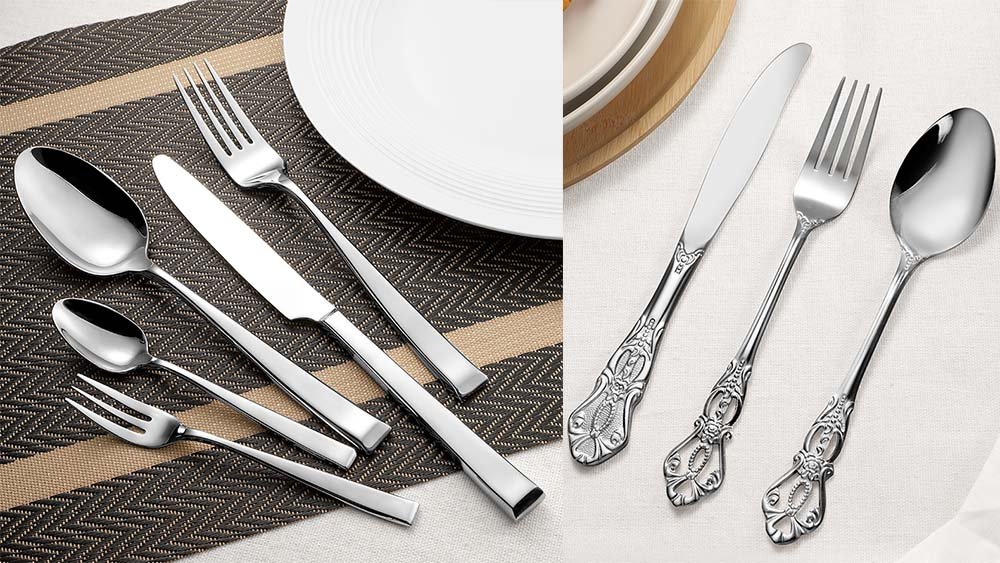
Understanding this distinction is the first step toward making a truly informed purchasing decision. Instead of relying on process names as a proxy for quality, it's time to look deeper at what each method offers. Let's break down the real differences so you can select the flatware that delivers the best value and quality for your market.
What Are the Key Differences Between Forged and Stamped Flatware?
Navigating the flatware sourcing process often feels like trying to decipher a foreign language. You see terms like "forged" and "stamped" used to describe products, but are you confident you know what they actually mean for your final inventory?
Forged flatware is formed by applying pressure to a heated metal billet, shaping it into the final product. In contrast, stamped flatware is produced by cutting shapes from large sheets of stainless steel and then pressing them into form. Forging suits intricate, heavy-set designs, while stamping is optimized for efficiency and consistency in high-volume production.
Dive Deeper: The Manufacturing Methods
To make a smart choice, you need to understand the fundamentals of how each type of flatware is made. While both methods can produce high-quality results, their processes, strengths, and ideal applications are quite different.
The Forging Process
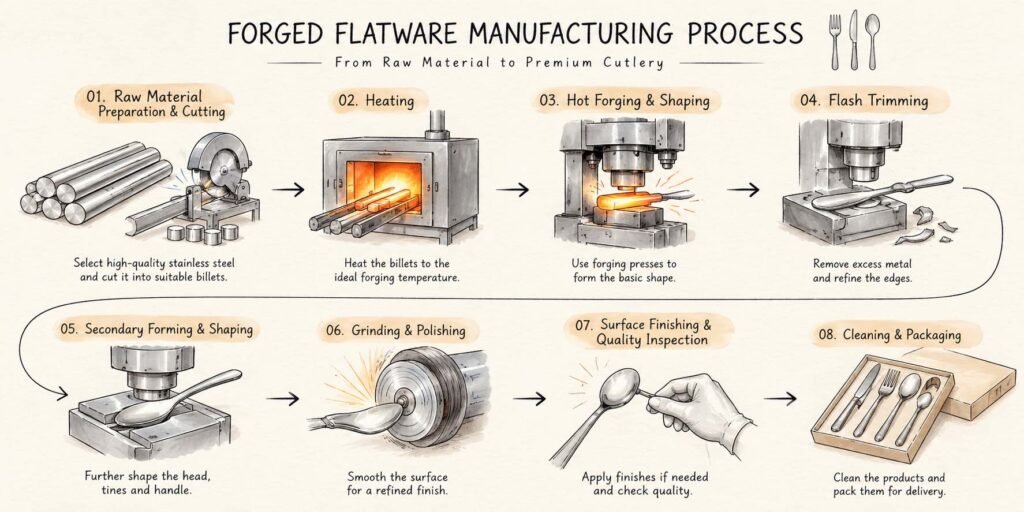
Forging is a classic metalworking technique. It starts with a solid piece of stainless steel, often a billet or rod, which is heated to make it malleable. This heated metal is then placed into a die and subjected to immense pressure, forcing it to take the shape of the mold. Key steps typically include:
- Material Preparation: Cutting metal billets to the correct size.
- Heating: Bringing the billets to a specific temperature for shaping.
- Forging: Using a press or hammer to mold the metal.
- Trimming and Coining: Removing excess material (flash) and refining the shape.
- Finishing: Grinding, polishing, and applying any surface treatments.
This process is excellent for creating flatware with substantial, three-dimensional handles and a noticeable heft.
The Stamping Process
Stamping is a more modern, high-efficiency manufacturing method. It begins with a large coil or sheet of stainless steel of a specific thickness. This sheet is fed into a series of presses that perform different operations in sequence. The typical steps are:
- Blanking: Cutting the basic outline of the fork, spoon, or knife from the steel sheet.
- Stamping/Forming: Pressing the blank into a die to create its shape, such as the bowl of a spoon.
- Trimming: Refining the edges for a smooth finish.
- Finishing: Polishing and applying surface treatments like mirror, satin, or PVD coating.
Stamping is incredibly versatile and allows for a wide array of designs, from simple and elegant to modern and decorative.
Forged vs. Stamped Flatware at a Glance
| Comparison | Forged Flatware | Stamped Flatware |
|---|---|---|
| Manufacturing Process | A metal billet is heated and formed under pressure. | A flat sheet of metal is cut and pressed into shape. |
| Material Form | Typically starts as a metal rod or billet. | Typically starts as a sheet or coil of stainless steel. |
| Design Flexibility | Ideal for thick, structural, and three-dimensional designs. | Highly versatile for a wide range of flat and formed designs. |
| Weight | Often designed to be heavier, but depends on the mold. | Determined by the thickness of the steel sheet and design. |
| Appearance | Can achieve a robust, sculptural look. | Can produce classic, modern, and minimalist styles. |
| Production Efficiency | Process can be more complex and slower per piece. | Excellent for automated, high-volume, and continuous production. |
| Tooling | Requires robust forging dies. | Requires precision stamping dies. |
| Typical Positioning | Often used for premium, heavy-duty product lines. | Applied across all market segments, from mass-market to high-end. |
It's crucial to remember that these are general tendencies. As a manufacturer with over 20 years of experience, I've seen complex, high-end stamped products and simple, cost-effective forged ones. The process itself does not dictate the final quality.
Does Forged Flatware Feel Stronger and More Durable?
Your brand's reputation can be made or broken by the perceived quality of your products. When customers complain about flimsy forks or spoons that bend in ice cream, you naturally look for a stronger alternative. But is choosing forged flatware the guaranteed solution to this problem?
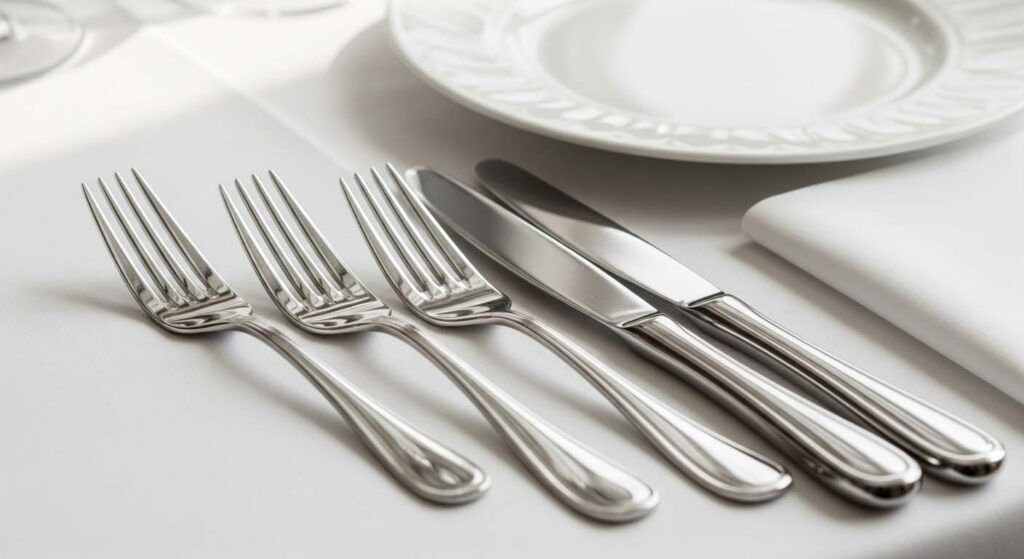
Not necessarily. While some forged flatware is intentionally designed to be heavier and thicker, the manufacturing method itself is not a guarantee of superior strength or durability. The resilience of a piece of cutlery is determined more by its material grade (e.g., 18/10 stainless steel), thickness, and overall structural design.
Dive Deeper: Separating Perception from Specification
Customers often associate weight with quality. A heavier fork feels more substantial and luxurious. However, as a buyer, you must look beyond this initial feeling and focus on measurable data.
The Truth About Weight and Thickness
The perception that forged flatware is always heavier comes from its common use in premium, thick-handled designs. However, a manufacturer can create a heavy piece of stamped flatware by simply using a thicker steel sheet. Conversely, a forged piece can be designed to be lightweight.
- Weight is a design choice, not a process outcome. A heavy fork might feel premium to one user but unwieldy and uncomfortable to another. The ideal weight depends on your target market and their expectations.
- Specify your requirements clearly. When I work with B2B clients, I advise them to move away from ambiguous terms like "heavy duty" or "premium weight." Instead, provide exact specifications. Define the target weight in grams and the material thickness in millimeters for each item, along with acceptable tolerances. This ensures you get exactly what you paid for.
Evaluating True Strength and Durability
The argument that forging creates a stronger internal grain structure has some metallurgical basis. However, in the context of everyday dining, this difference is often negligible if the stamped product is well-engineered.
Several factors are far more critical to a flatware piece's durability than its forming method:
- Material Grade: 18/10 (304) stainless steel offers superior corrosion resistance compared to 18/0 (430), making it more durable in the long run, especially in commercial dishwashers.
- Product Thickness: A thicker spoon or fork tine is inherently more resistant to bending, regardless of how it was made. This is one of the most important factors for durability.
- Structural Design: The "weakest point" of a piece of flatware is often where the handle meets the head (the neck of a fork or spoon). A well-designed product reinforces this area to prevent bending.
- Knife Blade Construction: For knives, the key is the blade material (often 420 stainless steel for a good cutting edge) and how securely it is attached to the handle.
For any bulk order, I always recommend requesting samples and performing physical tests. Try to bend the fork tines. Check the sturdiness of the spoon at its neck. This hands-on evaluation tells you more about durability than any marketing term.
How Do Design and Cost Compare Between Manufacturing Methods?
You're looking for a flatware collection that stands out aesthetically, but you also have a budget to maintain. You've heard that forged flatware offers a premium look but comes with a higher price tag. Is this always the case, or is the reality more nuanced?
Generally, forged flatware can accommodate thick, sculptural designs that are difficult to replicate with stamping, and these complex designs often cost more. However, stamped flatware provides immense design versatility and cost-effectiveness at scale. An elaborate stamped design with special finishes can easily be more expensive than a simple forged one.
Dive Deeper: Balancing Aesthetics and Budget
The choice between forging and stamping directly impacts both the visual possibilities and the final unit cost. Understanding this relationship is key to developing a successful product line.
Design Possibilities with Forged Flatware
Forging excels where significant material thickness and three-dimensional shaping are required, especially in the handle. This process allows for:
- Substantial, ergonomic handles that have a commanding presence.
- Intricate, sculptural details like twists, grooves, and embossed patterns.
- A seamless transition from a thick handle to a thinner fork head or spoon bowl.
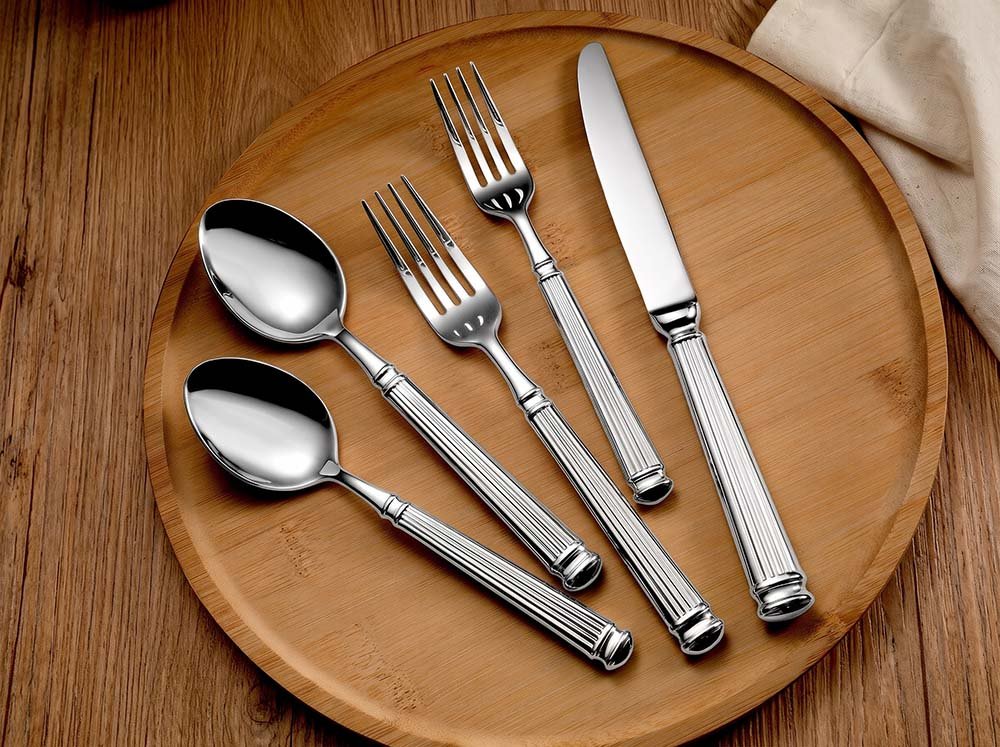
A great example from our own production line is a pattern featuring a forged Roman column handle. This design showcases the strengths of forging. It has a distinct, three-dimensional architectural handle with a mirror-polished finish. We use 420 stainless steel for the knife to ensure a lasting edge and 18/10 (304) stainless steel for the forks and spoons for maximum corrosion resistance. This type of high-end forged flatware is perfect for luxury hotels, fine dining restaurants, and premium private label brands seeking a differentiated product.
The Versatility of Stamped Designs
Do not underestimate the design potential of stamped flatware. Its adaptability makes it the backbone of the global flatware industry. Stamping is perfect for:
- Classic and timeless patterns with clean lines and elegant curves.
- Modern and minimalist designs that emphasize simplicity and function.
- A wide variety of surface finishes, including mirror, matte/satin, sandblasted, hammered textures, and PVD coatings (in gold, black, rose gold, etc.).
Because the tooling is so precise, stamping can achieve remarkable consistency across millions of pieces, making it ideal for large retailers, hotel chains, and wholesalers.
A Breakdown of Cost Factors
The idea that "forged is expensive, stamped is cheap" is an oversimplification. The final cost of any piece of flatware is a complex equation. As a manufacturer, these are the variables we calculate for every quote:
- Raw Material: The grade and market price of the stainless steel.
- Material Weight: The total amount of steel used per piece. A heavy stamped fork can cost more than a light forged one.
- Manufacturing Complexity: The number of steps in the forging or stamping process.
- Tooling & Mold Development: The cost of creating new dies, which can be significant for unique designs.
- Production Efficiency: The number of pieces that can be made per hour.
- Polishing Requirements: The level of polishing (e.g., basic tumble vs. multi-step mirror polish) dramatically affects labor costs.
- Surface Finishing: Special treatments like PVD coating add cost.
- Order Quantity: Larger orders reduce the per-unit cost due to economies of scale.
A simple, high-volume forged flatware design might be more affordable than a small-batch, complex stamped design with a titanium PVD coating. Always request quotes based on detailed specifications.
How Do You Choose the Right Flatware for Your Business?
You understand the technical differences, but now you face the final decision. You're ready to place a bulk order but are caught between choosing a process instead of a product. How do you translate your brand's unique needs into a clear specification for your supplier?
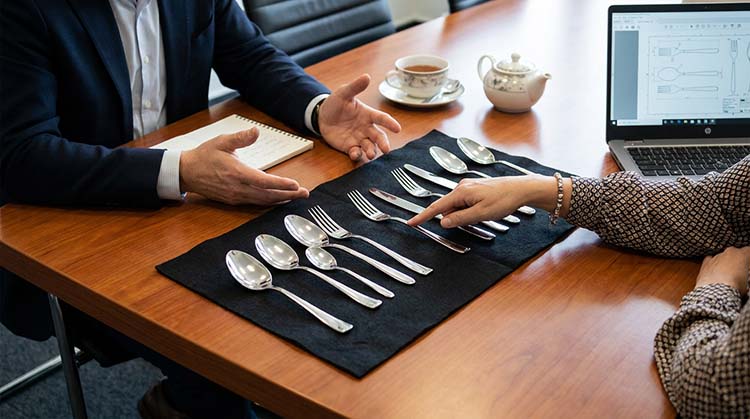
The most effective approach is to define your product requirements first, independent of the manufacturing method. Specify your target market, desired weight, material grade, and design. Then, request samples made with both processes and evaluate which one—forged or stamped—best delivers the quality and value you need.
Dive Deeper: A Practical Guide for Procurement
Your role as a buyer is to source the best possible product for your specific business context. This means matching the flatware's characteristics to your customers' expectations and your company's commercial goals.
Matching the Process to Your Business Model
Different businesses prioritize different attributes. Here’s how various buyers might approach the decision:
- Hotels and Restaurants (HoReCa): Durability, weight, and ease of cleaning are paramount. A heavy, well-balanced piece—whether forged or stamped from thick steel—can enhance the dining experience. The main focus should be on 18/10 stainless steel for high-frequency dishwashing and a design that resists bending.
- Premium Tableware Brands: Design differentiation, hand-feel, and perceived value are critical. Here, the sculptural possibilities of forged flatware can be a major selling point. However, a unique stamped design with a high-end PVD finish can be just as exclusive.
- Supermarkets and Retail Chains: Consistency, attractive packaging, and a competitive price point are key. The efficiency and scalability of stamped flatware make it a natural fit for standardized, large-volume retail programs.
- Wholesalers and Distributors: You need a balanced portfolio. It makes sense to offer a range of products: cost-effective stamped sets for volume sales and a few premium forged flatware patterns to cater to higher-end clients.
Your Pre-Sourcing Checklist
Before you even contact a supplier, you should have a clear vision for your product. I always find that conversations are most productive when a buyer comes prepared. Define these key parameters first:
- Target Market: Who is the end user? (e.g., budget restaurant, luxury hotel, home cook)
- Stainless Steel Grade: 18/10 (304), 18/0 (430), or 420 for knives?
- Product Thickness: Specify in millimeters for the handle and functional end.
- Piece Weight: Define the target weight in grams for each item.
- Dimensions: Overall length and width.
- Design & Finish: Provide reference images, handle style, and desired surface (e.g., mirror, satin).
- Quality Requirements: Define standards for edges, polishing, and consistency.
- Order Quantity: Your estimated volume will heavily influence the price.
Final Checks Before Placing a Bulk Order
Once you've shortlisted suppliers and reviewed initial samples, a final verification is essential to prevent costly surprises.
- Confirm the Process: Ask the supplier to confirm if the final product will be forged or stamped.
- Verify Specifications: Use a caliper and scale to check that production samples match your required thickness and weight.
- Inspect the Details: Evaluate the handle shape, edge smoothness, and overall finish quality.
- Approve Production Samples: Sign off on "golden samples" that will serve as the standard for mass production.
- Establish Tolerances: Agree on acceptable variances for weight, dimensions, and cosmetic defects.
By focusing on these concrete details, you ensure that the product you receive aligns perfectly with the product you designed, regardless of the manufacturing method.
Frequently Asked Questions
Is forged flatware always heavier than stamped flatware?
No, not always. Weight is a design specification, not a direct result of the process. While many forged designs are intentionally heavy, a stamped piece made from a thick steel sheet can be just as heavy or even heavier than a lightweight forged piece.
Which type of flatware is better for restaurants?
Both can be excellent choices. The decision should be based on the restaurant's brand, budget, and operational needs. A high-end steakhouse might prefer a heavy forged knife, while a high-volume cafeteria would benefit from durable, cost-effective, and easy-to-clean stamped flatware made from 18/10 stainless steel.
Is 18/10 stainless steel always forged?
No. The material grade (like 18/10 or 18/0) is completely independent of the manufacturing process (forged or stamped). You can find both forged and stamped flatware made from 18/10 stainless steel. The grade refers to the chromium and nickel content, which determines corrosion resistance.
Absolutely. A stamped piece made with a thick gauge of 18/10 stainless steel, given a flawless mirror polish and a well-balanced design, can feel every bit as premium as a forged one. The overall execution—including design, material, weight, and finish—is what creates a premium feel.
Conclusion
The central takeaway is that forged flatware is not automatically better than stamped flatware. Each manufacturing process serves a different purpose. Forging is ideal for certain thick, sculptural, and heavy-set designs that command a premium feel, while stamping offers incredible versatility and efficiency for a vast range of styles suitable for mass production and retail. The ultimate quality of a fork, spoon, or knife depends on the synergy of design, material grade, thickness, weight, and finishing quality—not on the process name alone.
For importers, wholesalers, and brands sourcing stainless steel cutlery, the most important task is to focus on the product's final specifications. You are buying a finished product, not a manufacturing method. By clearly defining your requirements and evaluating samples against those standards, you can select the process that delivers the best combination of quality, aesthetics, and commercial value for your market.
If you are looking for a manufacturing partner who understands these nuances and can deliver high-quality OEM/ODM flatware at scale, we can help. To discuss your specific product needs and explore both our forged and stamped manufacturing capabilities, contact the team at XR Cutlery today.