
Is black stainless steel silverware healthy?
That sleek, modern black cutlery looks stunning on a dinner table, but a nagging thought appears. Is that black coating just paint that will chip off into your food?
Yes, high-quality black stainless steel flatware is perfectly safe. The color comes from a food-grade PVD coating that is molecularly bonded to the steel. To guarantee safety, always purchase from suppliers who provide certifications like FDA or LFGB to prove it is non-toxic.

This is one of the most common questions I get from clients. When I first showed a sample of black flatware to Jacky, my B2B client from a major US brand, he was skeptical. He held it up to the light and asked, "Linc, is this going to peel?" I had to explain that it's not paint at all. It's a high-tech process that fundamentally changes the surface of the steel. Let's dig into how it's made and why, when done right, it's completely safe for you and your customers.
How Is Black Stainless Steel Cutlery Made?
You see beautiful black cutlery but have no idea how it gets that color. You're rightly worried it's a cheap spray-on finish that will wear off quickly into meals.
Black stainless steel cutlery is made using a high-tech process called Physical Vapor Deposition (PVD). This method bonds a thin, incredibly durable, food-safe layer of a titanium alloy onto the stainless steel surface inside a vacuum chamber, creating a lasting black finish.

In my factory, the PVD machine is one of our most advanced pieces of equipment. It's a world away from simply painting something. First, we place the finished, polished stainless steel pieces onto special racks inside a large vacuum chamber. Then, we introduce a small amount of a titanium alloy. We use extreme heat and an electric arc to vaporize this alloy into a plasma mist. This metallic mist then deposits onto the cutlery, piece by piece, atom by atom. Because it happens in a vacuum and at high temperatures, the a-coating doesn't just sit on top; it forms a molecular bond with the steel itself. This is why it's so incredibly hard and resistant to scratches and chipping. It's a scientific process, not a cosmetic one.
What Is the Coating on Black Silverware?
The word "coating" can sound temporary and flimsy. You're worried it will scratch or peel, ruining the aesthetic and potentially contaminating food. What exactly is it made of?
The best and most common coating is PVD (Physical Vapor Deposition), which uses titanium alloys to create a hard, scratch-resistant surface. A cheaper, less durable alternative is electroplating, which is more prone to wearing off with heavy use over time.
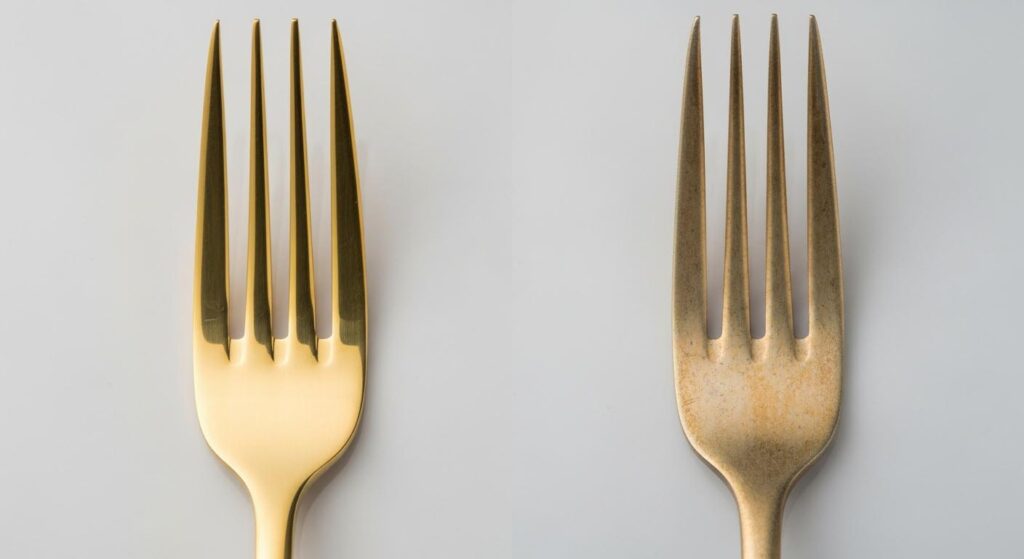
Understanding the difference between coating types is crucial for any buyer. Think of it as the difference between high-quality house paint and a cheap can of spray paint.
PVD (Physical Vapor Deposition)1
This is the premium choice. As I explained, the process creates a ceramic-like layer that is bonded to the steel. It's extremely durable, scratch-resistant, corrosion-resistant, and completely food-safe. It's also a more environmentally friendly process because it doesn't involve toxic chemical baths. For any commercial application, from a restaurant to a hotel, PVD is the only option I recommend. It's built to last.
Electroplating2
This is a more traditional and cheaper method. The cutlery is submerged in a chemical solution containing black metals like black nickel. An electric current causes these metal particles to deposit onto the surface. While it can produce a nice look, the bond is purely superficial. With repeated washing, scraping, and daily use, an electroplated finish can and will eventually wear off or chip. It's simply not durable enough for most applications.
Why Is Black Stainless More Expensive?
You get a quote for black cutlery and see it's significantly higher than standard stainless. Why does a simple color change lead to such a big jump in cost?
Black stainless steel is more expensive because of the complex and costly PVD process. It requires specialized vacuum machinery, expensive materials like titanium, and significant extra production time and energy, all of which drive up the final price.

The price difference is purely a reflection of the manufacturing reality. When I calculate the cost for a client, there are three main factors that make black PVD cutlery more expensive. First, the PVD machine itself is a massive capital investment, and it consumes a lot of energy to operate. Second, the raw materials for the coating, typically titanium or zirconium alloys, are far more expensive than plain stainless steel. Third, it's a time-consuming batch process. We have to carefully rack each piece, run the hours-long cycle, and then un-rack them. This extra labor and machine time adds a significant cost to every single fork, knife, and spoon. You aren't just paying for a color; you're paying for an advanced, value-adding technological process.
Which Is Better, Black Stainless Steel or Stainless Steel?
You love the modern aesthetic of black, but the classic shine of stainless steel is timeless and practical. You don't want to make an expensive mistake by choosing the wrong one.
Neither is better; the right choice depends on your priorities. Black stainless offers a unique, modern style but requires gentler care. Traditional stainless steel provides classic durability, easy maintenance, and a lower cost, making it the most practical choice for many.

This is the final conversation I have with most buyers. It's not about good versus bad, but about matching the product to its intended use. I always break it down for them with a simple comparison.
| Feature | Black Stainless Steel (PVD) | Traditional Stainless Steel |
|---|---|---|
| Aesthetics | Modern, luxurious, unique, and stylish. | Classic, traditional, and timeless shine. |
| Durability | Very durable and scratch-resistant, but the coating can be damaged by extreme abuse or very harsh abrasives. | Extremely durable. Scratches show on the metal itself but there is no coating to wear off. |
| Maintenance | Requires slightly gentler care. Avoid abrasive scrubbers to protect the finish's longevity. | Very easy to care for. Can withstand virtually any cleaning method. |
| Cost | Higher price due to the complex PVD coating process. | More economical and budget-friendly. |
| Best For | Upscale restaurants, hotels, special events, and design-forward homes. | Everyday home use, high-volume restaurants, catering, and institutions. |
Conclusion
High-quality black flatware is safe, durable, and beautiful. The choice between black and traditional stainless steel is simply a matter of your style, budget, and intended use.