
Inside a Stainless Steel Flatware Factory: A Look at the Complete Production Process
Ever wonder how a simple sheet of metal becomes an elegant fork or spoon? The transformation is a precise craft, and understanding it can help you source truly high-quality products.
The production of stainless steel flatware involves ten key steps: cutting, blanking, rolling, trimming, flat polishing, embossing, pressing, curved polishing, cleaning, and packaging. Each stage is carefully controlled in our factory to ensure durability, consistency, and a superior finish for every single piece.

It's a fascinating journey from a raw, industrial material to a polished piece of tableware you'd be proud to have in your home or restaurant. Over my 20+ years in this business, I've seen how crucial each step is to the final outcome. Cutting corners at any stage shows in the final product. Let’s walk through the entire process together, step by step, to see exactly how we bring our flatware designs to life right here in our factory.
01. Cutting
The entire process begins with a simple, precise cut. We start with large, high-quality stainless steel sheets. These sheets are carefully cut down into smaller, more manageable sizes that are perfectly suited for the specific flatware pieces we plan to produce. This initial step is all about efficiency and making the most of our raw materials.
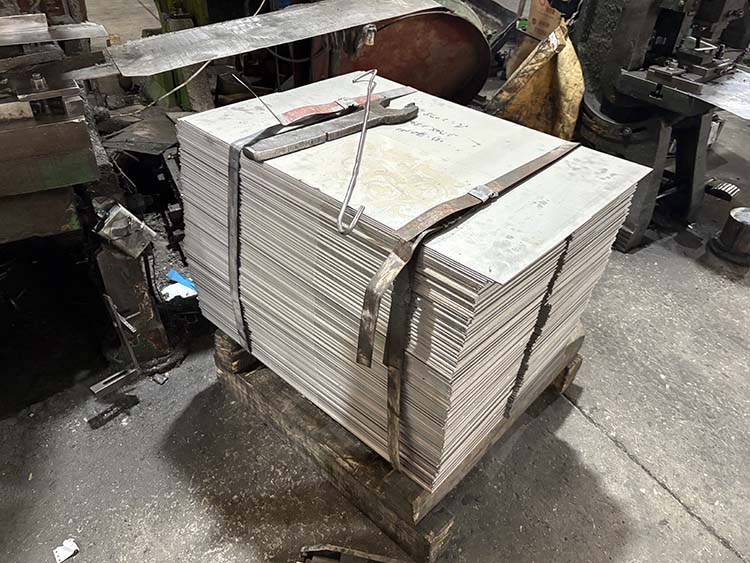
This first stage is more critical than it sounds. It sets the foundation for everything that follows. We work with various grades of stainless steel—like 18/10 for high-end markets or 18/0 for more commercial needs—and each has its own characteristics. Our long-term relationships with suppliers ensure we get consistent, high-quality raw material, which reduces variations down the line. We use automated cutting machines to guarantee that every piece is cut to the exact same dimensions. This precision is vital for minimizing waste, which helps us maintain competitive pricing for our clients. It also ensures that the material fed into the next stage is uniform, which is the first step toward creating a consistent final product. A small error here can get magnified with every subsequent step, so we get it right from the start.
02. Blanking
Think of this step like using a cookie cutter, but with immense force and for high-strength steel. The properly sized steel sheets from the cutting stage are fed into a powerful stamping press. Using a precision die, the machine punches out the basic, flat outline of a spoon, fork, or knife. This creates a "blank," which is the very first recognizable shape of the future utensil.
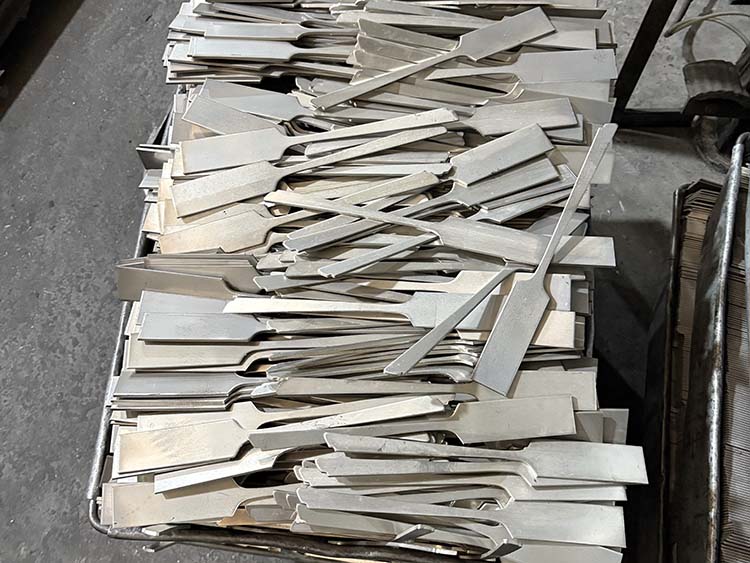
The quality of the blanking process depends entirely on the quality of the mold, or die. Over the years, I've learned that investing in high-precision, durable dies is non-negotiable. A worn or poorly made die will leave rough edges and create inconsistent shapes. Here in Jieyang, we are at the heart of the industry's supply chain, which gives us a huge advantage in mold development. We can create new, custom molds for our ODM clients quickly and cost-effectively. This allows brands to develop unique, differentiated products. The blanking process is loud and powerful, but its goal is pure precision. A clean, perfectly shaped blank is essential for the smooth flow of the following stages and is the true birth of the flatware piece.
03. Rolling
A flat piece of stamped metal doesn't feel very good in your hand. The rolling stage is where we give the flatware its initial substance and balance. The blanks are passed through heavy rollers that apply pressure to specific areas. This process thins out certain parts, like the bowl of a spoon, while allowing other parts, like the handle, to remain thicker. This adjusts the thickness across the piece to improve its strength and feel.
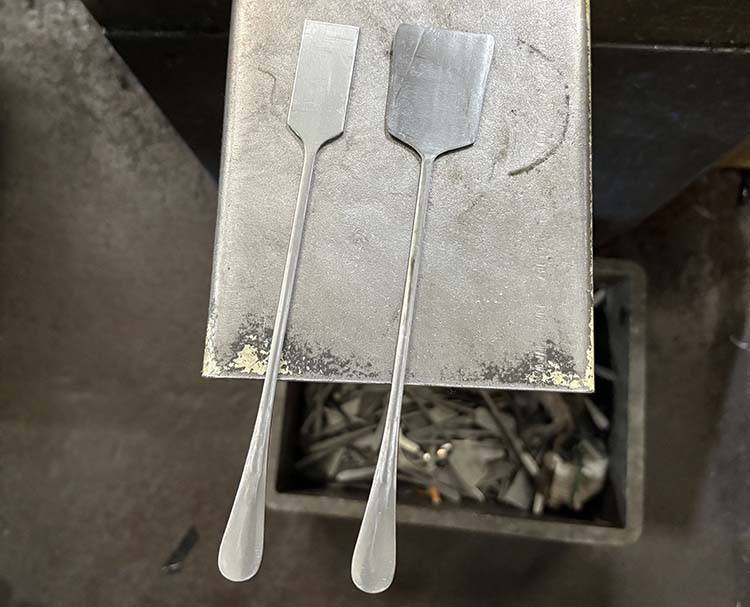
This is a step where artistry meets engineering. The goal is to create perfect balance and an ergonomic feel. For our clients in the European and American markets, this is a huge deal. They want flatware that has a certain heft and feels substantial, not flimsy. By carefully controlling the rolling process, we can create a thicker handle that gives the piece a weighted, premium feel. This is something that cheaper, mass-produced flatware often lacks. Getting the balance right—so the utensil doesn't feel top-heavy or handle-heavy—is a skill we've honed over two decades. It’s a subtle detail, but it’s one of the key differences between a basic utensil and a piece of high-quality tableware. It’s all about how it feels in the user's hand.
04. Trimming
After the blanking and rolling processes, the flatware pieces have small amounts of excess material and rough, sharp edges. The trimming stage is designed to clean this up. Each piece is placed into a trimming press, where another die precisely cuts away the excess material, refining the outline and ensuring every piece has the exact same dimensions and a smooth profile.
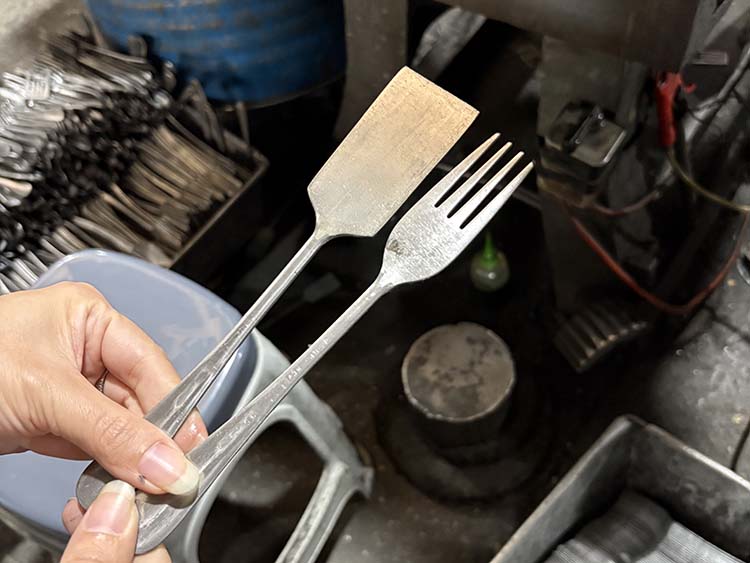
This step is absolutely critical for both safety and aesthetics. No one wants to use a fork or spoon with a sharp, unfinished edge. For me, a smooth edge is one of the clearest indicators of quality. This is one of the first major quality control checkpoints in our production line. While the process is largely automated for consistency, we also incorporate manual checks to ensure perfection. Our workers inspect the pieces to make sure there are no burrs or imperfections left behind. This hybrid approach—combining the speed of automation with the detailed eye of a skilled worker—allows us to produce millions of pieces that are not only identical in shape but also safe and comfortable to handle. This commitment to detail is what our B2B clients, from hotel chains to retail brands, rely on.
05. Flat Polishing
Now that the shape is defined, it's time to start working on the finish. The flat polishing stage is the first step in creating that beautiful shine. The pieces are run through machines that use abrasive belts to polish the flat surfaces, like the top of the handle and the back of the spoon bowl. This process removes any surface imperfections, scratches, or marks left over from the earlier manufacturing stages.
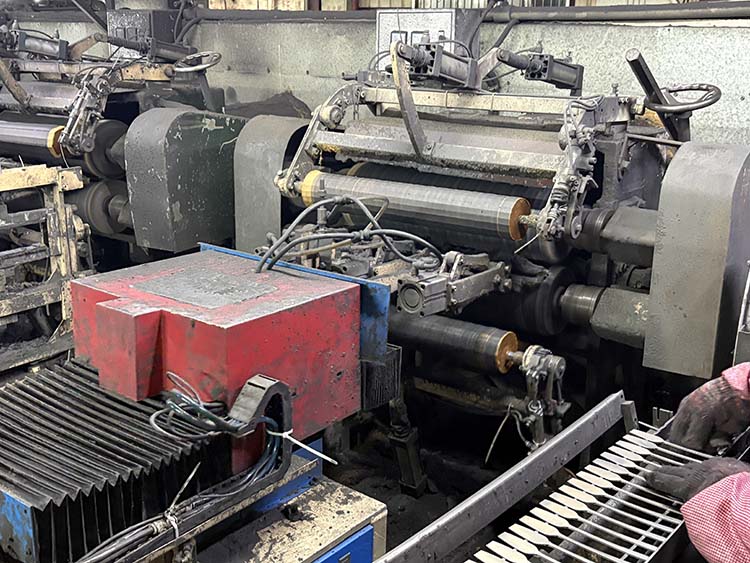
Think of this as sanding a piece of wood before you varnish it. You need a perfectly smooth surface to start with if you want a flawless final finish. This initial polish is not meant to create the final mirror shine; rather, it prepares the surface for what's to come. It creates a uniform, smooth base that will allow the final polishing stages to be much more effective. Without this step, you would see tiny waves, scratches, and inconsistencies under the final polish, especially on a mirror finish. We use different grades of abrasives to gently work the surface until it's perfectly even. It’s a methodical process that lays the groundwork for the premium look and feel that we are known for.
06. Embossing
This is where we add personality and branding to the flatware. During the embossing stage, we use a powerful press to imprint patterns, logos, or other design details onto the handles. Whether it’s a simple brand logo for an OEM client or an intricate decorative pattern for a high-end retail line, this is done with a custom-made steel stamp that presses the design permanently into the metal.
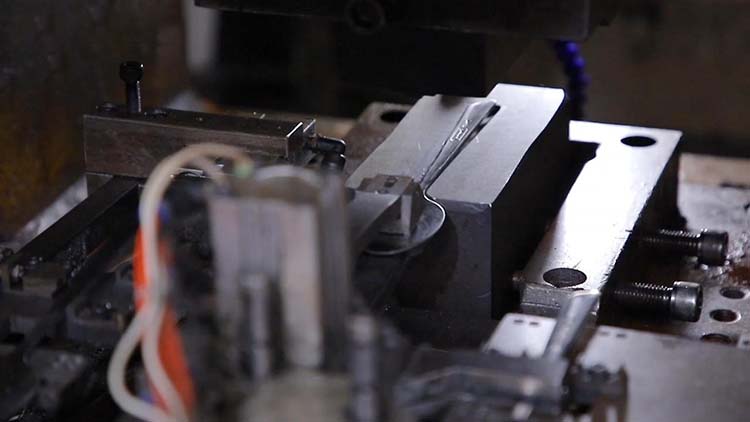
This step is especially important for our brand customers who want to create a unique identity. A well-executed embossed logo or pattern makes the product feel much more exclusive than a simple laser-engraved one. The key here is immense pressure and a perfectly crafted die. The pressure has to be just right—too little and the pattern is weak, too much and it can deform the handle. We can develop dies for almost any design, from complex scrollwork to minimalist logos. This capability allows us to work closely with brands to bring their vision to life. It's a key part of our OEM and ODM services1 and helps our clients stand out in a crowded market.
07. Pressing
Until now, the spoon or fork is still mostly flat. The pressing stage is where each piece gets its final, three-dimensional shape. The flat, embossed blank is placed into a forming press. Here, a die with the final curvature—like the deep bowl of a soup spoon or the gentle curve of a fork—presses the blank into its final, functional form.
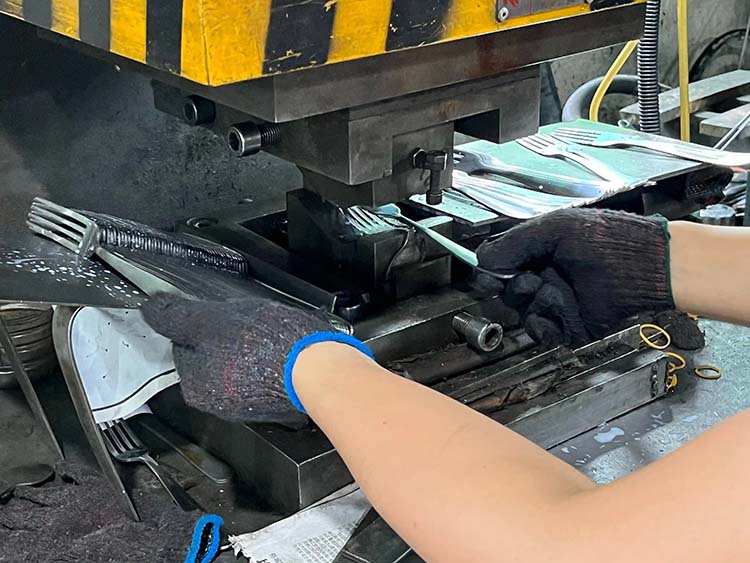
This step is what makes a spoon a spoon. It's all about functionality and ergonomics. The shape of the spoon bowl determines how well it holds liquid. The curve of the fork's body determines how it rests in your hand and how easily it picks up food. We've spent years refining the shapes of our 500+ designs to ensure they are not just beautiful but also perfectly functional. For example, a dinner fork needs a different curve than a dessert fork. Getting these profiles right requires a deep understanding of how people use flatware. This is where our experience serving diverse markets, from high-end hotels to everyday retailers, really pays off. We know what works, and we make sure every piece we produce is shaped for a perfect user experience.
08. Curved Polishing
This is our core competency and where the magic really happens. After the piece has its final shape, it undergoes a multi-step polishing process focused on the curves and edges—the tines of the fork, the inside of the spoon bowl, and all around the handle. This is often done with a combination of semi-automated machines and the skilled hands of our expert workers, who use polishing wheels to achieve a flawless finish.
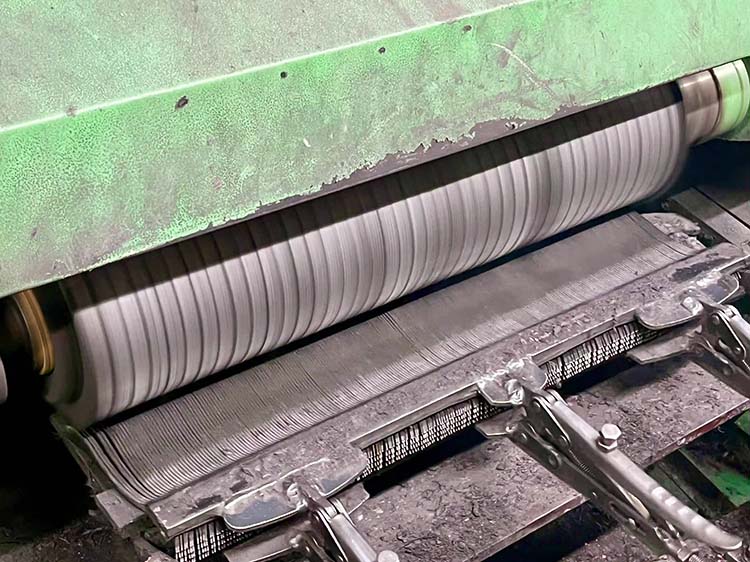
This is what separates premium flatware from the rest. Anyone can polish a flat surface, but achieving a perfect, uniform shine on complex curves without leaving any tiny scratches or wave marks takes immense skill. We pay special attention to the areas that the user interacts with most, like the edges of the spoon bowl and the space between the fork tines. Our polishing team is highly trained to create an incredibly smooth, comfortable, and visually stunning finish. Whether the client wants a brilliant mirror polish, a modern matte finish, or a rustic stone wash, it’s this detailed final polish that delivers the high-end look. It’s a labor-intensive step, but it's the reason why our products meet the high standards of luxury brands and importers worldwide.
09. Cleaning
After all the stamping, pressing, and polishing, the flatware is covered in dust, oils, and polishing compounds. The cleaning stage is a crucial final step to ensure the product is not only beautiful but also hygienic and food-safe. The pieces go through a multi-stage ultrasonic cleaning process, which uses sound waves and specialized solutions to remove every last trace of residue from all surfaces, nooks, and crannies.
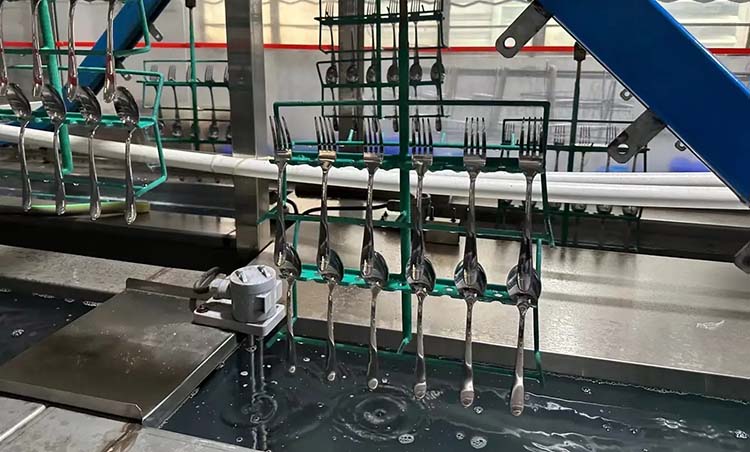
This is a non-negotiable step for meeting international health and safety standards like FDA and LFGB2. A product that looks clean isn't enough; it has to be genuinely clean on a microscopic level. Our cleaning process is thorough, ensuring that there is absolutely no residue left that could affect the taste of food or be harmful to the end-user. After the cleaning bath, the pieces are thoroughly rinsed and dried to prevent water spots. This ensures that when the flatware is finally packaged, it is in pristine condition, perfectly clean, and ready to be used straight out of the box. It’s a final guarantee of quality and safety before the product leaves our hands.
10. Packaging
The final step is inspection and packaging. Before anything goes into a box, each piece undergoes a final, rigorous quality control check. Our QC team inspects for any imperfections in shape, finish, or cleanliness. Once approved, the flatware is packed according to the customer's specific requirements. This can range from bulk packaging for wholesale, to elegant gift boxes for retail, or custom-branded packaging for Amazon FBA sellers.
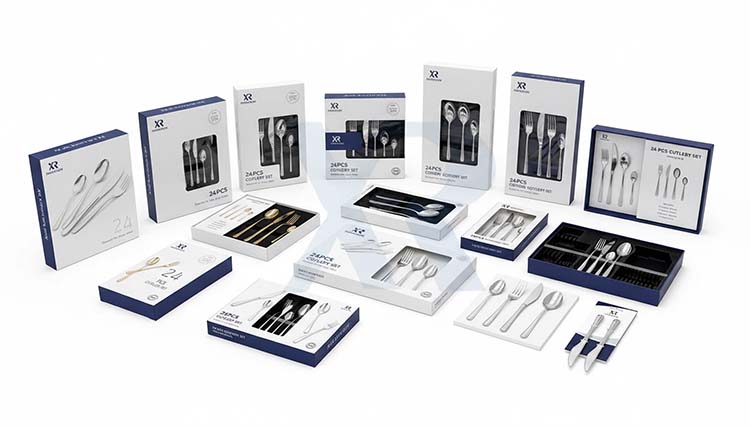
As a factory that serves a wide variety of B2B customers, our flexibility in packaging is a key service. An importer needs something different than a brand selling directly to consumers. We can handle it all. We can add FBA labels, custom barcodes, and protective sleeves. We can assemble custom sets—24-piece sets, 72-piece sets, you name it. The final QC check at this stage is our last promise to the client that what they receive is exactly what they ordered, and that it meets the high standards we've maintained through all nine previous steps. From here, the finished products are ready to be shipped to our clients all over the world.
Conclusion
From steel sheets to elegant tableware, our 10-step process ensures quality. As an experienced manufacturer, we offer reliable OEM/ODM services for your brand's needs. Let's create something great together.
If you are looking for a reliable stainless steel flatware manufacturer, please contact us. We have over 20 years of manufacturing and export experience and over 500 designs to choose from, covering high-end, classic, wedding, hammered, wooden handle, hotel, and children's series. We also offer OEM/ODM services and can develop designs from your drawings or samples.
-
XR Cutlery is a stainless steel cutlery manufacturer based in China, providing OEM/ODM services to wholesalers, retailers, and brands worldwide. ↩
-
The FDA and LFGB set specific guidelines for food-contact materials, including cleanliness and safety standards, which manufacturers must meet to ensure product compliance. ↩