
How to Import Stainless Steel Flatware From China?
Finding a reliable supplier is one of the biggest challenges for any business looking to import stainless steel flatware from China. You're navigating a massive market, trying to balance cost, quality, and delivery timelines. Get it wrong, and you could face production delays, unexpected costs, or products that don't meet your customers' standards, ultimately damaging your brand and bottom line. The key is a systematic approach that covers supplier verification, product specification, and total cost calculation from the very beginning.
To import stainless steel flatware from China successfully, you must perform due diligence on your supplier, clearly define all product specifications (material, weight, finish, packaging), approve pre-production samples, calculate the total landed cost beyond the factory price, and establish clear quality control standards before shipment. This process ensures your final product meets market, compliance, and brand requirements.
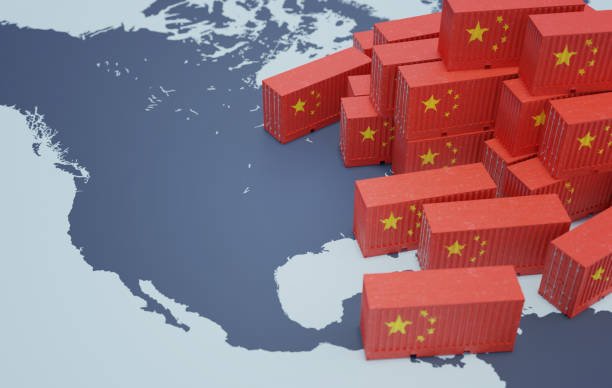
This process might seem complex, but breaking it down into manageable steps makes it straightforward. From finding the right manufacturing partner to managing logistics, each stage is critical for a profitable outcome. Let's dive into the essential steps for your next procurement project.
How Do You Find and Verify the Right Supplier in China?
Choosing a partner is the first and most critical step. You've heard about the cost advantages, but you're worried about finding a factory that can deliver consistently. A misstep here can lead to a cascade of problems later on. The solution is to understand the supplier landscape and have a clear verification process.
The best approach is to identify the type of supplier that fits your business model—be it a direct manufacturer or a specialized trading company—and then rigorously verify their capabilities before committing to an order.
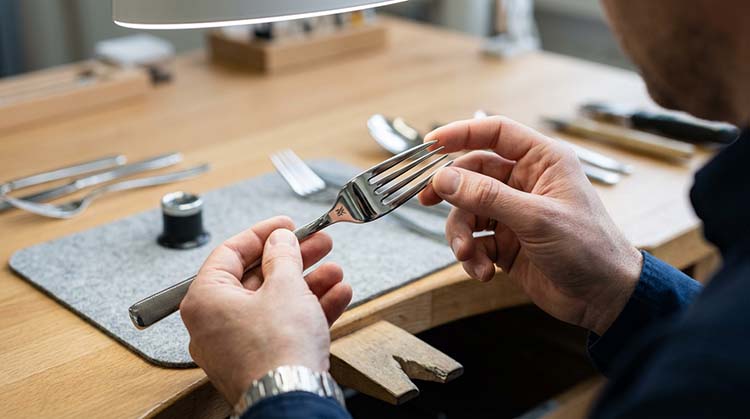
Dive Deeper: Vetting Your Manufacturing Partner
China has a mature and deeply integrated stainless steel flatware manufacturing ecosystem, particularly in clusters like Jieyang in Guangdong province. This supply chain covers everything from raw material sourcing and mold making to stamping, polishing, surface treatment, and final packaging. For importers, wholesalers, and private label brands, this means access to an enormous range of product grades, materials, and customization options.
However, not all suppliers are created equal. Your first task is to identify which type of partner aligns with your needs.
Types of Chinese Suppliers
- Manufacturer: A factory with its own production facilities. This is ideal for buyers focused on production capacity, quality control, and large-volume orders. You can directly discuss technical specifications and audit the production line.
- OEM/ODM Factory: A manufacturer that specializes in producing goods according to the buyer's unique design, brand, logo, finish, and packaging requirements. At XR Cutlery, for example, our core business is helping brands create custom flatware lines from the ground up.
- Trading Company: These companies don't own a factory but act as intermediaries, often offering a wider range of products by consolidating orders from various manufacturers. They can be helpful for sourcing diverse items but require you to confirm the actual production source.
- General Tableware Supplier: A business that may deal in stainless steel flatware alongside ceramic, glass, or other tabletop items. This can be convenient for one-stop shopping but may lack the specialized focus of a dedicated flatware factory.
How to Verify a Flatware Manufacturer
Once you've shortlisted potential partners, verification is non-negotiable. What you see on a website doesn't always reflect the reality of their production capabilities.
I always recommend buyers take these steps:
- Verify Business Credentials: Confirm the official company name, factory address, and business license. Ensure the address points to an industrial area, not just a city-center office.
- Assess Production Capacity: Inquire about the factory's production lines, key equipment, number of employees, and stated monthly output. At our 8,000㎡ facility, we can produce over 5 million pieces per month, a figure we substantiate with our production records.
- Confirm In-House Capabilities: Can the factory handle the entire process? Ask specifically about polishing, surface treatments (like PVD for gold or black finishes), logo application (laser engraving, stamping), and custom packaging assembly. Outsourcing key steps can introduce quality and lead time risks.
- Request Documentation: Ask for a full product catalog, physical samples of existing products, and any relevant quality management certificates. Remember to treat certifications as documents to be verified with the issuing body, checking their validity, scope, and applicability to your specific product.
- Consider a Factory Audit: For large or high-risk orders, a factory audit—either conducted by your team or a third-party service—is a wise investment. It provides an unbiased assessment of their quality systems and production environment.
The goal is to confirm that the factory can reliably and consistently produce the specific products you need at the volume you require.
What Product Details Must You Define Before Ordering?
Placing an order based on a picture alone is a common mistake. You're excited by a design, but you're worried the final product won't have the right feel or quality. This ambiguity leads to disputes and unsatisfactory goods. The only way to prevent this is by creating a detailed specification sheet.
Before requesting a quote, you must clearly define every technical aspect of the flatware, from the stainless steel grade and thickness to the surface finish and packaging. This becomes the basis for your contract and quality control.
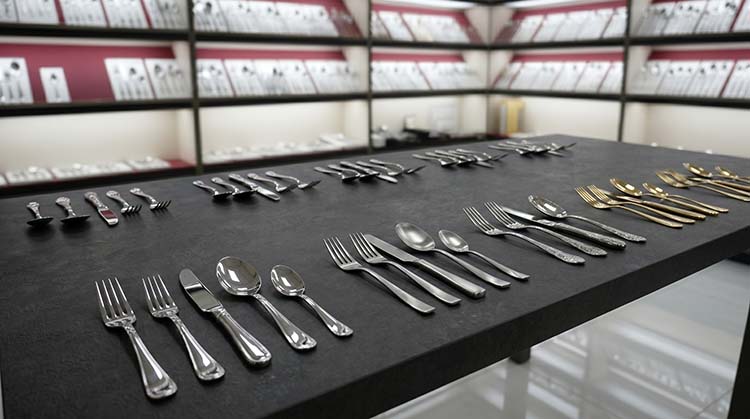
Dive Deeper: From Design to Detailed Specification
Defining your product specifications is the foundation for getting an accurate quote and ensuring the final product matches your vision. A professional manufacturer will expect and appreciate this level of detail. Here’s a breakdown of what to define.
| Specification | Key Considerations | Examples |
|---|---|---|
| Material | Must comply with your target market's food-contact regulations and meet your quality/price point. | 18/10 (304), 18/0 (430), 13/0 (410 for knives) |
| Product Type | Define every item in the set or order. | Table knives, table forks, tablespoons, teaspoons, dessert cutlery, steak knives. |
| Thickness & Weight | Directly impacts the perceived quality, durability, and cost. | e.g., Fork thickness of 2.5mm, 3.0mm, or 4.0mm. |
| Design | The overall aesthetic and functional elements. | Handle shape, overall length, proportions, series consistency. |
| Surface Finish | Determines the look and feel of the flatware. | Mirror polish, matte/satin, brushed, hammered, tumbled, sandblasted. |
| Color | Achieved through PVD (Physical Vapor Deposition) coating. | Natural silver, gold, black, rose gold, rainbow. |
| Construction | How the pieces, especially knives, are made. | Monoblock knives (single piece) vs. hollow handle knives (premium). |
| Packaging | Must be suitable for shipping, retail, or hospitality use. | Bulk pack, polybag, gift box, retail-ready set with barcodes. |
Standard Products vs. Custom OEM/ODM Orders
Your path forward depends on whether you select an existing design or create a new one.
-
Standard (Wholesale) Products: You choose from the factory's existing catalog of mature designs. This is the fastest route to market, as it typically avoids new tooling costs. It's an excellent choice for wholesalers and distributors looking to quickly add proven sellers to their lineup. Even with standard products, you still need to confirm all the specifications listed above (material, weight, finish, logo, packaging) and always get a sample.
-
Custom (OEM/ODM) Orders: This involves creating a product unique to your brand. You can customize the shape, logo, color, surface treatment, and packaging. This process is more complex and requires:
- Providing Clear Inputs: Buyers should supply technical drawings (e.g., CAD files), reference images, dimensional requirements, or even physical samples to be replicated or modified.
- Engineering and Tooling: New designs may require engineering evaluation and the development of new molds, which involves time and cost.
- Prototyping: Multiple rounds of sampling may be needed to perfect the design before mass production.
Custom orders have a higher MOQ and longer lead times, but they give you a proprietary product that sets you apart in the market. As an OEM/ODM specialist, this is where we thrive, working with brands to turn their vision into a finished product.
Crucially, always request and approve a pre-production sample before placing a bulk order. This sample is your golden standard for quality. You should inspect its material, finish, weight, dimensions, edge smoothness, color consistency, and logo placement. Once approved, this sample and its written specifications become the reference for final inspection.
How Do You Calculate the Total Cost to Import Stainless Steel Flatware from China?
Focusing only on the per-piece price from a factory is a major pitfall. You get a quote that seems incredibly low, but then you're hit with a series of unexpected charges for shipping, customs, and fees. This erodes your profit margin and makes budgeting impossible. To avoid this, you must calculate the total landed cost.
The landed cost includes every expense incurred to get the product from the factory floor in China to your warehouse door. This comprehensive view is essential for making an informed purchasing decision.

Dive Deeper: Beyond the Factory Price
An accurate cost analysis is the difference between a profitable import and a financial loss. Never compare quotes from different suppliers without first ensuring they are for the exact same product specifications and, just as importantly, the same trade terms (Incoterms).
Components of Your Total Landed Cost
Here is a checklist of potential costs to account for when you import stainless steel flatware from China:
- Product Cost: The price per piece or set from the factory.
- Tooling & Sampling Fees: One-time costs for new molds or pre-production samples, especially for custom orders.
- Customization Charges: Fees for logo application, special colors, or unique finishes.
- Packaging Costs: The cost for retail boxes, master cartons, and any special labeling.
- Inspection & Testing: Fees for third-party quality inspection or lab testing for compliance.
- Inland Transportation (China): Cost to move goods from the factory to the port or airport.
- Export Handling & Documentation: Fees charged by the forwarder in China.
- International Freight: The cost of sea or air shipping to your country.
- Insurance: Optional but highly recommended to cover loss or damage during transit.
- Import Duties & Taxes: Tariffs and taxes (like VAT or GST) levied by your country's customs authority.
- Customs Clearance & Destination Handling: Fees charged by your customs broker and the destination port/airport.
- Local Delivery: Cost to transport the goods from the destination port to your final warehouse.
Understanding MOQ, Pricing, and Payment Terms
These commercial terms are directly linked to your total cost.
- Minimum Order Quantity (MOQ): This can vary based on the product model, material, PVD color, and packaging complexity. Custom orders almost always have a higher MOQ than standard catalog items.
- Pricing: Order volume significantly impacts unit cost. Larger orders allow the factory to optimize material purchasing and production efficiency, often resulting in a lower price per piece. Your quote should always be dated and clearly state all product specifications.
- Payment Terms: A common structure for OEM orders is a 30% deposit to start production and a 70% balance payment upon completion, often before shipment or against a copy of the bill of lading. These terms should be clearly defined in your purchase order.
- Incoterms: These international trade terms define who is responsible for costs and risks at each stage. A quote listed as EXW (Ex Works) only includes the product cost at the factory gate. A FOB (Free On Board) quote includes the cost of the product plus getting it loaded onto the vessel at the Chinese port. A CIF (Cost, Insurance, and Freight) quote includes all of that plus the sea freight and insurance to your destination port. Never compare an EXW price to a FOB price directly.
How Can You Ensure Quality and a Smooth Delivery Process?
After months of development and negotiation, the last thing you want is for a shipment to arrive with widespread defects. You're worried about inconsistent colors, rough edges, or incorrect packaging. If you wait until the goods arrive at your warehouse to check for quality, it's already too late. A proactive quality control and logistics plan is essential.
The key is to establish clear, written quality standards from the start and implement inspection checkpoints before the goods ever leave the factory. This, combined with a well-planned shipping strategy, ensures a smooth final leg of your import journey.

Dive Deeper: From Production Oversight to Final Delivery
Successfully managing the final stages of your import process protects your investment and your brand's reputation. This involves meticulous quality control, avoiding common pitfalls, and choosing the right shipping method.
How to Control Quality Before Shipment
Effective quality control is not a one-time event but a continuous process.
- Define Written Standards: Your approved sample and detailed specification sheet are your primary tools. These documents should be shared with and agreed upon by the factory.
- In-Process Checks: For large or complex orders, arranging for checks during production can catch systemic issues early, saving time and money.
- Final Pre-Shipment Inspection (PSI): This is the most critical checkpoint. An inspector (either your own or from a third-party agency) should check a statistically significant sample of the finished goods. Key areas to check include:
- Visuals: Color consistency (especially for PVD), surface defects (scratches, pits), and polishing quality.
- Measurements: Conformance to dimensions, weight, and thickness specifications.
- Functionality: Edge smoothness on forks and spoons, sharpness of knives.
- Customization: Logo clarity, size, and position.
- Packaging: Correct labeling, barcodes, quantity per carton, and shipping mark integrity.
- Establish Acceptance Criteria: For an order of tens of thousands of pieces, you must agree on quality tolerance levels (AQL - Acceptable Quality Limits) before production begins.
Choosing the Right Shipping Method
Your choice depends on your budget, timeline, and order volume.
- Sea Freight: The most cost-effective option for large, bulk orders where time is not the most critical factor.
- FCL (Full Container Load): You pay for an entire container (20ft or 40ft). This is ideal for large shipments as it's more secure and often faster than LCL once at the port.
- LCL (Less than Container Load): You share container space with other importers. It's suitable for smaller shipments but can involve more handling and slightly longer transit times.
- Air Freight: Significantly more expensive but much faster. Best reserved for urgent samples, small high-value orders, or emergency restocks.
Common Mistakes to Avoid
Based on my 20+ years in this industry, here are the most frequent errors I see importers make:
- Choosing a supplier based on the lowest unit price alone.
- Failing to define and confirm material grade, weight, and dimensions.
- Skipping the sample approval step before authorizing mass production.
- Underestimating the impact of retail packaging on cost and logistics.
- Neglecting to verify import compliance and food-contact requirements for their specific market.
- Not allowing enough buffer time for production lead times, shipping, and customs clearance.
- Lacking clear, written quality acceptance standards.
For importers, wholesalers, and private label brands, working with an experienced manufacturer mitigates many of these risks. A partner like XR Cutlery understands the intricacies of bulk OEM/ODM orders. With our capacity for over 60 million pieces annually and a portfolio of 500+ product models, we are equipped to manage the entire process, from custom design and sample approval to stringent quality control and export delivery.
Finally, before you sign that purchase order, run through this final checklist.
Final Import Checklist
- Supplier and factory verification complete.
- Product models and specifications finalized.
- Stainless steel grade confirmed.
- Weight, thickness, and dimensions approved.
- Surface finish and color selected.
- Logo and packaging requirements documented.
- MOQ, full quotation, and pricing validated.
- Pre-production sample approved.
- Payment terms and Incoterms agreed upon.
- Production lead time confirmed.
- Quality inspection requirements established.
- Import compliance and documentation needs verified.
- Freight and destination charges estimated.
- Shipping schedule planned.
Frequently Asked Questions
What's the difference between FOB and EXW Incoterms?
EXW (Ex Works) means the buyer is responsible for all costs and risks from the factory's door. FOB (Free On Board) means the seller is responsible for the product costs plus all charges to get the goods loaded onto the ship at the origin port. FOB is more common for overseas buyers as it simplifies logistics within China.
Why is a pre-shipment inspection so important for flatware?
A pre-shipment inspection is your last chance to identify any quality issues before you make the final payment and the goods are shipped. It verifies that the products match your approved sample and specifications regarding finish, dimensions, weight, and packaging, saving you from costly surprises upon arrival.
How does order quantity affect the price of stainless steel flatware?
Larger order quantities generally result in a lower price per piece. This is because manufacturers can achieve economies of scale through bulk raw material purchasing, optimized machine setup, and more efficient production runs. A small order may have a higher unit cost due to fixed setup fees and less efficient processing.
What are the most common materials for stainless steel flatware?
The most common grades are 18/10 (304 stainless steel) and 18/0 (430 stainless steel). 18/10 contains nickel, offering superior corrosion resistance and a premium feel. 18/0 is nickel-free, magnetic, and a very durable and cost-effective option widely used in commercial and high-volume settings. Knives are often made from 13/0 (410/420) for better blade hardness.
Conclusion
Successfully executing a plan to import stainless steel flatware from China hinges on much more than finding a low factory price. It requires a diligent, systematic approach. Your success depends on verifying your supplier, meticulously defining product specifications, approving physical samples, calculating your total landed cost, and establishing firm quality standards. For wholesalers, distributors, retail chains, and private-label brands, the value of a reliable manufacturing partner who understands the nuances of bulk production and OEM/ODM customization cannot be overstated. This partnership ensures not only the quality of the product but also the stability and predictability of your supply chain.
If you are looking for a manufacturing partner with over two decades of experience in wholesale, OEM, and private label flatware, our team at XR Cutlery is ready to help. Contact us to discuss your project requirements and learn how we can support your next import program.