
How to choose the right cutlery series for restaurants of different styles?
You're opening a restaurant and have perfected the menu and decor. But when you look at cutlery, the endless options are overwhelming, and you're worried your choice will feel cheap or disconnected.
Match your cutlery to your restaurant's concept, durability needs, and menu. A fine dining room needs heavy, elegant pieces, while a busy bistro needs durable, easy-to-clean flatware. The style must complement the food and atmosphere.

I've seen this exact challenge play out many times. I once worked with Jacky, a professional buyer, on two projects at the same time. One was for a sleek, minimalist hotel that needed heavy, mirror-polished 18/10 flatware. The other was for a chain of rustic, farm-to-table cafes that needed stonewashed cutlery that looked intentionally worn-in and could hide scratches. The choice wasn't about which was "better," but which was right for the story each restaurant wanted to tell. Your choice sends a message to your guests the moment they sit down. Let's break down how to get it right.
How much silverware to order for a restaurant?
You're about to place a huge order for your new restaurant. You're terrified of either running out of forks mid-service or wasting thousands on inventory that just sits in a box.
Follow the "Rule of Three": order enough of each cutlery piece (fork, knife, spoon) for three times your restaurant's maximum seating capacity. This ensures you always have one set on the table, one being washed, and one in reserve.

Under-ordering is one of the most common and disruptive mistakes new owners make. A dinner rush is no time to discover you're out of clean forks. The "Rule of Three" is the industry standard we recommend to all our restaurant clients because it builds a foolproof buffer into your operations. It means that for a 100-seat restaurant, you need 300 dinner forks, 300 knives, and so on for each required utensil.
Breaking Down the "Rule of Three"
This guideline ensures your service flows smoothly without interruption.
| Par Level | Purpose | Status |
|---|---|---|
| Par 1 | For the guests. | On the tables or in use. |
| Par 2 | In transition. | Dirty and currently in the wash cycle. |
| Par 3 | The buffer stock. | Clean, polished, and ready in reserve for the next table turn. |
This system accounts for the time it takes to clear, wash, and polish your silverware. For restaurants with extremely high turnover, like a bustling lunch spot, we might even recommend a par level of 3.5 or 4. The initial investment is higher, but it prevents the costly chaos of service grinding to a halt.
What is the best finish for flatware in high traffic venues (hotels, restaurants)?
You love the look of shiny, mirror-polished flatware. But you know your restaurant's dishwasher and constant use will scratch it up, making it look old and tired within months.
A tumbled or stonewashed finish is the most practical and durable choice for high-traffic restaurants. These matte, textured finishes are designed to hide scratches and wear, maintaining their appearance far longer than a traditional mirror finish.
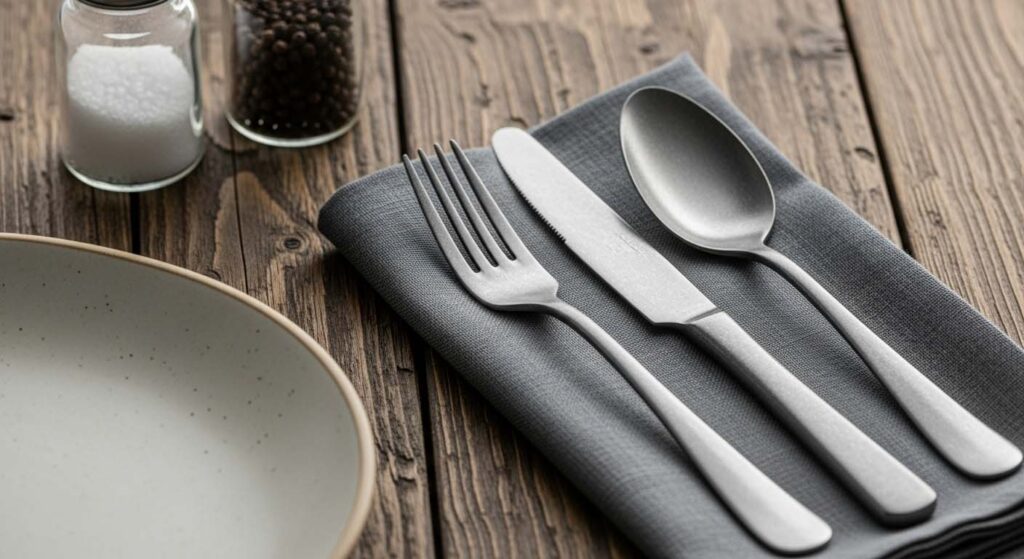
The finish on your flatware is a battle between aesthetics and practicality. While a mirror polish looks fantastic for fine dining, it's a high-maintenance choice for most venues. It shows every fingerprint and scratch, requiring constant, careful polishing. For the rugged environment of most restaurants, you need a finish that works as hard as you do. This is why we've seen a huge increase in orders for non-traditional finishes.
Choosing Your Finish Wisely
| Finish Type | Best For | Why It Works |
|---|---|---|
| Stonewashed/Tumbled | High-volume bistros, cafes, industrial-chic restaurants. | The matte, pre-worn texture excels at hiding scratches. It requires less polishing and looks great even with heavy use. |
| Satin/Brushed | Modern casual, contemporary hotels. | A good middle ground. It resists fingerprints better than a mirror polish but still offers a sleek, clean look. |
| Mirror Polish1 | Fine dining, upscale hotels, banquet halls. | The classic choice for luxury. It reflects light beautifully but demands high maintenance and careful handling to prevent scratching. |
Jacky now specifies a stonewashed finish for nearly all his casual dining clients. He says it lowers labor costs from polishing and extends the usable life of the product, directly impacting the restaurant's bottom line.
How often do restaurants replace silverware?
You're trying to create an annual budget. You know silverware mysteriously vanishes, but you have no real data on how much you should expect to lose and budget for replacing.
Most restaurants budget to replace 10-20% of their total silverware stock each year. This is known as the "attrition rate" and accounts for pieces that are lost, accidentally discarded, or damaged beyond use.

Silverware loss2 is a simple, unavoidable cost of doing business in a restaurant. Your spoons and forks will disappear, and it's essential to plan for it. They get scraped into trash cans with food, accidentally taken home by customers, or damaged in the dish pit. Ignoring this will lead to mismatched table settings and a slow decline in your professionalism. Instead of being surprised, you should treat it as a predictable operational expense. A 10-20% annual replacement rate3 is a solid benchmark. So, if you started with 300 forks, plan on buying 30 to 60 new forks over the course of the year to maintain your par levels. I advise my clients to do a full inventory count every quarter. This allows them to place smaller, more frequent orders rather than taking a big hit once a year. It also helps them spot if a particular item, like teaspoons, is disappearing faster than others, allowing them to adjust their stock accordingly. This proactive approach keeps service standards high and makes budgeting predictable.
How to properly wash silverware in a restaurant?
Your new stainless steel silverware is already getting stained and spotty. You're frustrated and worry you bought a bad batch, but the problem might be your washing procedure.
To wash silverware properly, scrape off food, then briefly pre-soak in a non-abrasive solution. Wash them in a flatware rack to prevent crowding, use a non-bleach detergent, ensure a hot rinse, and dry them immediately to prevent spots.

Inside my factory, we test our flatware against the harshest conditions, and I can tell you that 99% of spotting and early corrosion issues are due to improper washing, not defective steel. A commercial dishwasher is an aggressive environment, but with the right process, your 18/10 or 18/8 silverware should look great for years. The biggest mistake restaurants make is letting washed silverware sit and air dry in the machine. This allows mineral deposits from water droplets to etch the surface, creating permanent spots.
The 5 Steps to Sparkling Silverware
- Scrape & Pre-soak: Scrape off all food. Soak the silverware in a plastic container with a professional de-tarnishing solution for no more than 10-15 minutes. Soaking for too long, especially overnight, can pit the steel.
- Rack Correctly: Place utensils in a cylinder or flat rack with handles down. This allows the water jets to clean the most important parts. Do not overcrowd them.
- Choose the Right Detergent: Use a high-quality detergent that is free of bleach and citrus additives, as these can corrode stainless steel over time.
- Ensure a Final Rinse: The final rinse cycle should be hot enough to help water evaporate quickly. A rinse agent can also help prevent spotting.
- Dry Immediately: This is the most crucial step. As soon as the cycle is complete, the silverware must be removed and dried with a clean, lint-free towel. This single action is the key to preventing water spots.
Conclusion
Choose a cutlery style that reflects your brand, buy three times your seat count, and select a durable finish like stonewashed. Proper washing and a 10-20% annual replacement budget will protect your investment.
-
Discover why Mirror Polish is the go-to choice for luxury dining, balancing beauty and maintenance in upscale settings. ↩
-
Understanding effective strategies for managing silverware loss can help maintain your restaurant's efficiency and reduce costs. ↩
-
Learning how to accurately calculate the annual replacement rate can enhance your budgeting and inventory management. ↩