
How to choose the perfect cutlery set for your retail or wholesale business?
Your shelves are ready, but choosing which cutlery to sell is a gamble. Pick the wrong set, and you're stuck with unsold stock that ties up your cash and hurts your bottom line.
Focus on your target customer's style and budget. High-quality 18/10 stainless steel offers the best durability and perceived value, while stylish, giftable packaging and a balanced design are crucial for catching the consumer's eye.

I learned this lesson when I started working with Laura on his company's retail line. He buys for restaurants, where durability is everything. But for retail, he thinks differently. He once told me, "Linc, in a restaurant, the fork is a tool. On a retail shelf, the fork is a promise." He meant that customers buy a vision of their future dinner parties and family meals. They are buying an accessory for their home and their life. Your job as a retailer isn't just to sell steel; it's to sell that promise. Everything from the metal's weight to the box it comes in has to support that idea.
What's the best stainless steel material for retail cutlery?
You see the numbers 18/10, 18/8, and 18/0. You're worried you'll overpay for quality customers won't notice, or under-buy and get hit with complaints about rust and bending.
For most retail environments, 18/10 or 18/8 stainless steel is the best choice. The nickel content provides superior rust resistance and a tangible sense of quality that justifies a higher price point.
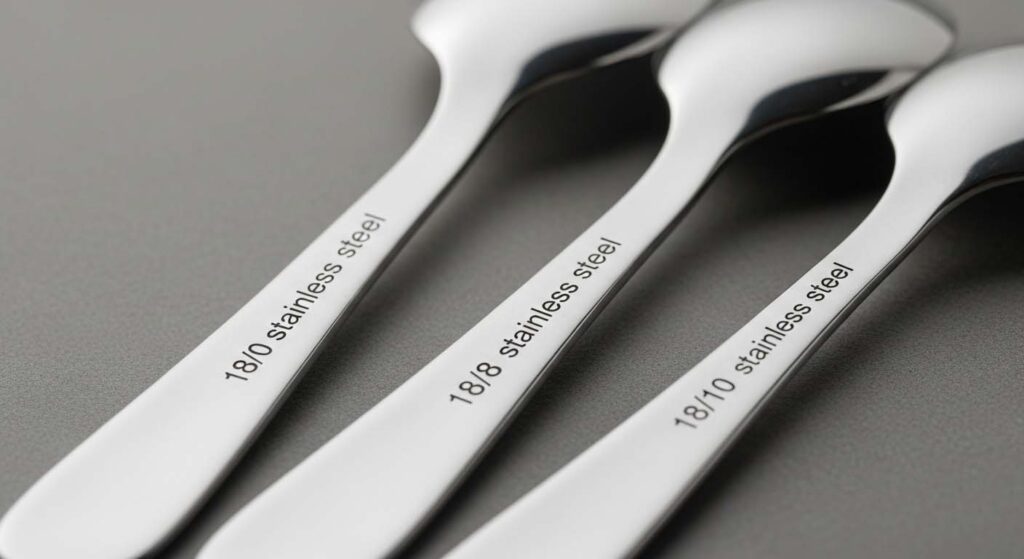
From my factory floor, I can tell you that the material is the foundation of your product's quality. While all are food-safe, their performance and perception vary wildly. Customers might not know the numbers, but they can feel the difference in weight and see the difference in shine and durability over time. Choosing the right steel grade is the first step in building a product line that customers will trust. It’s about matching the product's quality to the price and brand image you want to create.
Understanding Steel Grades
The numbers refer to the percentages of chromium and nickel in the steel alloy. Both are key to performance.
| Steel Grade | Composition | Key Benefits | Best Retail Target |
|---|---|---|---|
| 18/10 | 18% Chromium, 10% Nickel | Premium. Maximum rust resistance, best shine, heaviest feel. | High-end department stores, bridal registries, premium online brands. |
| 18/8 | 18% Chromium, 8% Nickel | Excellent. The industry standard for quality. Great durability and luster. | Mid-to-high market retailers, quality-focused home goods stores. |
| 18/0 | 18% Chromium, 0% Nickel | Budget. Most affordable, but susceptible to rust spots over time. Lighter feel. | Discount stores, mass-market retailers, promotional sets. |
Laura's brand almost exclusively uses 18/10 for their boxed retail sets. He says, "The customer is making a ten-year decision. The extra cost for 18/10 steel is a small price to pay for a decade of customer satisfaction and zero rust complaints."
How does design and finish impact sales and customer appeal?
You see minimalist, ornate, and rustic designs. You don't know which style to stock, and fear you'll misjudge your customer's taste and be left with unwanted inventory.
Design directly reflects your customer's personal style. A clean, minimalist design appeals to modern urban customers, while classic patterns suit traditional tastes. The finish—mirror, satin, or stonewashed—further defines the product's character and target audience.

Once you've chosen your material, the visual design is what will make a customer stop and look. This isn't just about making something pretty; it's about making a connection. When a customer sees a cutlery set, they are subconsciously asking, "Does this look like me? Does this fit in my home?" Your product assortment needs to answer that question for your specific target market. Trying to sell an ultra-modern Swedish design in a store that specializes in rustic farmhouse decor just won't work. The design and finish are the languages your product uses to speak to the right customer.
Matching Style to Shopper
- Classic & Ornate: Designs with scrolls, lines, and traditional shapes appeal to customers who love hosting formal dinners. These almost always look best with a high-shine mirror polish.
- Modern & Minimalist: Clean lines, simple curves, and unadorned handles are for the contemporary home. Satin finishes are very popular here, as they feel sleek and resist fingerprints.
- Rustic & Industrial: Styles that look handcrafted or utilitarian are increasingly popular. This is where a stonewashed or tumbled finish shines, as its pre-worn look suggests authenticity and durability.
In our meetings, Laura brings customer profiles. For the "young urban professional," we look at sleek, satin-finish designs. For the "suburban entertainer," we review polished, classic patterns that feel timeless. Know your customer, and the right design becomes obvious.
Why is packaging so critical for retail cutlery sets?
You've focused all your energy on the forks and knives inside the box. You don't realize that in a store, the box is half the product, and a cheap-looking one kills the sale.
Packaging is your silent salesperson on the shelf. A well-designed, sturdy gift box instantly increases perceived value, protects the product, tells a brand story, and makes the set giftable, hugely boosting sales potential.

In my factory, we pack cutlery in bulk cardboard boxes for restaurants. For retail clients like Laura's brand, we have an entirely separate packaging design team. The difference is night and day. A retail box has to do so much work. It has to grab attention from ten feet away, feel substantial in the customer's hands, protect every single piece from scratches, and look good enough to be given as a wedding gift. A great product in a terrible box will not sell. But a good product in a fantastic box will feel like a premium item. Customers can't feel the weight or balance of the fork until after they buy, but they can see and feel the quality of the box right there in the aisle. It’s their first physical interaction with your brand, and it has to be impressive. It convinces them the inside is just as good.
How do you balance price points and quality to maximize profit?
You want to offer the best quality, but you also need healthy margins. You're struggling to find that sweet spot between a great product and a price your customers are willing to pay.
Create a "good, better, best" strategy. Offer an entry-level 18/0 set for budget shoppers, a core 18/8 set for the mass market, and a premium 18/10 set with a unique finish for high-end buyers.
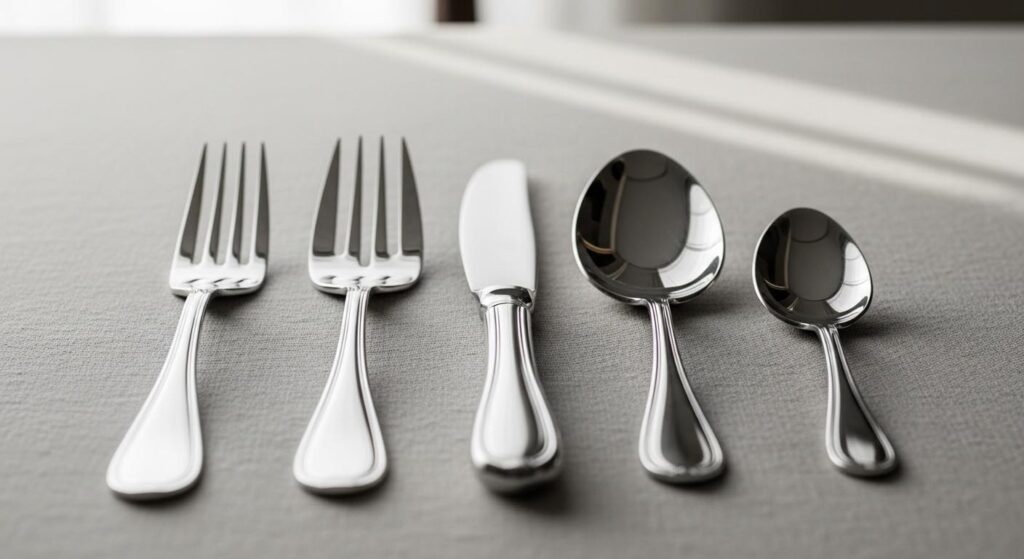
You don't need to choose just one price point. The most successful retailers cater to a spectrum of customers. By creating tiered offerings, you capture more of the market and guide customers towards the choice that's right for them. A "good, better, best" model is a classic retail strategy that works perfectly for cutlery. The "good" option is your value leader. It gets people in the door. The "better" option is your volume driver. This is where most of your sales will be. The "best" option is your aspirational product. It might not sell as many units, but it elevates the perception of your entire brand and offers the highest profit margins per sale. I work with clients to develop these ranges. We might use 18/0 steel in simple packaging for the "good" tier, our most popular 18/8 designs in a nice photo box for "better," and a unique stonewashed 18/10 set in a deluxe gift box for "best." This strategy prevents you from being "too expensive" or "too cheap" – you have an answer for every customer.
Conclusion
Choose 18/10 or 18/8 steel for quality. Match your design and finish to your customer's style, and never underestimate the power of premium, gift-worthy packaging to drive sales.