
How Long Does It Take to Manufacture Custom Flatware? A Complete OEM/ODM Timeline
Running into unpredictable lead times when sourcing products can disrupt your entire business plan. If you're looking to develop custom flatware, you've likely wondered about the real timeline from design to delivery. The uncertainty can be frustrating, making it difficult to plan marketing campaigns, stock inventory, or meet client deadlines. Fortunately, understanding the manufacturing process demystifies the timeline and empowers you to plan effectively.
Manufacturing custom flatware can take anywhere from 2 weeks for a simple wholesale order to over 12 weeks for a fully new design requiring new tooling and complex packaging. The final timeline depends heavily on factors like design complexity, tooling requirements, material choice, surface finish, order quantity, and the efficiency of the sample approval process.
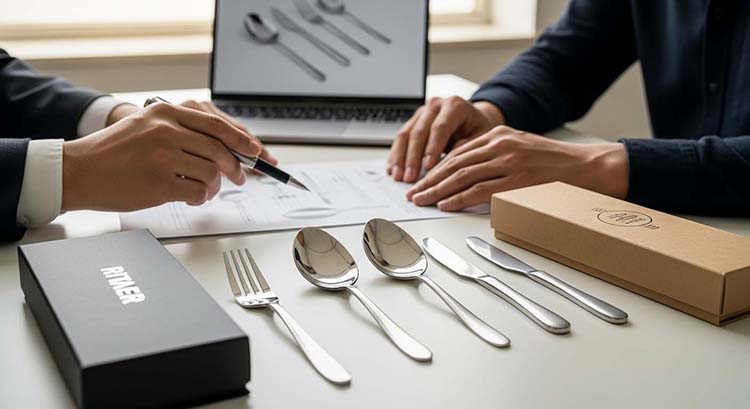
This range seems wide, but each stage of the production process has its own timeline. By breaking down the journey from a design concept to a finished product ready for shipping, you can gain a much clearer picture of your project's specific lead time. Let's dive into the details of each step.
What Are the Key Stages in the Custom Flatware Manufacturing Timeline?
You have a great idea for a new flatware set, but how does it actually become a physical product? The path from a drawing to a shipping container involves a series of critical steps. Misunderstanding this sequence is a common reason for unexpected delays.
The full manufacturing process for custom flatware includes design confirmation, tooling and mold development (for new designs), sample production, bulk production, quality control, and finally, custom packaging. Each stage builds upon the last and has its own distinct time requirement.
A Step-by-Step Breakdown
In my 20+ years of manufacturing stainless steel flatware, I've managed thousands of projects. Here is the typical seven-step process we follow for every custom order.
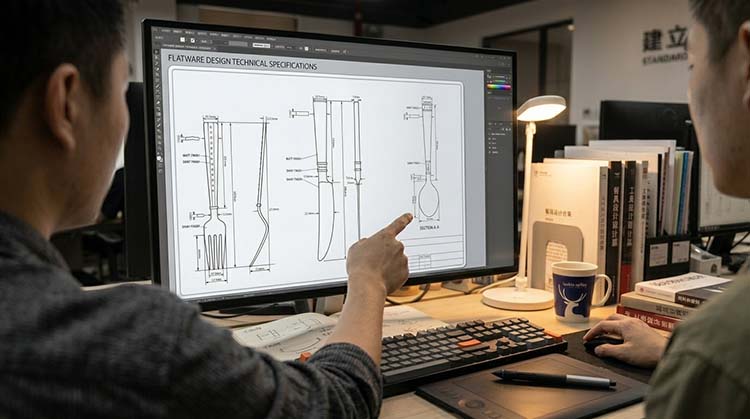
Step 1: Design and Specification Confirmation (1–7 Days)
This is the foundational stage. We work with you to finalize every detail, including:
- Product dimensions and technical drawings (CAD files are ideal)
- Stainless steel grade (e.g., 18/10, 18/0, 430)
- Product weight and thickness
- Handle design and shape
- Surface finish (e.g., mirror polish, matte, stone wash)
- Logo placement and application method (laser engraving or stamping)
- Packaging requirements
- Order quantity
The more prepared you are with complete specifications, the faster this stage goes. If you come to us with a full CAD file and a clear list of requirements, we can often finalize this within a day.
Step 2: Tooling and Mold Development (1–3 Weeks)
This step is only necessary for completely new, from-scratch OEM/ODM designs. Tooling is one of the biggest differentiators between a standard wholesale order and a truly custom project. It involves creating the precise molds and dies that will stamp, forge, and shape the raw stainless steel into your unique design. This can include tooling for the main body, the handle, or any embossed patterns. Because we are located in Jieyang, the heart of China's stainless steel industry, we have access to a mature supply chain that allows for fast and cost-effective mold development.
Step 3: Sample Production and Approval (3–10 Days)
Once the design is set (and tooling is complete, if needed), we produce a physical sample. This is your opportunity to see, feel, and test the product. You'll check for:
- Correct shape and dimensions
- Intended weight and balance
- Handle comfort and ergonomics
- Surface finish quality
- Logo clarity and placement
- Color accuracy (for PVD-coated items)
We then ship this sample to you for final approval. A quick approval keeps the project moving forward without delay.
Step 4: Bulk Production (Variable)
This is typically the longest phase of the project, and its duration is directly tied to your order volume and product complexity. Stamping, shaping, polishing, and finishing 10,000 pieces takes significantly less time than producing 1,000,000 pieces. At XR Cutlery, our factory has a monthly capacity of over 5 million pieces, allowing us to manage large-volume orders for major importers and retail brands efficiently. However, a large order still requires careful production scheduling, which is why it's crucial to confirm your order well in advance.
Step 5: PVD Coating or Special Finishes (Adds Time)
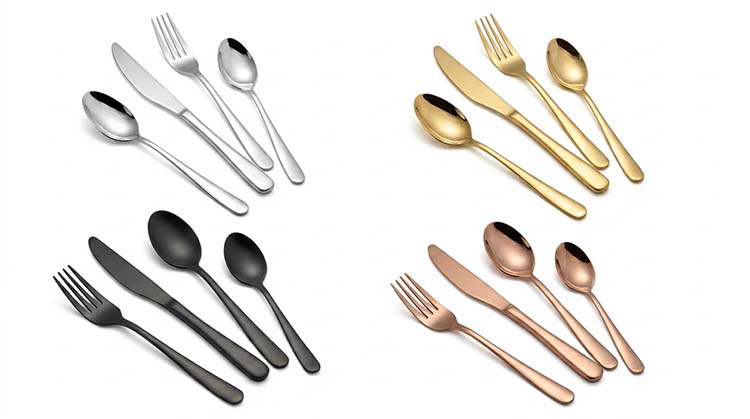
If your custom flatware requires a finish other than standard polishing—such as PVD gold, black, rose gold, or a stone washed texture—this adds another step. The process involves meticulous surface preparation, cleaning, PVD coating in a vacuum chamber, and color inspection. In my experience, the quality of the final PVD finish depends almost entirely on the quality of the polishing and preparation before coating. We dedicate extra time here to ensure a durable and flawless finish.
Step 6: Multi-Stage Quality Inspection (Ongoing)
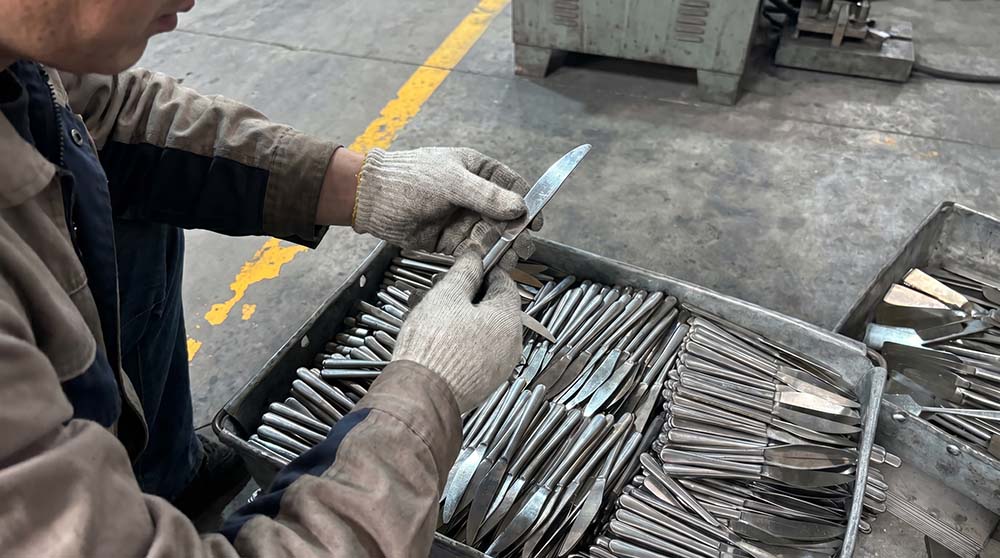
Quality control isn't just a final step; it happens throughout the process. Our QC teams inspect:
- Raw Materials: Verifying grade, thickness, and purity.
- Semi-Finished Products: Checking dimensions and shape after stamping.
- Post-Polishing: Inspecting for scratches, uniformity, and smoothness.
- Post-Coating: Checking PVD color consistency and adhesion.
- Final Inspection: A final check of the finished, packaged product before shipping.
For high-volume orders, ensuring consistency across the entire batch is our top priority.
Step 7: Custom Packaging (1–3 Weeks, Can Run in Parallel)
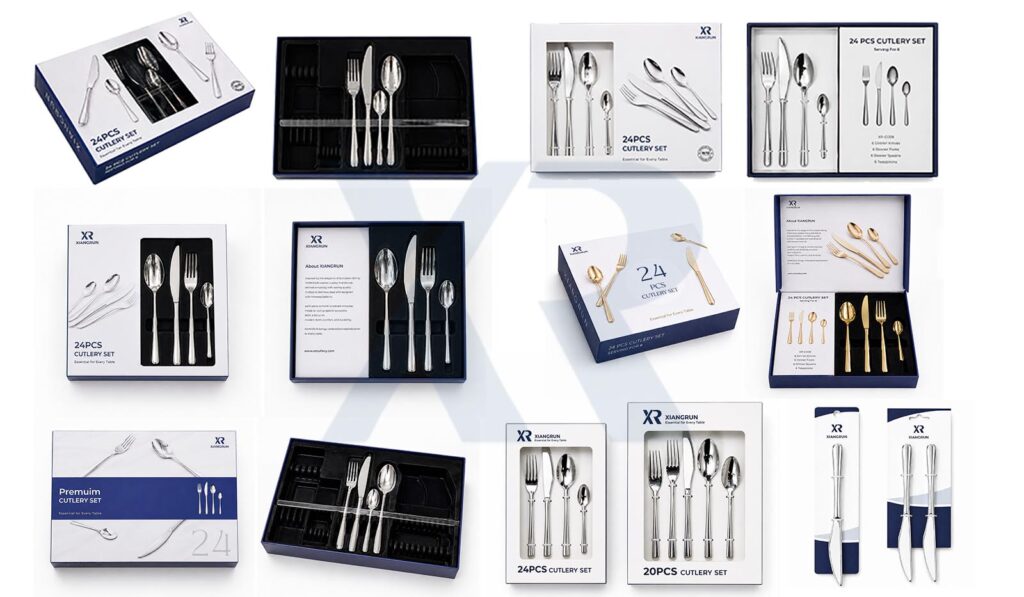
If your order requires custom retail boxes, gift boxes, sleeves, or barcode labels, this packaging needs to be designed, sampled, and produced. To save time, we strongly recommend developing your packaging in parallel with product production. Waiting until the flatware is finished to start on the boxes can add several unnecessary weeks to your final lead time.
How Do Different Customization Levels Affect Your Custom Flatware Lead Time?
You want to bring a unique product to market, but you're also on a tight schedule. Does every customization add months to your timeline? Not necessarily. The key is choosing the right level of customization for your goals and timeline.
Selecting an existing model from a manufacturer's catalog is the fastest option. Making moderate customizations like adding a logo, a PVD color, or custom packaging adds some time but is much faster than developing a completely new design from scratch, which requires new tooling and a longer development cycle.
Finding the Right Balance of Speed and Differentiation
At XR Cutlery, we offer a flexible approach that allows our clients—from Amazon sellers to large importers—to find the perfect balance.
Option 1: Existing Model (Wholesale)
This is the quickest path to market. You choose a design from our existing catalog of over 500 models. The process is simple: Existing Design → Sample Confirmation → Order → Bulk Production.
- Best for: Wholesalers, distributors, or businesses needing a fast turnaround.
- Advantage: No development costs, no new tooling, and the shortest lead time.
Option 2: Existing Model + Customization (Private Label)
This is the most popular option for brands. You start with one of our proven designs and add your unique touch. The process looks like this: Existing Model + Logo/Color/Packaging → Sample → Order → Production.
- Best for: Private label brands, retail brands, hotel suppliers, and e-commerce sellers.
- Advantage: Achieves brand differentiation without the time and cost of new mold development.
Option 3: Fully Custom OEM/ODM Design
This option offers maximum differentiation. You provide a drawing, a sample, or even just a design concept, and we build it from the ground up. The process is more involved: Design → Tooling → Prototype → Sample Approval → Mass Production.
- Best for: Established brands looking for an exclusive product line.
- Advantage: Creates a completely unique, proprietary product.
The timeline varies significantly across these options. Here is a typical breakdown:
| Project Type | Typical Timeline | Customization Level |
|---|---|---|
| Existing Model, Bulk Wholesale | 2–3 Weeks | Low |
| Existing Model + Logo | 2–4 Weeks | Low-Medium |
| Existing Model + Custom Packaging | 3–5 Weeks | Medium |
| Existing Model + Custom Color (PVD) | 4–6 Weeks | Medium-High |
| New OEM Design (Using existing tooling principles) | 6–10 Weeks | High |
| New Design + New Tooling + Custom Packaging | 8–12+ Weeks | Very High |
Note: These are estimates. Actual lead times depend on order quantity, material availability, and current production schedules.
What Common Issues Can Delay Your Custom Flatware Production?
You've planned your project and have a timeline in mind, but what could throw a wrench in the works? In manufacturing, unexpected delays can be a major source of frustration, impacting everything from cash flow to customer relationships.
The most common delays in custom flatware production stem from changes made after a stage is complete. This includes frequent design changes, slow sample approvals from the client, tooling modifications, and last-minute packaging updates.
Proactive Steps to Keep Your Project on Track
Identifying potential bottlenecks is the first step. The next is knowing how to prevent them. Based on my experience, here are the most frequent causes of delays and, more importantly, how you as the buyer can help shorten your production time.
Common Causes of Delays
- Design Changes: Revisions made after samples have been produced often require going back to the beginning, which can add weeks to the timeline.
- Sample Approval Delays: The factory can't start bulk production until you approve the physical sample. The longer this takes, the longer the production queue gets.
- Tooling Changes: Requesting a change to a handle shape or product dimension after a multi-thousand-dollar mold has been created is both costly and time-consuming.
- Packaging Design Delays: As mentioned, if the custom box isn't ready when the flatware is, the entire shipment will sit and wait.
- Large Order Volume: A massive order of one million pieces simply takes longer to produce than an order of 50,000. It requires more raw materials, more machine time, and more manpower.
- Material Availability: A request for a non-standard grade or thickness of stainless steel may require a special order from the steel mill, adding to the lead time.
- Complex Color Matching: Achieving a very specific custom PVD color can sometimes require several rounds of sampling to get the hue just right.
How Buyers Can Help Shorten the Production Timeline
You have more control over the timeline than you think. Here are five things you can do:
- Prepare Complete Specifications: Provide detailed drawings, dimensions, materials, finishes, and quantities from the very beginning. The less guesswork for the factory, the faster we can move.
- Approve Samples Quickly: Once you receive your production sample, test it and provide feedback or approval as soon as possible.
- Finalize Packaging Early: Treat your packaging design as part of the product development process, not an afterthought. Approve your box designs while the flatware is in production.
- Avoid Frequent Design Changes: Lock in your design before tooling and bulk production begin. This is the single most effective way to prevent major delays.
- Choose an Experienced Manufacturer: A factory with decades of experience, like XR Cutlery, can anticipate problems, optimize production flows, and provide clear, realistic communication from the start.
How Does an Experienced Manufacturer Streamline the Custom Flatware Process?
You now know the process, the variables, and the potential pitfalls. So how do you choose a manufacturing partner who can expertly navigate it all? An inexperienced factory might promise an impossibly short lead time, only to deliver delays and quality issues.
An experienced manufacturer streamlines the process by leveraging a deep understanding of the entire production chain. At XR Cutlery, our 20+ years of focusing exclusively on stainless steel flatware gives us the foresight to identify potential issues early, the expertise to manage complex customizations, and the capacity to handle large-volume orders on a predictable schedule.
The XR Cutlery Advantage
We've built our reputation by being a reliable long-term partner for international brands, importers, and wholesalers. We don't just take orders; we guide our clients through the process to ensure a successful outcome.
Here’s how our experience translates into a smoother project for you:
- A Head Start with 500+ Existing Models: You don't always need to start from scratch. Our extensive library of designs is the perfect starting point for private label projects, dramatically reducing development time.
- Deep OEM/ODM Expertise: For clients needing a fully unique product, our development team can work from a simple sketch or a detailed CAD file to bring your vision to life efficiently. We understand how to optimize a design for both aesthetics and manufacturability.
- In-House Finishing Capabilities: With advanced capabilities for mirror polishing, matte finishing, PVD coating, and more, we control the quality and timing of every step. There's no need to subcontract critical finishing work to another factory.
- Large-Volume Capacity and Realistic Scheduling: With a monthly output of over 5 million pieces, we can handle large orders without creating a production bottleneck. More importantly, we provide realistic lead times based on actual capacity, not just optimistic promises.
- International B2B Export Experience: We are intimately familiar with the standards, aesthetics, and logistical requirements of markets in Europe, the Americas, the Middle East, and Southeast Asia. This experience minimizes communication gaps and ensures a smooth process from our factory to your warehouse.
In large-volume flatware projects, the fastest supplier isn't the one who promises the shortest time. It's the one who delivers on a realistic, well-managed production schedule.
Frequently Asked Questions
What is the typical minimum order quantity (MOQ) for custom flatware?
MOQ varies depending on the product and level of customization. For existing models, it can be a few thousand pieces. For fully custom designs requiring new tooling, the MOQ is generally higher to justify the development costs, often starting around 12,000 pieces per item.
Can I put my logo on an existing flatware design?
Absolutely. This is one of our most common requests and a core part of our private label services. We can add your logo via laser engraving for a sharp, modern look or through stamping (embossing/debossing) for a classic, integrated feel.
How much does new tooling for a custom design cost?
Tooling costs can range from a few thousand to several thousand dollars, depending on the complexity of the flatware design. A simple spoon mold is less expensive than an intricate, ornate fork design. We provide a detailed quote for all tooling costs before starting any project.
Is PVD coating on flatware durable enough for restaurant or daily home use?
Yes, when done correctly. PVD (Physical Vapor Deposition) coating is a vacuum-coating process that molecularly bonds the finish to the stainless steel. It is significantly more durable and scratch-resistant than older methods like electroplating or painting, making it suitable for both commercial and residential use.
Conclusion
Understanding the manufacturing timeline for custom flatware is the first step toward a successful product launch. The lead time is a direct function of your project's complexity, ranging from a few weeks for customized existing models to a few months for completely new OEM designs. Key factors like tooling, surface finishes, and order quantity all play a significant role. By preparing clear specifications, making timely decisions, and finalizing your packaging early, you can keep your project on track. Most importantly, partnering with an experienced manufacturer who provides transparent communication and a realistic schedule is your greatest asset.
If you are looking for a reliable partner for your next custom flatware project, our team at XR Cutlery is here to help. Contact us today to discuss your design and receive a detailed quote and production timeline.