
How Is Hammered Stainless Steel Flatware Actually Manufactured?
You've probably seen it—flatware with a beautiful, textured, "hammered" finish. It looks artisanal and random, but have you ever wondered how it's made consistently for thousands of pieces?
Hammered stainless steel flatware is made by first forming the basic shape, then using a specialized mechanical process to create the dimpled texture, followed by careful polishing to enhance the pattern and ensure a smooth feel. It's a process of creating a natural look through controlled, repeatable steps.
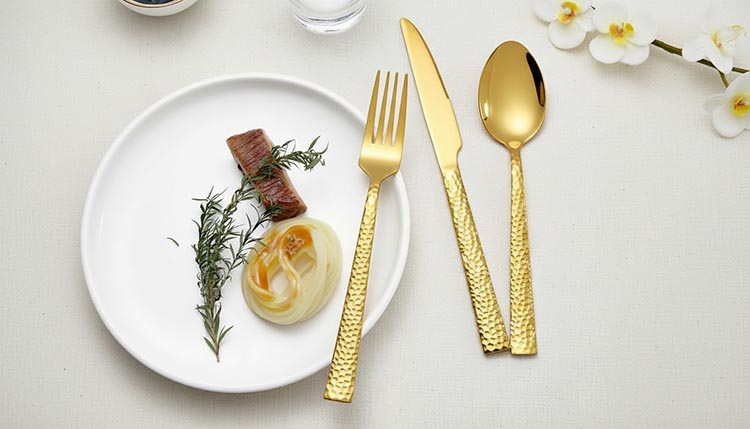
The biggest misconception about hammered flatware is that it's all done by hand with a hammer. In my factory, I've seen firsthand that while it looks random, achieving that look consistently across a massive order requires incredible precision. A client once showed me a sample from another factory where the hammered texture was beautiful, but the forks were slightly warped. This happens when the initial forming stage is weak. The secret to great hammered flatware isn't just the hammering itself; it's the entire sequence of steps that ensures both beauty and structural integrity.
Do You Just Take a Hammer to a Spoon?
It seems simple enough—just start hammering. But if you did that, you'd end up with a lumpy, uneven piece of metal, not an elegant piece of flatware.
No, the process starts with creating a solid foundation. A high-quality "blank" is first stamped or forged into the basic shape of the spoon, fork, or knife. This ensures the final piece is structurally sound.
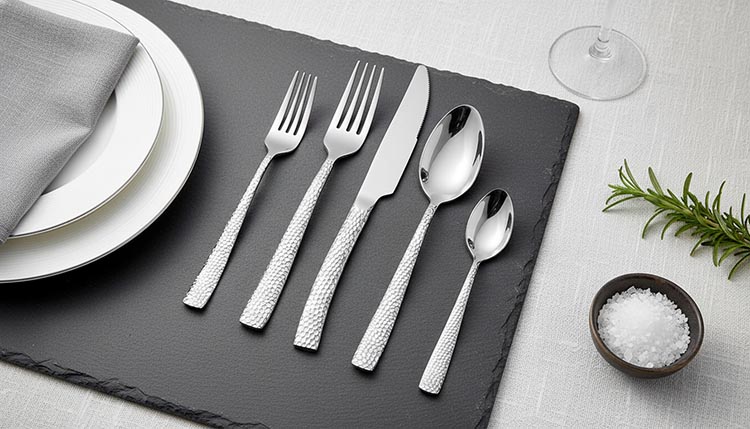
The final texture can only be as good as the initial form. At XR Cutlery, we prioritize using dimensionally stable blanks for our hammered models before they move to the texturing stage. After forming, the blank goes through a pre-polishing stage. This is a crucial but often overlooked step. We clean the surface and remove any minor defects. If you apply a hammered texture to a flawed surface, the texture will only magnify those imperfections. It’s like painting a wall—you have to prep the surface first if you want a perfect finish.
How Is the Hammered Texture Actually Created?
If it's not done by hand with a hammer, then how do you get that unique, random-looking pattern on thousands of pieces?
The hammered texture is created using industrial methods like coining presses with textured dies or automated rotary hammers. These methods imprint the pattern onto the steel in a controlled and repeatable way.
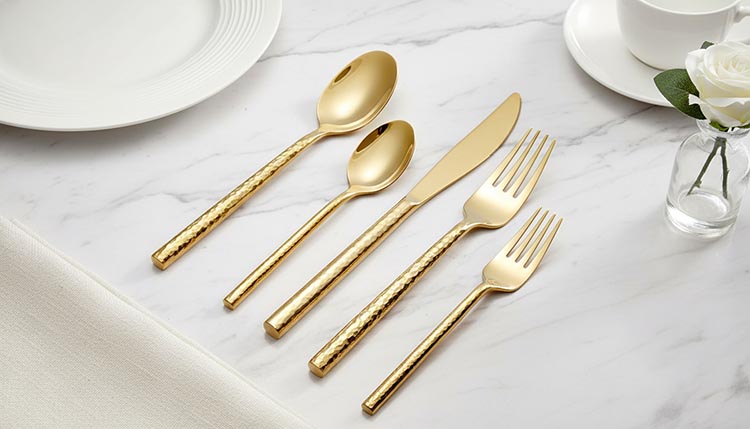
While true hand-hammering exists for artisanal, small-batch lines, it's not scalable for mass production. To ensure consistency, we rely on technology that mimics the effect.
- Mechanical Coining/Pressing1: The flatware handle is passed through a press with a die that has the "hammered" pattern carved into it. This is the most common method for achieving a consistent texture across large batches. Some low-cost factories use simple, repetitive molds, resulting in a pattern that looks artificial. At XR Cutlery, we use molds designed to look natural and control the pressing rhythm to ensure the texture is both beautiful and replicable.
- Automated Rotary Hammers: These machines use small, fast-moving hammers to strike the surface in a programmed pattern, creating a more genuinely "random" look that is still highly controlled.
This core step determines the visual identity of the final product.
How Do You Make It Feel Smooth and Look "Premium"?
After the texturing process, the metal can have sharp edges or a dull finish. What turns it from a textured piece of steel into a piece of high-end flatware?
The "premium" feel comes from two critical final steps: secondary polishing and edge finishing. This process smooths any rough spots, removes burrs, and brings out a luster that makes the texture "pop."
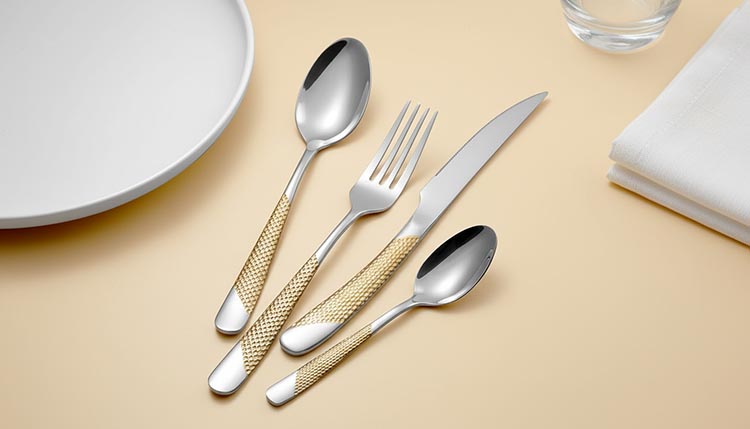
This is the stage that truly separates high-quality hammered flatware from the rest. Hammered pieces with rough, sharp edges are a common complaint and a sign of a rushed job. At XR Cutlery, we add a manual finishing step to meticulously grind and polish the edges, ensuring they are perfectly smooth to the touch and safe to use.
The secondary polishing is what brings the design to life. It can be controlled to achieve different effects:
- Mirror Polish: Creates a brilliant shine where the facets catch the light dramatically.
- Satin/Matte Finish: Offers a softer, more subtle look that hides fingerprints.
- PVD Coating2: Adds colors like gold, black, or copper on top of the texture.
This final touch is what creates the "高级感" (gāojí gǎn)—that feeling of high-end quality.
Conclusion
The beauty of hammered flatware lies in its perfect imperfection. It’s a design that looks random and natural but is born from a highly controlled, multi-step manufacturing process that ensures consistency, safety, and a premium feel in every single piece.