
How Is Custom Flatware Actually Produced for Global Brands?
Struggling to source flatware that truly reflects your brand's quality? The production process can feel like a minefield, full of hidden costs and risks. Let's clear the confusion.
The best custom flatware production comes from a partnership that translates your brand's vision into tangible specifications. It involves making informed trade-offs between materials, mold development, and finishing techniques to create a product that perfectly aligns with your market, budget, and quality promise.
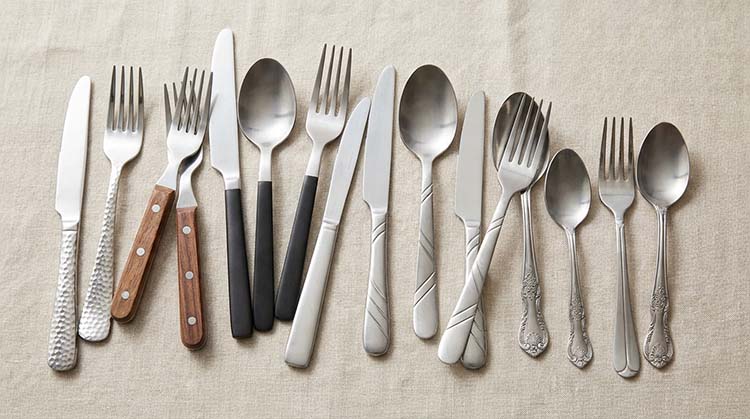
Over my 20+ years in this business, I've seen countless product developers and brand owners get stuck on the idea of finding the single "best" quality. The truth is, it doesn't exist. The real path to success is understanding the critical decisions you need to make along the way. I guide my partners through this every day, helping them ask the right questions to get the exact product they envision. Let’s walk through that process together, step by step.
How Do You Choose the Right Material Without Overspending?
Confused by stainless steel grades like 18/10, 18/8, and 18/0? Choosing the wrong one can waste your budget or compromise the quality your customers expect. Let's simplify it.
The right material depends entirely on your brand's goal. For luxury and durability, 18/10 is the standard. For cost-effective, high-volume lines or trendy, decorative pieces, a grade like 18/0 can be a much smarter choice. It's a strategic balance, not a quality contest.
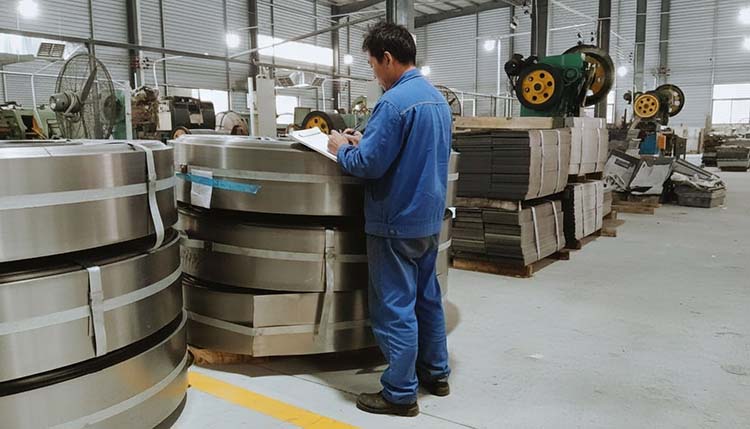
A common question from our brand partners is which stainless steel is "best." My answer is always the same: "best for what?" The material you choose is the foundation of your product's story and performance. It's not just a technical spec; it's a strategic decision that impacts cost, feel, and long-term durability.
For High-End Hospitality and Retail
If you're developing a line for a luxury hotel or a premium retail brand, your customers expect a certain heft, a brilliant shine, and absolute rust resistance. This is where 18/10 stainless steel (304 stainless steel) shines. The 10% nickel content provides superior corrosion resistance, making it ideal for withstanding daily use and harsh commercial dishwashers. It also allows for a beautiful, high-mirror polish.
For Mass Market and E-commerce
If your focus is on a fast-fashion home goods brand or a high-volume e-commerce bestseller, cost-effectiveness and visual appeal might be bigger priorities. Here, 18/0 stainless steel (430 stainless steel) is an excellent choice. It contains no nickel, making it more budget-friendly and magnetic (a plus for some storage systems). While less corrosion-resistant than 18/10, it's more than durable enough for typical home use.
Material Trade-Offs at a Glance
| Material Grade | Key Feature | Best For | Trade-Off |
|---|---|---|---|
| 18/10 (304) | Highest corrosion resistance | Luxury hotels, fine dining, premium retail | Higher cost |
| 18/8 (304) | Great corrosion resistance | Upscale casual dining, quality retail | Mid-to-high cost |
| 18/0 (430) | Cost-effective, magnetic | Mass market, e-commerce, food service | Lower corrosion resistance |
| 13/0 (410/420) | Hardness | Knives (for a sharp, durable edge) | Less flexible |
Ultimately, we help our partners align the material with their market. A five-star hotel chain will always spec 18/10. But an Amazon seller launching a trendy rose gold set for seasonal sales might find 18/0 is the perfect way to deliver style at an accessible price point.
What Does “Customization” Mean Beyond Just Adding a Logo?
Think custom flatware is just stamping your logo on a stock design? That approach severely limits your brand's potential and leaves you competing on price alone. There is a much deeper level.
True customization means creating a unique product DNA. It involves developing new molds for distinctive shapes, specifying the exact material thickness for a desired weight and balance, and selecting advanced finishes like stone wash or hammered textures to stand out in a crowded market.
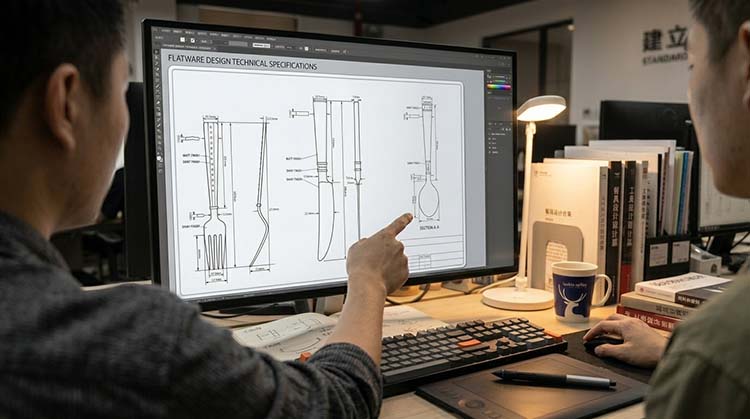
When a new partner comes to us, they rarely begin by asking for a logo. They come with a mood board, a target customer, and a story they want to tell. Our job is to translate that vision into a physical product. This is where real customization happens, far beyond a simple laser engraving.
Mold Development: Creating a Unique Silhouette
The shape of a fork, the curve of a spoon, the line of a knife handle—these are your flatware’s silhouette. Using stock molds means your product will look like everyone else's. We specialize in new mold development. A brand recently came to us wanting an "organic, hand-forged" look. We worked with them to develop a new handle mold that was slightly irregular and asymmetrical, creating a unique product that was exclusively theirs. This is a powerful way to build a brand.
Thickness and Weight: The Feel of Quality
How flatware feels in the hand is just as important as how it looks. We can customize the thickness of the steel, typically ranging from a standard 2.5mm to a premium 8.0mm or more. A thicker gauge gives the piece more weight and a better sense of balance, which users perceive as higher quality. For a high-end steakhouse client, we designed a knife with an extra-thick handle to give it a substantial, commanding feel.
Advanced Finishes: Telling a Story
The finish is where you can truly express your brand's personality.
- Mirror Polish: The timeless, classic choice for luxury.
- Matte/Satin Polish: A modern, subtle, and fingerprint-resistant option.
- PVD Coating: Offers stunning colors like gold, black, or champagne, with excellent durability.
- Stone Wash: Creates a vintage, weathered look that's incredibly popular for rustic and industrial aesthetics.
- Hammered Finish: Adds a unique, artisanal texture that catches the light beautifully.
These choices are what turn a utensil into a design object. They require expertise and specialized equipment, but the result is a product that can define a collection and command a premium price.
How Do We Balance Automation and Handcrafting for Consistent Quality?
Are you worried that large-scale production will lose that high-quality, detailed touch? Or that "handcrafted" just means inconsistent products for your big order? You can, and should, have the best of both.
We use automation for what it does best: consistency. Our machines ensure every single fork and spoon has the exact same size, shape, and weight across a massive order. But we rely on our skilled artisans for the final polish and inspection to create the details machines cannot replicate.
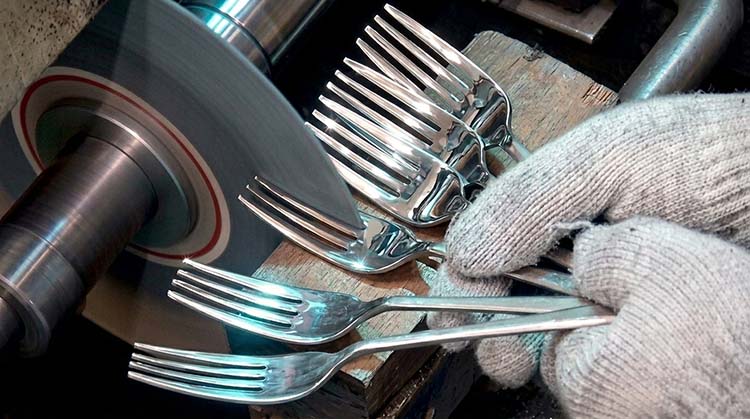
Many clients tour our factory and are surprised by what they see. They expect either a fully robotic line or a small, old-fashioned workshop. The reality is that producing world-class flatware at scale requires a smart combination of both. When I evaluate our own processes, I look for this balance.
The Role of Automation
For an order of 500,000 pieces, consistency is everything. Your customer in New York should get the exact same product as your customer in London. This is where automation is our greatest strength.
- Automated Stamping: High-tonnage presses cut the initial shapes from giant rolls of stainless steel with incredible precision. This guarantees every blank is identical.
- Automated Forging: For thicker designs, automated hammers shape the metal, ensuring uniform thickness and strength.
- Semi-Automated Polishing: Initial polishing stages are often handled by machines that can process thousands of pieces per hour, creating a uniform base finish.
Without this level of automation, achieving the consistency required by global brands would be impossible.
The Importance of the Human Touch
However, machines have their limits. The finest details that separate good flatware from great flatware are created by hand. After the initial stamping, the edges of a fork can be sharp. A machine can't feel that, but a person can. Our skilled polishers manually work each piece, paying special attention to:
- Smoothing Fork Tines: Ensuring the space between the tines is perfectly smooth and comfortable.
- Rounding Edges: Making sure every edge of the handle and spoon bowl feels soft in the hand and mouth.
- Final Inspection: A trained eye can spot tiny imperfections in the polish or a slight wave in the surface that a machine’s sensor would miss.
This blend is our core philosophy. We let machines handle the brute force and repetition, freeing up our talented craftspeople to focus on the nuance and detail that creates a truly premium product.
Why Is Your Supplier's Advice as Valuable as Their Production Line?
Have you ever placed a large order, only to discover a critical flaw after the product has already shipped? A supplier who just takes your order without asking questions is a major red flag.
A true manufacturing partner acts as a consultant. They don't just take your specs; they ask "why." They challenge your assumptions to prevent costly mistakes, advising on everything from the dishwasher durability of a coating1 to the packaging needs for different retail channels.
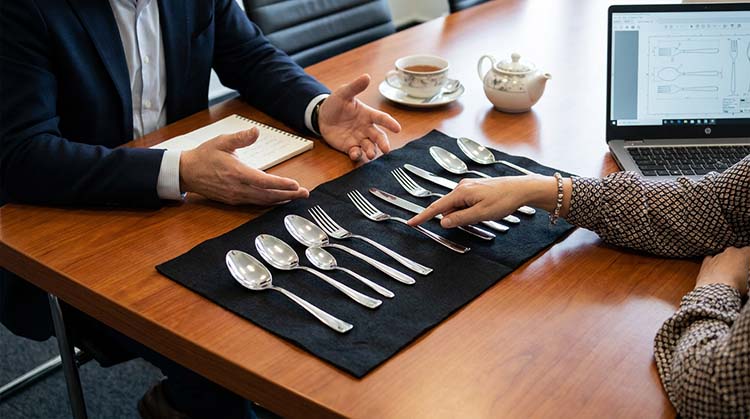
My goal is not just to produce an order; it's to build a long-term partnership. A successful product launch for my client is a success for me. That's why the most important part of my job often happens before a single piece of steel is cut. It's about asking the right questions and offering advice based on over 20 years of experience.
From Order-Taker to Problem-Solver
An order-taker will say, "Yes, we can do that." A partner will ask, "Are you sure you want to do that? Here are the potential issues." This is the core difference. When a client comes to me with a new design, I immediately start thinking about potential problems.
- Will this beautiful matte black finish withstand 100 cycles in a commercial dishwasher?
- Is this thin, elegant handle strong enough to not bend when scooping hard ice cream?
- Does this gift box design protect the mirror polish during cross-ocean shipping?
Anticipating these issues is what separates an experienced manufacturer from a simple factory.
A Real-World Example
I remember a new e-commerce brand came to us, excited about a design with a very intricate, laser-etched pattern on a gold PVD finish. It looked stunning on the render. My production team and I immediately saw a problem. The sharp angles of the laser pattern could create micro-fractures in the PVD coating, leading to flaking over time. Instead of just producing it and letting them deal with customer returns later, we stopped. We produced three samples for them: one their way, and two others using different engraving techniques that were gentler on the coating. We sent them all, along with a report of our durability tests. They chose one of our suggested methods. It saved them what would have been thousands of dollars in returns and devastating brand damage from bad reviews. That is the value of a true partnership.
Conclusion
Ultimately, sourcing custom flatware is about making smart, informed decisions, not just reading a spec sheet. A true partner guides you through these choices to create a product that succeeds.
-
Research shows that the durability of coatings significantly affects the performance and longevity of flatware, particularly in commercial settings. ↩