
How Does Mass Production Ensure Consistent Flatware Quality?
Struggling with flatware orders where the quality varies from batch to batch? Many importers and brand owners find that a perfect sample doesn't guarantee a perfect bulk shipment, leading to customer complaints and a damaged reputation. The key to overcoming this is partnering with a manufacturer who has mastered the art of achieving consistent flatware quality through systematic mass production.
To ensure consistent flatware quality in mass production, manufacturers must implement a rigorous system. This involves standardizing raw material selection, using precision molds and automated forming equipment, controlling every stage of the polishing process, and conducting multi-stage quality control inspections from start to finish. This disciplined approach guarantees that every single piece, from the first to the millionth, meets the exact same specifications.
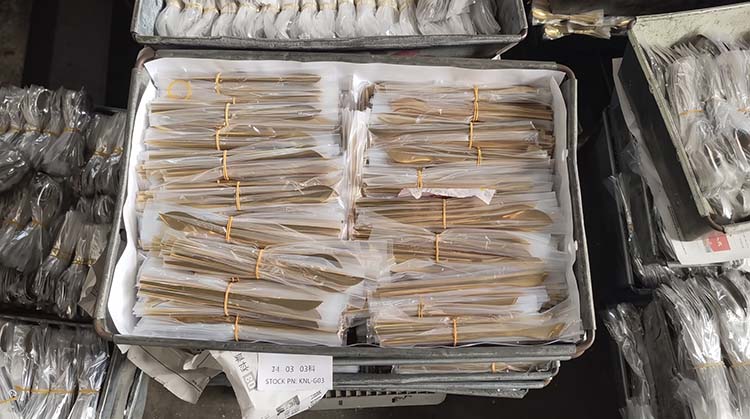
This level of uniformity isn't an accident; it's the result of a deliberate and finely-tuned manufacturing philosophy. Let's peel back the layers and explore the specific processes that turn the challenge of mass production into your greatest competitive advantage.
Why is a Standardized Process Crucial for Consistent Flatware Quality?
Have you ever approved a beautiful flatware sample, only to receive a bulk order where pieces feel lighter, look different, or have rough edges? This inconsistency is a major risk for any brand. The solution lies in a manufacturing process that is standardized from the very beginning.
A standardized manufacturing system is the foundation of consistency. By strictly controlling raw materials, utilizing precision forming techniques, and implementing rigorous mold management, we create a repeatable blueprint that eliminates variations before they can ever occur.
It All Starts with Raw Material Control
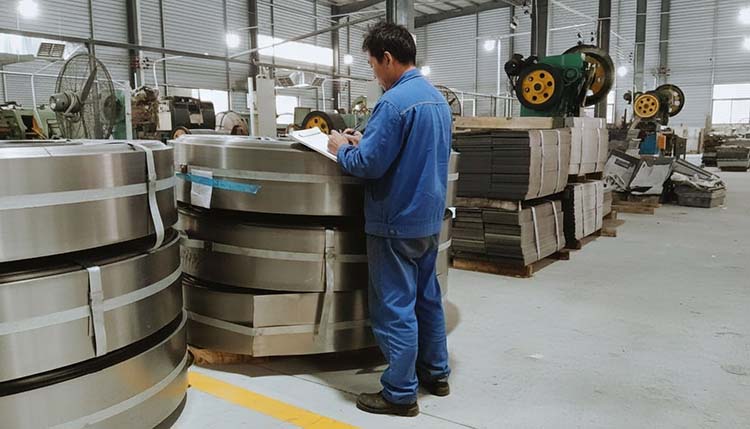
You cannot build a quality product on a weak foundation. For flatware, the foundation is the stainless steel itself. Achieving consistent flatware quality begins long before the first machine is turned on. It starts with meticulous control over the raw materials.
Professional manufacturers establish strict protocols for their steel supply. We work with a handful of trusted suppliers who can provide large, stable batches of material. This minimizes the variations in composition and finish that can occur between different steel coils. Before any production run, our quality control team inspects the incoming raw materials for several key criteria:
- Stainless Steel Grade1: We verify the composition (e.g., 18/10, 18/0, 430) to ensure it meets the client's specifications for corrosion resistance and durability.
- Material Thickness: Using precise gauges, we measure the steel to ensure it matches the required thickness. A tiny deviation here can affect the final weight and feel of the product.
- Hardness and Finish: We check the material's hardness and surface for any defects that could impact the forming or polishing stages.
By rejecting any material that falls outside our tight tolerances, we ensure that every piece of flatware starts with the exact same properties. This is the first and most critical step in building a uniform product line.
Precision in Every Cut and Press
Once the raw material is approved, it enters the forming stage. This is a multi-step process where sheets of steel are transformed into the recognizable shapes of forks, spoons, and knives. Key processes include:
- Cutting: Large steel sheets are cut into smaller, manageable strips.
- Blanking: A high-pressure press stamps out the basic flat shape (the "blank") of the utensil.
- Stretching & Rolling: The blank is rolled to achieve the correct thickness variation between the handle and the head.
- Trimming: Excess material is trimmed away from the blank.
- Press Forming: The final shape, including the bowl of a spoon or the tines of a fork, is stamped.
- Handle Shaping: The pattern or design is pressed into the handle.
In mass production, consistency at this stage depends on the "three pillars": accurate molds, stable equipment, and skilled operators. A minor shift in machine pressure or a slight degradation in a mold can create subtle but noticeable differences in the final product's appearance and balance. At XR Cutlery, we rely on a combination of automated presses for uniformity and regular maintenance to keep our equipment within precise operational parameters.
Mold Management: The Unsung Hero of Consistency
Molds are the heart of flatware shaping. For any given design, a dedicated set of molds is used to stamp tens of thousands of pieces. If not managed properly, molds can be a major source of inconsistency. Poor mold management can lead to shape differences, uneven handle patterns, and size variations between batches.
To prevent this, we practice meticulous mold management. I once worked with a European distributor who was frustrated with their previous supplier. The same flatware model they reordered would arrive with slight changes in handle curvature or tine length because the factory failed to document its production settings.
When they partnered with us, we solved this problem by creating a comprehensive record for their product line. This file includes:
- The specific mold identification number
- Approved production parameters (machine pressure, cycle time)
- The master "golden sample" for approval
Now, when they place a replenishment order—even a year later—we pull the exact mold and replicate the exact production standards. This ensures their collection remains perfectly consistent, allowing them to build long-term customer trust.
How Do Polishing and Finishing Impact Consistent Flatware Quality?
A flatware piece can be perfectly formed, but if the polishing is inconsistent, it can look cheap or defective. Rough edges, uneven shine, or visible scratches can ruin a brand's premium image. The solution is a sophisticated process that blends automated efficiency with expert human craftsmanship.
The polishing and finishing stage is what gives flatware its final luster and feel. Achieving consistent flatware quality here means balancing machine-driven efficiency with the irreplaceable skill of experienced technicians to ensure every single piece has the same flawless surface.
Balancing Machine Efficiency and Human Touch
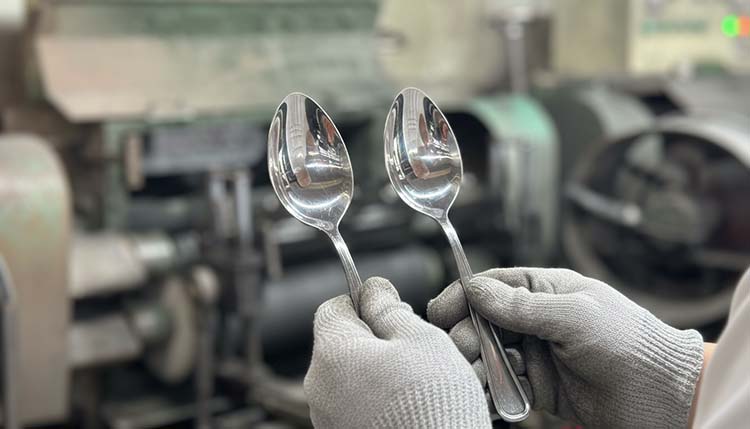
Polishing is not a single action but a sequence of steps designed to gradually smooth the metal's surface. A typical workflow involves multiple stages, moving from coarse to fine abrasives. At XR Cutlery, we use a semi-automated approach that combines the best of both worlds.
Automated and semi-automated machines handle the initial, heavy-duty polishing stages. This is crucial for large wholesale orders because the machines apply uniform pressure and consistent motion, ensuring that the basic surface finish is identical across thousands of pieces. However, machines can't replicate the nuanced touch of a human expert.
Our experienced technicians perform the final, delicate polishing. They are trained to feel for the slightest imperfection and can maneuver the utensil to polish hard-to-reach areas, like the space between fork tines or the curve of a spoon's bowl. This hybrid approach allows us to produce a high volume of flatware that meets the exacting standards of high-end brands, where a flawless, uniform finish is non-negotiable.
We offer several types of finishes to meet diverse market needs:
| Finish Type | Characteristics | Best For |
|---|---|---|
| Mirror Polish | Highly reflective, glossy, classic look | High-end hotels, fine dining, premium retail |
| Matte / Satin Polish | Non-reflective, modern, hides fingerprints | Scandinavian designs, contemporary brands, everyday use |
| Stone Wash | Distressed, vintage, textured feel | Industrial-chic restaurants, unique brand collections |
| Hammered Finish | Hand-crafted appearance, artisanal | Differentiated brand lines, custom hospitality projects |
In-Process Controls: Catching Issues Early
Many factories only inspect for quality at the very end of the production line. This is inefficient and risky. A small issue at the forming stage can go unnoticed until thousands of defective pieces have already been polished, wasting time, materials, and money.
We believe in building quality into the process. To ensure consistent flatware quality, we implement several in-process QC checkpoints:
- Post-Forming Inspection: After a piece is stamped, it's checked for correct shape, dimensions, and any structural defects.
- Post-Polishing Inspection: Before moving to cleaning or coating, each piece is inspected under bright light for surface uniformity, brightness, and any scratches or polishing marks.
- Pre-Packaging Inspection: A final visual check is performed to confirm the piece meets all appearance standards before it is wrapped.
This multi-stage inspection system allows us to identify and correct deviations early, ensuring that only perfect products make it to the final packaging stage. For our wholesale and brand clients, this means fewer defects, more reliable inventory, and greater peace of mind.
Frequently Asked Questions
What is the most common cause of inconsistent quality in flatware manufacturing?
The most common causes are a lack of standardized raw material control and poor mold management. If the incoming steel varies in thickness or composition, or if production molds are not properly maintained and documented, it is impossible to produce a uniform product batch after batch.
How do you ensure the same quality for a repeat order placed months later?
We maintain detailed production records for every order. This includes the specific mold used, machine settings, polishing parameters, PVD color formulas, and an approved "golden sample." When you place a replenishment order, we use this data to replicate the product exactly as you first approved it.
Can you achieve different weights and thicknesses for the same design?
Yes. We specialize in OEM/ODM projects and can customize the thickness and weight of your flatware. By adjusting the material thickness and forming process, we can create a product with a heavier, more premium feel that is popular in European and American markets, helping your brand stand out.
Can I create a custom design if I don't have a technical drawing?
Absolutely. Our experienced ODM team can work with you to develop a new product from a physical sample, a photograph, or even a simple sketch. We will help optimize the design for mass production, create prototypes for your approval, and ensure the final product is both beautiful and manufacturable at a consistent quality.
Conclusion
Ultimately, achieving consistent flatware quality in mass production is not a matter of luck; it is the direct result of a disciplined, systematic approach. It is built on a foundation of standardized raw materials, precision molds, a hybrid of automated and skilled craftsmanship, and rigorous, multi-stage quality control. For brands, wholesalers, and importers, this consistency is the bedrock of customer trust, repeat business, and long-term success. It ensures that the product your customers buy tomorrow is just as perfect as the one they fell in love with today.
With over 20 years of experience, a monthly capacity of over 5 million pieces, and a deep understanding of global market standards, XR Cutlery is more than just a factory; we are a reliable partner in your growth. If you are looking for a manufacturer who can deliver consistent, high-quality flatware at scale, we invite you to get in touch. Let's work together to build a product line you can be proud of.
-
Authoritative overviews of stainless steel report that “18/10” typically indicates about 18% chromium and 10% nickel (often corresponding to AISI 304), while grade 430 is a ferritic stainless steel with roughly 16–18% chromium and little or no nickel; chromium provides the primary corrosion resistance and nickel stabilizes the austenitic structure, influencing corrosion performance and durability. ↩