
How Do You Create Your Own Private Label Flatware Brand?
Struggling with price wars and low margins? Selling generic flatware is a race to the bottom. Private labeling lets you build a brand and escape the competition.
Private label flatware involves having a factory like us manufacture products that you sell under your own brand. This includes custom logos, unique packaging, and exclusive product lines, allowing you to build brand equity and control your market positioning for long-term growth.
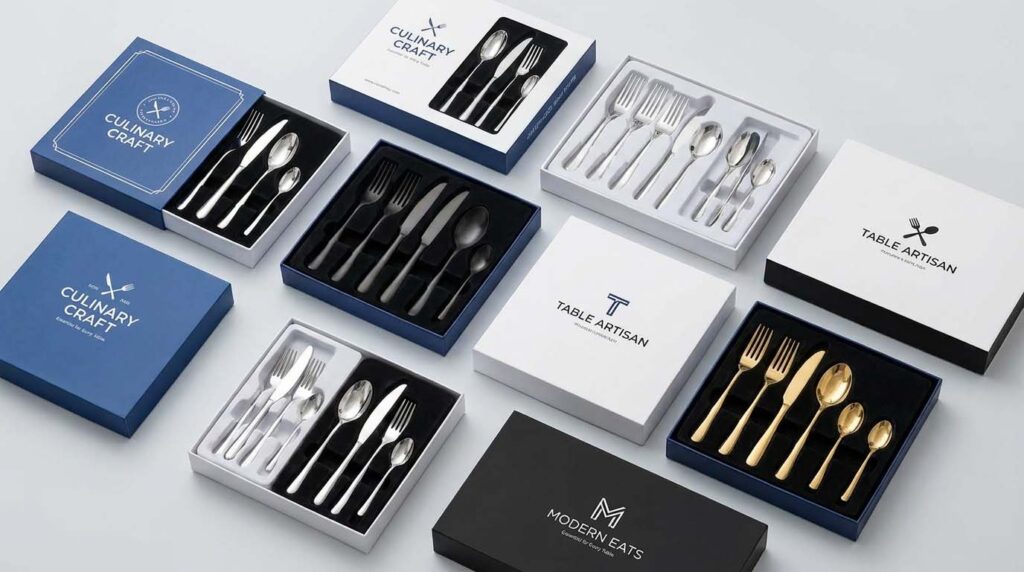
This sounds great, but where do you even start? Building a brand from scratch can seem overwhelming. As a factory with over 20 years of experience, we've helped countless clients navigate this process. I've seen what works and what doesn't. Let me break down the essential steps for you, from initial concept to long-term success.
What Is Private Label Flatware and Why Should You Care?
Are you just reselling standard products? This makes you easily replaceable and forces you into endless price wars. A private label gives you a unique identity and customer loyalty.
A private label allows you to sell factory-made flatware under your brand. This means higher profit margins, no direct price competition, and stronger customer recognition. It's how you build a lasting business asset instead of just moving boxes.
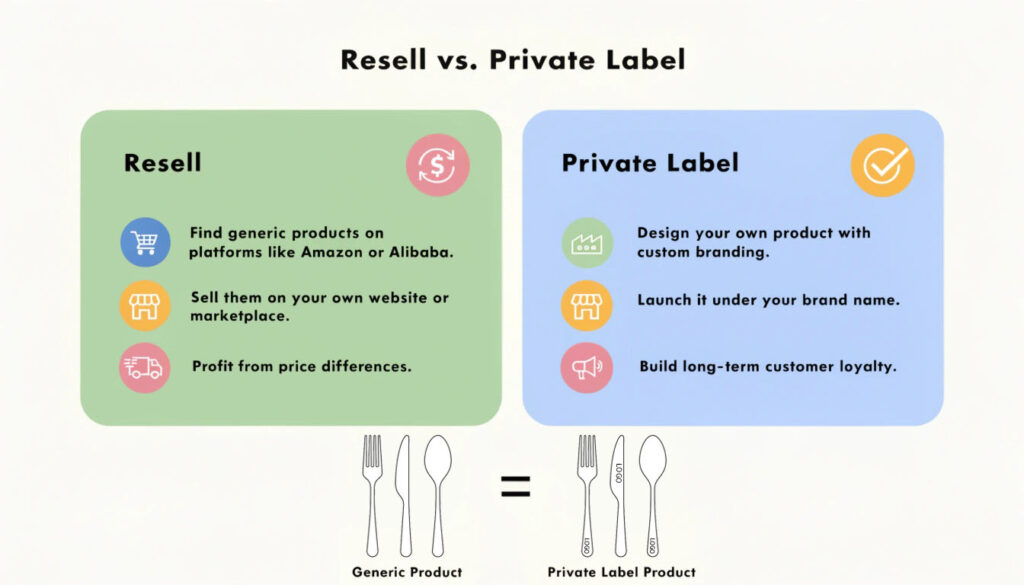
The Shift from Reseller to Brand Owner
For years, I've watched the market change. Many of our clients, from distributors to e-commerce sellers, start by simply buying our standard, in-stock items. It's a great way to get started. But the most successful ones eventually make a crucial shift. They stop being just resellers and start becoming brand owners. A private label is not just about putting your logo on a product. It's about creating an asset. You control the narrative, the pricing, and the customer experience. You are no longer competing with ten other sellers offering the exact same fork. Instead, you are building something unique that customers can connect with and return to. We've seen clients begin with a single customized set and grow it into a full product line with consistent SKU management, building real, long-term value in their business.
How Do You Develop Your Private Label Flatware Product?
Worried your product won't stand out? Choosing the right materials and design is confusing. A wrong choice can ruin your brand before it even starts, wasting time and money.
Start by defining your market (e.g., e-commerce, Horeca) and price point (e.g., premium, economy). This dictates your material (like 18/10 stainless steel for high-end), design aesthetics, and surface finish (like mirror or matte), forming the core of your product identity.
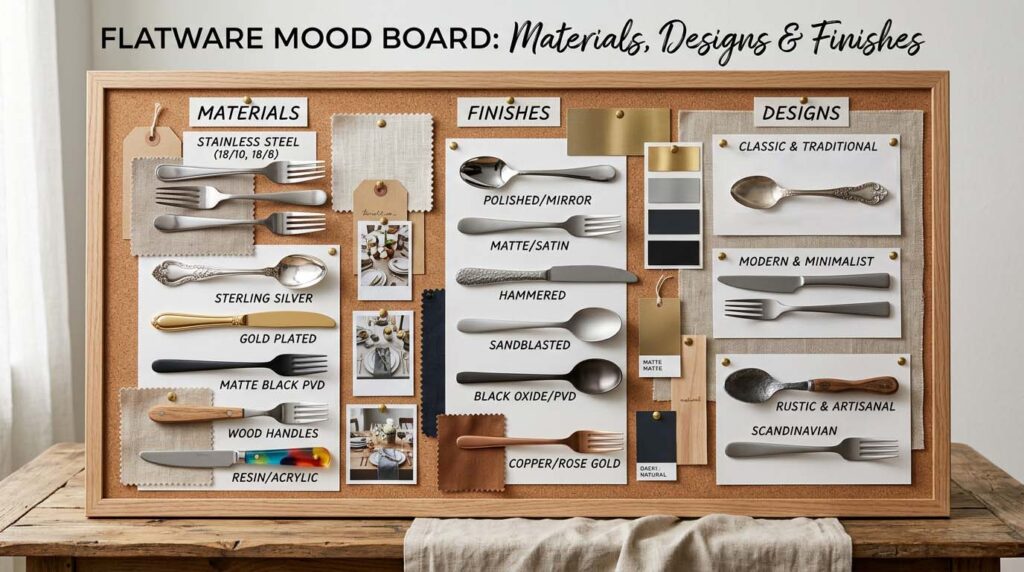
A successful private label starts with a clear plan. Before we even talk about manufacturing, you need to know who you are selling to and what you want your brand to represent.
Step 1: Define Your Market Position
The first question I always ask new clients is: "Who is your customer?" The answer changes everything. Are you selling to hotels and restaurants (Horeca), where durability and classic design are key? Or are you targeting e-commerce shoppers who are drawn to trendy designs and beautiful packaging? Your target market and desired price point—whether economy, mid-range, or premium—will determine the specifications of your product. For example, a premium retail brand will require a heavier weight, a more sophisticated finish, and high-end gift packaging, which naturally comes with a higher MOQ and cost. A wholesale product for a budget market might prioritize cost-effectiveness, using a lighter material and bulk packaging. Defining this position first saves a lot of wasted effort.
Step 2: Choose the Right Materials and Design
Once you know your market, we can select the right material. This is a critical choice for your brand's reputation.
| Material | Best For | Key Features |
|---|---|---|
| 304 (18/8, 18/10) | Mid-range to Premium Brands, Horeca, Retail | Excellent corrosion resistance |
| 430 (18/0) | Economy Market, High-Volume Wholesale | Good value, magnetic |
| 201 | Lowest-Cost Market | Prone to rust, not for brands |
My advice is simple: if you want to build a long-term brand, don't just chase the lowest material cost. 304 stainless steel offers the best balance of quality and value for a product you want customers to love for years. Beyond material, the design itself is crucial. A mature brand thinks about the feel, the balance in the hand, the proportions of the lines. We once had a client who designed a beautiful fork with an ultra-thin handle. It looked great in the 3D render, but we knew from experience it would bend easily in mass production. We worked with them to adjust the internal structure, keeping the sleek design while making it strong enough for daily use. That's the value of working with an experienced factory.
Step 3: Select a Surface Finish
The finish of your flatware is a core part of its personality. It's the first thing your customer sees and touches, and it speaks volumes about your brand's positioning.
| Finish | Market Position |
|---|---|
| Mirror Polish | Mainstream Wholesale, Hospitality |
| Satin / Matte | Modern E-commerce Brands |
| Hammered1 | High-End, Artisanal Design |
| PVD Coating | Trend-Driven, Visual Brands |
A high-shine mirror polish is a timeless classic, perfect for hotels or traditional retail. A satin or matte finish feels modern and is popular with Nordic-style brands. Finishes like hammered or a PVD coating in black or gold are visual statements, perfect for making a splash on Instagram or in a high-end designer store. The finish is another layer of your brand's language.
How Do You Finalize Your Brand's Look and Feel?
Is a simple logo enough to build a brand? Poor packaging and inconsistent branding can make your product look cheap. Your presentation matters just as much as the product inside.
Finalize your brand with consistent logo application (laser, stamping), and strategic packaging (gift boxes, FBA-ready). Always get a pre-production sample to confirm every detail—material, weight, finish, logo, and packaging—before committing to a full order. This step prevents costly surprises.
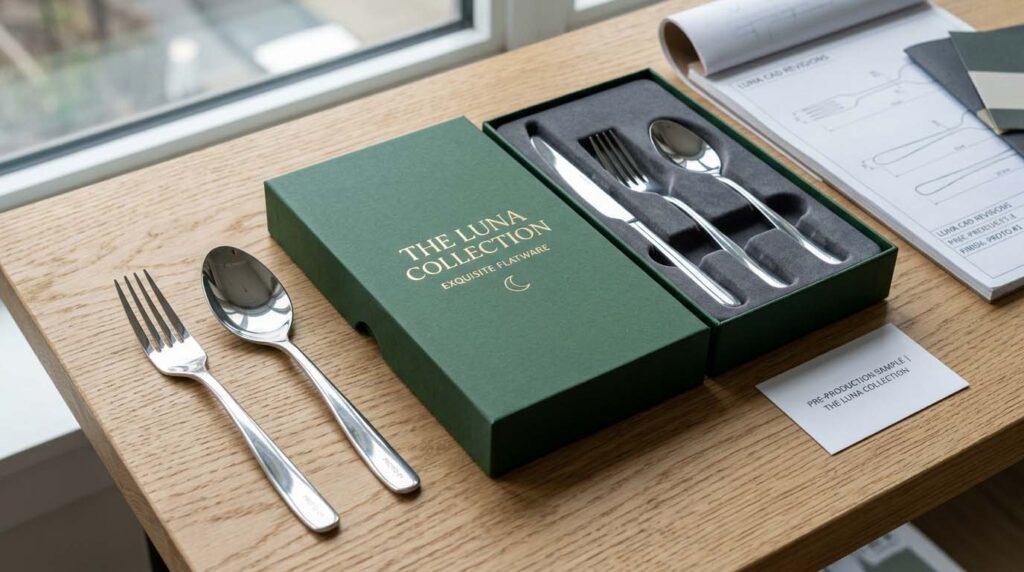
With the core product defined, it's time to bring your brand to life. This is where the details make all the difference, turning a good product into a great brand experience.
Logo and Branding Consistency
Putting a logo on a product is easy. Anyone can do it. The real challenge, and what we focus on at XR Cutlery, is ensuring that the logo is perfect on every single piece, across thousands of units and multiple production runs. We offer several options like laser engraving, stamping, or embossing2. But our focus isn't just on the "how," it's on the consistency. We work with you to ensure the depth of the logo is stable, the position is uniform, and it looks exactly the same on your 10,000th set as it did on your first sample. This level of detail is what separates professional brands from amateur ones.
Strategic Packaging Development
I've seen fantastic products fail because of poor packaging. Your packaging is your silent salesperson. For our wholesale clients, the main concern is often transport efficiency—how many units can fit in a container? We design master cartons to maximize space and lower shipping costs. For our Amazon and e-commerce clients, the focus is totally different. It's about the "unboxing experience" and durability to prevent shipping damage. For retail brands, it’s about shelf appeal and communicating brand value through beautiful color boxes or gift sets. Packaging isn't just a box; it's a strategic tool that impacts brand image, customer experience, and your bottom line.
The Critical Sampling Stage
If I could give only one piece of advice, it would be this: do not skip or rush the sampling stage. This is your chance to hold the final product in your hands before committing to a large order. A pre-production sample is where you confirm everything: the exact material, the finished thickness and weight, the feel of the surface finish, the placement of the logo, and the quality of the packaging. We send samples to our clients for every new project. So many problems that arise during mass production could have been avoided with a thorough sample review. It's the single most important step to ensure what you envisioned is what you get.
What's the Secret to Long-Term Private Label Success?
Worried your second order won't match the first? Inconsistent quality and unreliable supply can kill your brand's reputation. Finding a dependable long-term partner is the biggest challenge.
The secret is a scalable and repeatable product system. This means choosing a factory partner focused on batch-to-batch consistency and reliable replenishment. True success isn't about the first order, but about building a stable, long-term supply chain for your brand's growth.
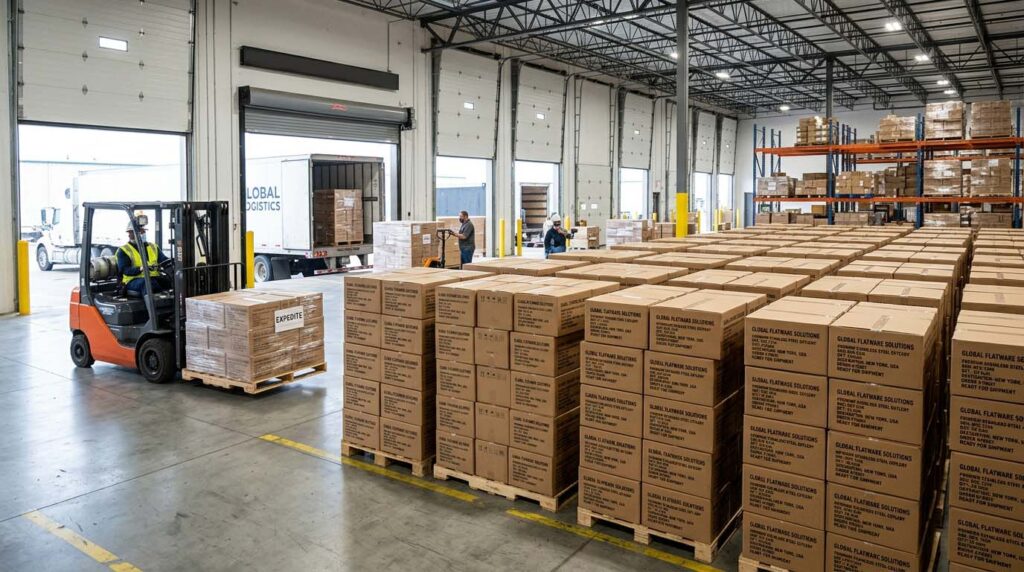
Creating a successful first batch is one thing. Building a brand that lasts for years is another. This is where the true partnership between you and your manufacturer is tested.
Mass Production and Quality Control
The real mark of a mature private label manufacturer is not the ability to "make" a product. It's the ability to make it exactly the same, every single time. That is our core focus. For our long-term private label clients, we establish a fixed production system. We use the same molds, source from the same certified steel suppliers, lock in the specific polishing parameters, and use the exact same logo process for every replenishment order. All your packaging files and quality standards are documented and saved. This rigorous process ensures that a customer buying your product two years from now receives the exact same quality as a customer who bought it today.
The Importance of Replenishment
Many promising brands fail, not because their first product was bad, but because their second order was inconsistent or their supplier couldn't handle replenishment. An out-of-stock product is a missed sale and a blow to your brand's reliability. The core of a successful private label is a robust, long-term supply chain. We have a monthly capacity of over 5 million pieces, which means we can support your growth from a small test order to large-scale distribution. We understand that your success depends on our ability to deliver consistent quality, on time, every time.
Common Mistakes to Avoid
Over 20 years, I’ve seen it all. Here are the most common pitfalls we help our clients avoid:
- Focusing only on the lowest price: This almost always leads to inconsistent quality down the line.
- Rushing sample confirmation: This results in surprises and deviations in the final mass production.
- Creating too many SKUs too quickly: This creates inventory headaches and cash flow problems.
- Ignoring production feasibility: A design might look good on paper but be difficult or costly to mass-produce.
- Neglecting packaging: This undermines brand perception and can lead to damage during transit.
Our advantage at XR Cutlery is that we don't just see ourselves as a factory. We are a partner. We leverage our deep experience to guide you through these decisions, ensuring your product is not only beautiful but also commercially viable and scalable for long-term success.
Conclusion
Private label is more than a logo. It’s about building a repeatable product system with a reliable partner to ensure your long-term brand growth and continued success.