
How are stainless steel spoons classified?
A spoon seems like the simplest tool in the world. But when you need to order thousands for your business, you discover a confusing world of numbers and names. Picking the wrong one is a mistake that can cost you money and disappoint customers.
Stainless steel spoons are classified mainly by their material (like 18/10 or 18/0), their design for a specific use (like a soup spoon versus a coffee spoon), and their surface finish (like a mirror polish or a matte look). Understanding these categories is key to choosing the right spoon.

In my factory, I see buyers get overwhelmed by these choices every day. But it's not as complicated as it looks. All these classifications exist for one reason: to help you find the perfect spoon for your specific need. Whether you run a high-end hotel or a casual cafe, there's a spoon that's right for you. Let's break down the three main ways we classify spoons so you can order with confidence.
Does the Type of Stainless Steel Really Matter?
You hear terms like 304 and 430 steel, but they all just look like metal. Choosing based on price alone can be a disaster, leading to rust spots and a cheap feel after only a few washes.
Yes, the type of steel is critical. 304 (18/10) stainless steel offers the best corrosion resistance and is perfect for high-end, heavy-use environments. 430 (18/0) steel is a great value option that is durable for most general purposes.
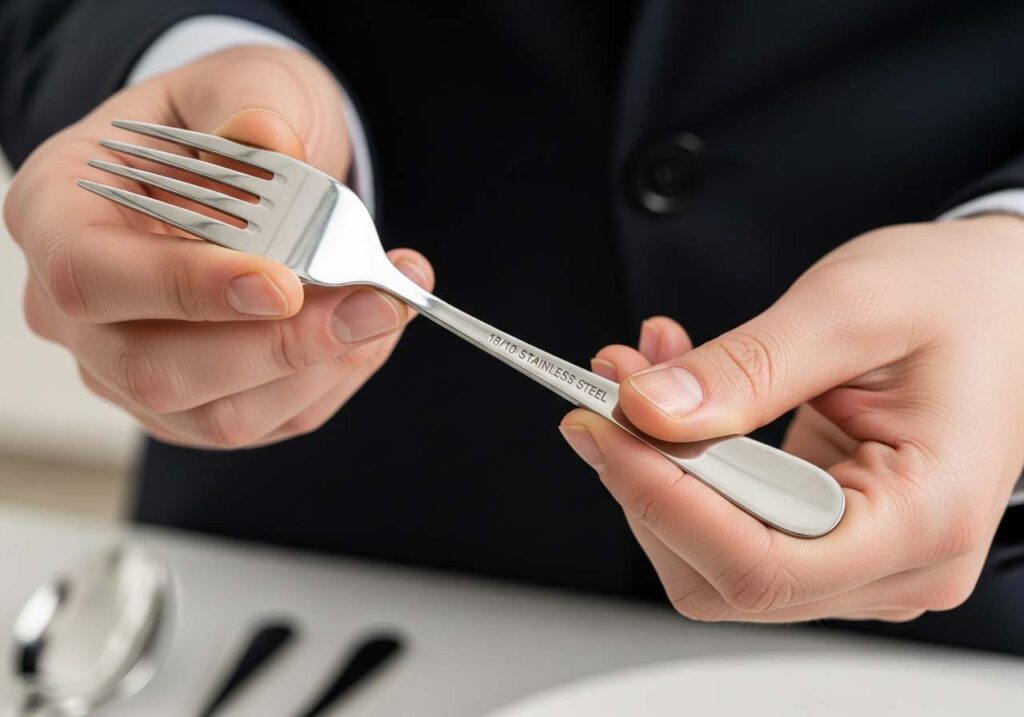
The numbers are not just for show; they tell you exactly what is in the metal. The most common types are 304, 430, and 201 stainless steel. The main difference is the amount of chromium and nickel. Nickel is the key ingredient for fighting rust and corrosion. A high-end hotel client of mine will only order 304 (18/10) steel because their powerful commercial dishwashers and harsh detergents will quickly ruin lesser grades. For a family restaurant with a tighter budget, 430 (18/0) steel is an excellent choice. It's tough, looks great, and holds up well under normal use. 201 steel is the most basic option, suitable for low-intensity use where cost is the absolute main concern. The steel grade is the foundation of the spoon's quality and lifespan.
| Material Grade | Common Name | Key Feature | Best For |
|---|---|---|---|
| 304 Steel1 | 18/10 or 18/8 | Highest rust resistance, premium feel. | Hotels, fine dining, heavy use. |
| 430 Steel2 | 18/0 | Good durability, magnetic, best value. | Casual dining, homes, general use. |
| 201 Steel | - | Lowest cost. | Low-budget, low-intensity use. |
Is There a Real Difference Between a Soup Spoon and a Dinner Spoon?
A spoon is a spoon, right? But if you serve a hearty soup and give your customers a small, shallow spoon, you are creating an awkward and frustrating experience for them.
Yes, the design is essential for function. A soup spoon has a large, deep, round bowl for holding liquid. A dinner spoon is more oval and shallower, designed for solid foods like rice and vegetables. Using the correct shape matters.

Every spoon in a cutlery set is designed for a purpose. Using the wrong one is like trying to use a screwdriver to hammer a nail. It just doesn’t work well. The main spoons you will encounter are the dinner spoon, soup spoon, teaspoon, and dessert spoon. The dinner spoon, or tablespoon, is the all-purpose workhorse for the main course. The soup spoon is noticeably different, with a larger and often rounder bowl to prevent spilling. The teaspoon is the small one for stirring coffee or tea. A dessert spoon is in between the size of a teaspoon and a dinner spoon, perfect for things like ice cream or mousse. We also make specialty spoons, like long iced tea spoons or small children's spoons with special shapes. Paying attention to these designs shows a level of care that customers notice.
| Spoon Type | Size | Bowl Shape | Primary Use |
|---|---|---|---|
| Dinner Spoon | Large | Oval, shallow | Main course foods (rice, vegetables). |
| Soup Spoon | Large | Round, deep | Soups, stews, and other liquids. |
| Dessert Spoon | Medium | Oval | Desserts, cereal, appetizers. |
| Teaspoon | Small | Oval | Stirring hot drinks, small desserts. |
Should You Choose a Shiny or a Matte Finish for Your Spoons?
You have chosen the right steel and shape, but now you have to pick the finish. This detail seems small, but it has a huge impact on the look, feel, and maintenance of your cutlery.
A shiny mirror finish gives a classic, elegant look perfect for formal dining. A matte or brushed finish offers a modern aesthetic and does a better job of hiding fingerprints and small scratches, making it very practical for busy restaurants.

The surface finish is what brings the spoon's design to life. It’s what your customers will see and feel first. The most common finish is the mirror polish. It’s achieved by polishing the steel until it’s smooth and reflective like a mirror. This look is timeless, elegant, and easy to clean, making it a favorite for upscale restaurants. The opposite is a brushed or satin finish. We achieve this by lightly scratching the surface with a fine brush, creating a soft, textured look that hides fingerprints well. It’s a very popular choice for modern, casual dining spots. A sandblasted finish goes a step further, creating a uniform, non-reflective matte texture that looks very contemporary and sophisticated. The finish you choose should complement your restaurant's overall style and atmosphere.
| Finish Type | Appearance | Pros | Cons |
|---|---|---|---|
| Mirror Finish3 | Shiny, Reflective | Classic, elegant, easy to clean. | Shows fingerprints, can scratch. |
| Brushed/Satin Finish4 | Soft, Textured | Hides fingerprints, modern look. | Can be harder to clean if deeply textured. |
| Sandblasted/Matte | Non-Reflective, Dull | Very modern, great at hiding wear. | Can stain more easily than mirror polish. |
Conclusion
Classifying spoons by material, design, and finish makes it simple. This knowledge lets you choose spoons that are durable, functional, and perfectly match your brand’s style and your customers' needs.
-
Explore the advantages of 304 Steel for kitchenware, known for its rust resistance and premium quality, ideal for high-end dining. ↩
-
Discover how 430 Steel offers durability and value, making it a popular choice for casual dining and everyday kitchen items. ↩
-
Explore the advantages of a Mirror Finish to enhance your home decor with elegance and ease of maintenance. ↩
-
Discover the unique qualities of a Brushed/Satin Finish and how it can modernize your space while minimizing maintenance. ↩