
Food-Grade Stainless Steel Explained: 316 vs 304 vs 430 vs 420 vs 410 vs 201 for Flatware?
Trying to navigate the world of food-grade stainless steel can feel overwhelming. You see a confusing list of numbers—304, 430, 420—and worry that choosing the wrong one will lead to rusty products, unhappy customers, and a damaged brand reputation. The truth is, selecting the right material is the foundation of a successful flatware business.
Food-grade stainless steel refers to specific alloys that are safe for food contact and chosen based on their unique performance characteristics. For premium forks and spoons, 304 is the industry standard. For high-volume commercial flatware, 430 offers the best value. For sharp, durable knife blades, 420 is essential due to its hardness. 316 provides maximum corrosion resistance for specialty applications, while 410 and 201 are used for more budget-focused projects.
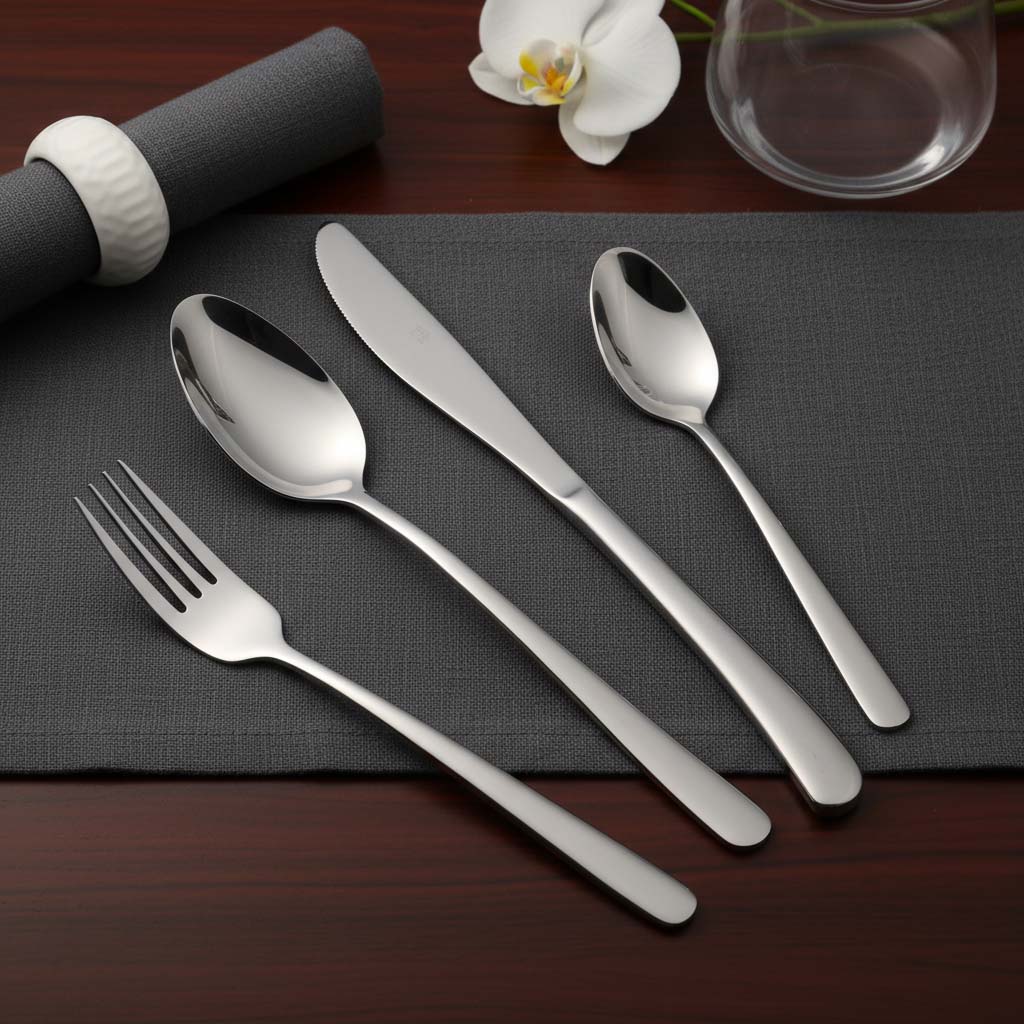
But these numbers represent more than just a simple "good, better, best" scale. Each grade is a precise tool engineered for a specific job. Understanding the unique strengths of each allows you to build a flatware collection that perfectly balances quality, durability, and cost for your target market.
What Are the Premium Food-Grade Stainless Steel Options for Flatware?
When you’re building a premium retail brand or a luxury hospitality line, your customers expect the best. You see grades like 316 and 304 mentioned, but they come with different price tags. Choosing the right one means understanding which provides tangible value and which might be unnecessary for your specific needs.
For most premium flatware, 304 stainless steel is the gold standard, offering an exceptional balance of corrosion resistance, a brilliant finish, and durability. 316 stainless steel is a more specialized, higher-cost option reserved for environments with extreme exposure to salt or corrosive elements.
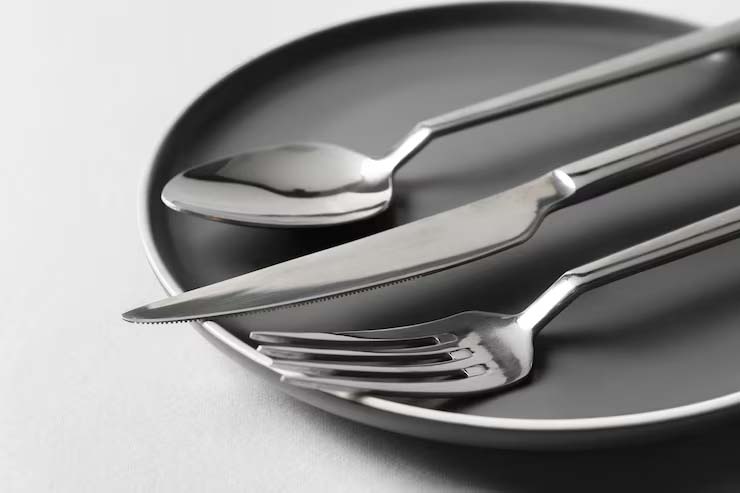
316 vs. 304 Stainless Steel
316 Stainless Steel – The Ultimate Choice for Corrosion Resistance
316 stainless steel stands apart due to the addition of molybdenum1, an element that dramatically enhances its ability to resist corrosion. This makes it particularly effective against chlorides, which are found in salt and many cleaning chemicals. While technically superior in this regard, its benefits often only become apparent in very demanding conditions.
Advantages of 316 Stainless Steel:
- Outstanding Corrosion Resistance: The best defense against rust and pitting.
- Excellent Salt and Acid Resistance: Ideal for use in coastal or marine environments.
- Premium Appearance: Holds a finish beautifully and signals top-tier quality.
- Exceptional Durability: Engineered for a very long service life in harsh conditions.
Best Applications:
- Luxury cruise ships and yachts
- Coastal resorts and beachfront hotels
- Premium serving utensils for acidic foods
- High-end specialty flatware collections
However, these advantages come at a price. 316 is the most expensive of the common food-grade stainless steel grades and is more challenging to manufacture. In my experience at XR Cutlery, we typically recommend 316 only for projects where the flatware will be consistently exposed to salty air or other highly corrosive elements. For the vast majority of premium applications, 304 offers a much better balance of performance and cost.
304 Stainless Steel – The Industry Standard for Premium Flatware
304 stainless steel is the most popular material for high-quality forks, spoons, and serving utensils around the world. It provides the ideal combination of corrosion resistance, strength, and aesthetic appeal for both high-end homes and upscale commercial dining. It offers excellent performance in the dishwasher and holds its bright, beautiful finish for years.
Advantages of 304 Stainless Steel:
- Excellent Corrosion Resistance: More than sufficient for daily household and commercial use.
- Bright, Long-Lasting Finish: Can be polished to a brilliant mirror shine.
- Dishwasher Safe: Withstands repeated washing with standard detergents.
- Long Service Life: A durable investment for any premium brand.
I remember working with a European cookware brand that was looking to elevate its flatware line. They were previously using an economy-grade material and facing customer complaints. We helped them switch the entire collection to 304 stainless steel. The improved finish and superior corrosion resistance perfectly matched their premium brand image, leading to a significant drop in complaints and a noticeable increase in repeat sales.
What Is the Best Value Food-Grade Stainless Steel for Commercial Use?
If you're a wholesale distributor or you supply hotels, restaurants, or schools, your priorities are different. You need to procure thousands of flatware pieces that are durable, look professional, and meet a strict budget. How do you find the sweet spot between quality and cost efficiency?
For high-volume commercial projects, 430 stainless steel is the best value choice. This grade of food-grade stainless steel delivers reliable quality, an attractive appearance, and excellent cost efficiency, making it the workhorse of the commercial flatware industry.
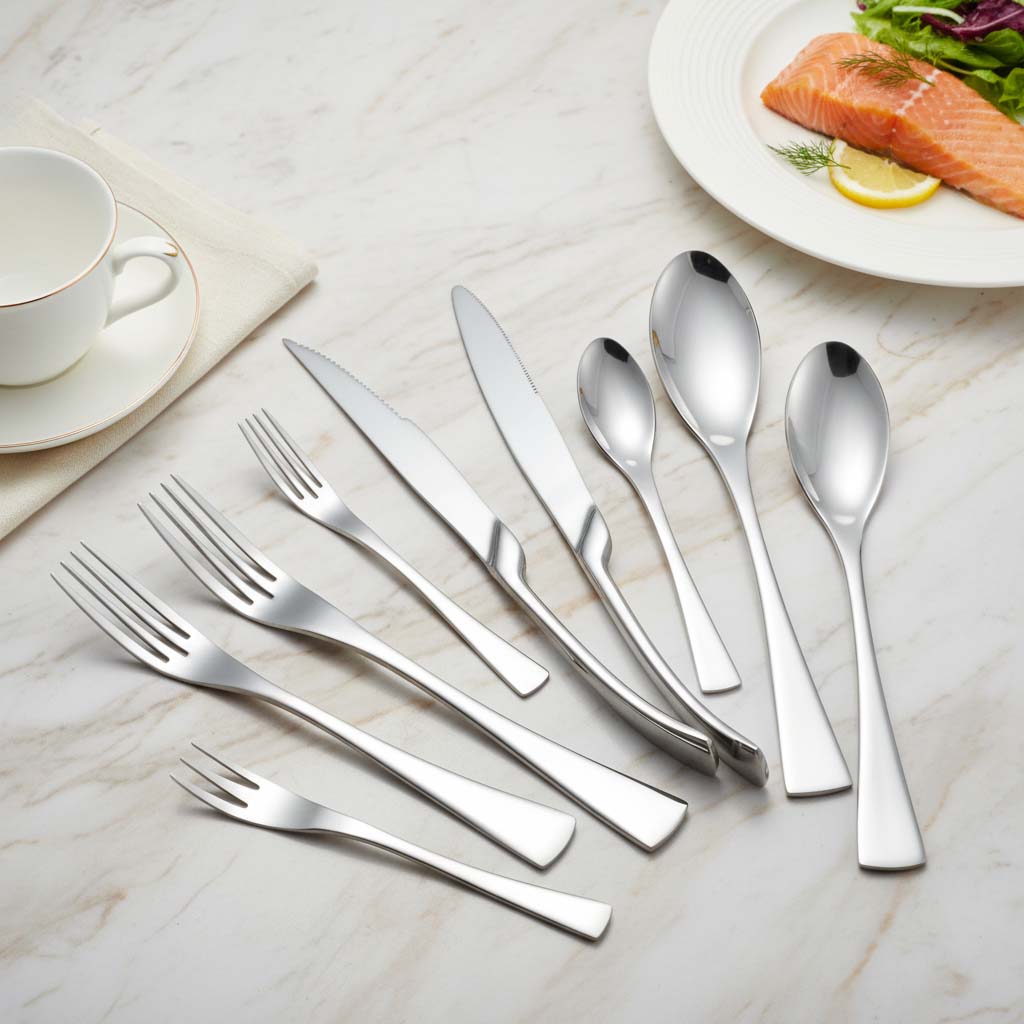
430 Stainless Steel for High-Volume Projects
430 stainless steel is part of the ferritic family of stainless steels, which means it is magnetic. While it doesn't contain the nickel that gives 304 its superior corrosion resistance, it contains enough chromium to offer good resistance to rust in most everyday environments. Its real strength lies in its balance of properties.
Advantages of 430 Stainless Steel:
- Excellent Value for Money: Provides good performance at a much more competitive price than 304.
- Good Corrosion Resistance: Sufficient for most commercial catering and hotel environments.
- Good Polishing Performance: Can be finished to a bright, attractive shine.
- Magnetic: This can be an advantage in commercial kitchens that use magnetic retrieval systems to prevent flatware from being accidentally discarded.
Because of this incredible balance, 430 is the go-to choice for clients who need dependable flatware on a large scale. This includes:
- Wholesale distributors supplying retailers
- Commercial catering companies
- Hotel and restaurant chains
- School and hospital cafeterias
- Restaurant suppliers
Many of our long-term commercial customers at XR Cutlery specify 430 stainless steel for their standing orders. They know it provides the durability to withstand thousands of wash cycles and the professional appearance their clients expect, all while keeping their operational costs manageable. For large-volume projects where extreme corrosion resistance isn't the top priority, 430 is almost always the smartest choice.
Why Is Different Food-Grade Stainless Steel Used for Knives?
Have you ever noticed that the knife in a flatware set is often magnetic, even when the fork and spoon are not? Or that it feels slightly different? This isn't a sign of inconsistent quality; it's a mark of thoughtful engineering.
Knives require a different grade of food-grade stainless steel because their function is fundamentally different. A knife must be hard enough to hold a sharp cutting edge. For this reason, manufacturers use 420 stainless steel for blades, a material that can be heat-treated2 for exceptional hardness.
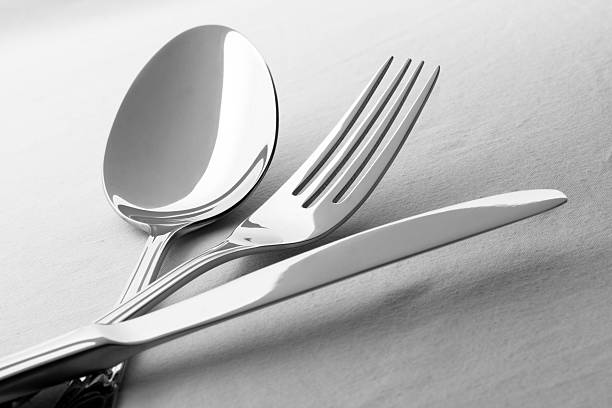
The Science Behind a Good Knife Blade
A fork needs to be strong enough not to bend, and a spoon needs to be corrosion-resistant. A knife needs to cut. Grades like 304 and 430 are relatively soft, which makes them easy to stamp and form into spoon and fork shapes, but they can't hold a sharp edge. This is where martensitic stainless steels like 420 and 410 come in.
420 Stainless Steel – The Preferred Material for Knife Blades
420 stainless steel is the industry standard for high-quality dinner knife and steak knife blades. Its chemical composition allows it to become extremely hard after a specialized heat-treatment process. This hardness is crucial for maintaining a sharp edge through repeated use and sharpening.
Advantages of 420 Stainless Steel:
- Excellent Hardness: Achieves high Rockwell hardness values after heat treatment.
- Superior Edge Retention: Stays sharper for longer.
- Strong Cutting Performance: Easily cuts through food without tearing.
We once had a private label customer who insisted that every piece in their new flatware set, including the knife, be made from 304 stainless steel. We produced a sample for them as requested. While the fork and spoon were perfect, the knife was dull and couldn't be sharpened effectively. After we explained the functional difference and provided a sample with a 420 blade, they immediately understood. The final product—with 304 handles, forks, and spoons, and a 420 blade—delivered the premium appearance and high-performance cutting they wanted.
410 Stainless Steel – An Economical Choice for Basic Knives
Similar to 420, 410 stainless steel can also be heat-treated for hardness, but to a lesser degree. It offers good mechanical strength at a lower cost, making it a viable option for certain applications.
However, its corrosion resistance is lower than 420, and it doesn't hold an edge quite as well. For these reasons, 410 is typically found in entry-level knife sets, budget-friendly kitchen tools, and promotional products where cost is the primary driver. In most high-quality flatware sets, 420 has become the preferred choice for superior performance.
How Do You Choose the Right Food-Grade Stainless Steel for Your Business?
With all these numbers and specifications, you might be worried about making the wrong call. Should you just pick the most expensive grade to be safe, or risk a budget option that might fail? The key is to stop thinking about which grade is "best" and start thinking about which is "most suitable."
Choosing the right food-grade stainless steel involves matching the material to your target market, price point, and intended use. A budget-friendly material like 201 stainless steel might be perfect for a short-term promotion, whereas a premium retail set demands a combination of 304 and 420 for optimal performance and appearance.
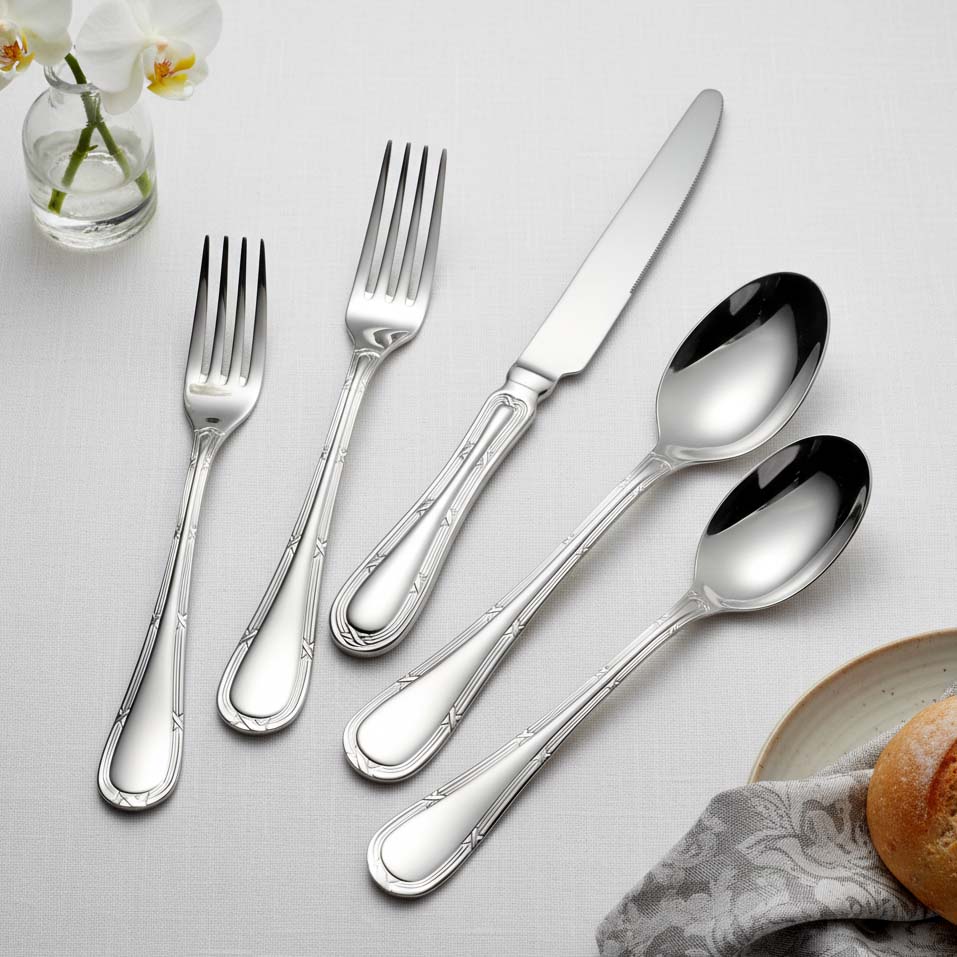
Making a Strategic Material Decision
The most professional flatware sets are rarely made from a single type of steel. Smart manufacturing is about using the right material for the right job to create a product that is greater than the sum of its parts.
Why One Flatware Set Uses Multiple Steel Grades
This is a concept that surprises many new buyers. The optimal flatware set is a hybrid, designed for performance.
| Product | Recommended Material | Why |
|---|---|---|
| Spoon | 304 or 430 | Needs high corrosion resistance and a beautiful finish. |
| Fork | 304 or 430 | Requires strength in the tines and good corrosion resistance. |
| Dinner Knife Blade | 420 | Must be hard to maintain a sharp cutting edge. |
| Knife Handle | 304 or 430 | Matches the spoon and fork for a consistent look and feel. |
This combination isn't a compromise; it's a sign of expert manufacturing. It ensures each piece performs its function perfectly.
A Look at 201 Stainless Steel – The Budget Material
201 stainless steel was developed as a lower-cost alternative to 304 by replacing some of the expensive nickel with manganese. While it is perfectly safe for food contact, its lower nickel content also means it has lower corrosion resistance. It's more susceptible to staining and rusting in harsh environments.
We only recommend 201 for projects where minimizing cost is the absolute highest priority. For a client running a massive, short-term promotional giveaway, 201 was the perfect fit. Affordability was the goal, not long-term heirloom quality.
Common Misconceptions About Food-Grade Stainless Steel
❌ The most expensive steel is always the best. The right steel depends on the application. Using 316 for a budget cafe is over-engineering.
❌ Every piece in a set should use the same steel. As we've seen, professional sets use different grades to optimize performance.
❌ Magnetic stainless steel is poor quality. Not at all. High-quality grades like 430 and 420 are magnetic and essential to the industry.
❌ 201 stainless steel is good for every project. It's a tool for a specific job (cost-sensitive projects) and is not recommended for premium export flatware.
Instead of asking "Which steel is best?", ask these questions:
- Who are my target customers (e.g., luxury hotels, budget retailers)?
- What is my target retail price point?
- Will the flatware be used in a demanding commercial or a standard domestic environment?
- Is high-performance cutting a priority for the knife?
Answering these will lead you to the right material far more effectively than just looking at a spec sheet.
Frequently Asked Questions
Is 304 or 430 stainless steel better for flatware?
Neither is universally "better." 304 stainless steel is better for premium retail flatware due to its superior corrosion resistance and finish. 430 stainless steel is better for high-volume commercial flatware because it offers the best balance of good performance and cost-effectiveness.
Why is my stainless steel knife magnetic but my fork isn't?
This is a sign of good design! Your knife blade is likely made from 420 stainless steel, which is heat-treated for hardness to hold a sharp edge and is naturally magnetic. Your fork is likely made from 304 stainless steel, which has higher corrosion resistance and is non-magnetic.
Is 201 stainless steel safe for food?
Yes, 201 stainless steel is considered food-safe. However, due to its lower nickel content and reduced corrosion resistance compared to 300- and 400-series steels, it is best suited for budget-focused products or items not intended for long-term, heavy use in harsh conditions.
Can you put all food-grade stainless steel flatware in the dishwasher?
Generally, yes. However, higher grades like 316 and 304 offer superior long-term performance and better resistance to the heat and harsh detergents of commercial dishwashers. Lower-cost grades may show signs of staining or pitting sooner over many wash cycles.
Conclusion
Choosing the right material is one of the most critical decisions you'll make for your flatware business. As we've seen, there is no single "best" option. The key is to understand that a successful product line is built on selecting the right food-grade stainless steel for the right application. Premium retail brands thrive on 304, high-volume commercial clients depend on the value of 430, and a great dining experience requires the cutting performance of a 420 steel blade. By moving beyond the simple question of which is best, you can build a collection that delivers exactly what your customers need.
Ready to find the perfect balance of quality, performance, and cost for your next flatware collection? Contact XR Cutlery today. Our 20+ years of manufacturing experience can help you select the ideal materials to meet your business goals and delight your customers.