
Custom Color Flatware Guide: How to Choose the Right Finish?
Struggling to make your flatware collection stand out in a sea of standard silver? The intense competition makes it difficult for brands and retailers to capture attention and justify premium pricing. This Custom Color Flatware Guide is your solution, explaining how leveraging advanced finishes can help you create unique, durable, and highly desirable collections for your target market.
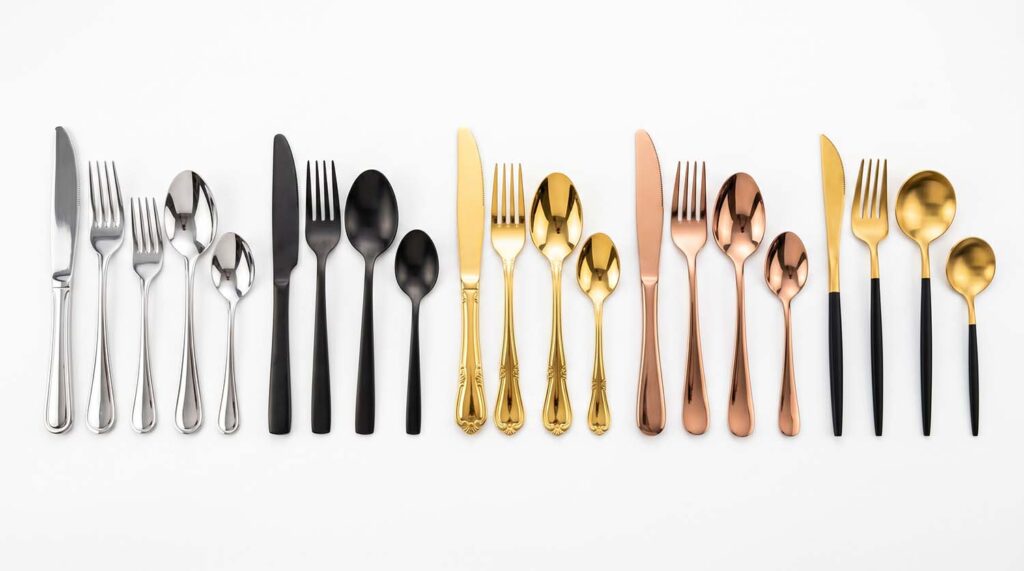
Choosing the right finish for custom color flatware involves matching the color and technology to your specific goals. First, identify your target market—luxury hotels may prefer gold, while modern restaurants lean towards black. Next, select the appropriate application method; PVD (Physical Vapor Deposition) coating offers superior durability, color consistency, and a premium feel, making it the ideal choice for high-end and commercial-use flatware that needs to be both beautiful and long-lasting.
Now that you have a direct answer, let's explore the details. Understanding the market trends, the most popular color options, and the manufacturing technology behind them is crucial for making a profitable decision. This guide will walk you through everything you need to know.
Why Is Custom Color Flatware Gaining Popularity?
Are you noticing more colored flatware in boutique hotels, trendy restaurants, and designer home stores? This isn't just a fleeting trend. It's a strategic move by businesses to solve the problem of market saturation and create a distinct identity.
Custom color flatware is becoming a powerful tool for brand differentiation and aligning with modern interior design aesthetics. It allows businesses to move beyond function and create an emotional connection with customers, supporting a more premium positioning in the market.
The Power of Brand Differentiation
In a market dominated by traditional silver-colored cutlery, standing out is a major challenge. Color offers a direct path to creating a memorable product. For private label flatware brands, importers, and retailers, a unique colorway can become a signature element.
Here's how color helps:
- Creates Unique Collections: A simple switch from silver to black or gold can completely transform a standard design into an exclusive collection.
- Increases Product Recognition: Customers are more likely to remember and recognize a brand associated with a distinctive color, like a lifestyle brand known for its elegant rose gold cutlery.
- Supports Premium Pricing: Colored flatware, especially when executed with a high-quality finish like PVD, has a higher perceived value. This allows you to position your products in a more premium segment and achieve better margins.
Over our 20+ years in manufacturing, we've helped numerous brands launch successful collections based on this principle. A client selling on Amazon, for instance, saw a significant sales lift after introducing a matte black version of a classic design, carving out a niche in a crowded category.
Matching Interior Design Trends
Flatware is no longer just a tool for eating; it's a key component of a tablescape and overall interior design. Discerning customers, from boutique hotels to home decor brands, want every element to be cohesive.
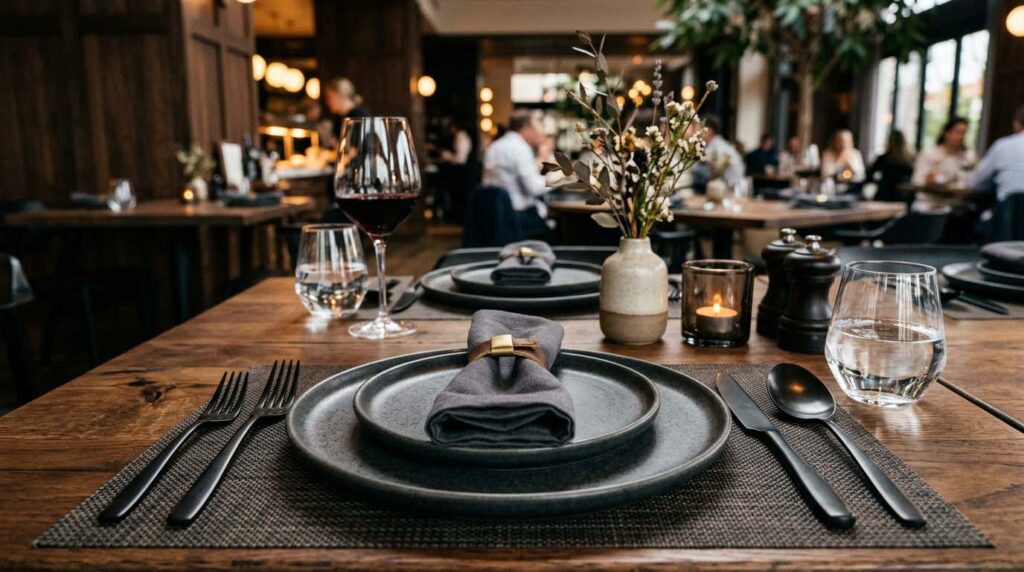
- Modern & Luxury Spaces: Black flatware is a perfect match for modern, minimalist, or industrial-themed restaurants. It adds a touch of drama and sophistication.
- Premium & Elegant Venues: Gold and champagne gold flatware elevate the dining experience, making them a go-to for luxury hotels, wedding suppliers, and fine dining establishments. The warm, reflective finish complements opulent decor.
- Lifestyle & Boutique Brands: Rose gold flatware resonates with a more fashion-forward, feminine aesthetic. It's incredibly popular with lifestyle bloggers, wedding-focused collections, and brands targeting a younger, style-conscious demographic.
By offering colored stainless steel flatware, you are providing a solution for buyers who are looking to create a complete and curated experience.
What Are the Most Popular Finishes in This Custom Color Flatware Guide?
Wondering which colors have the most market appeal? While custom possibilities are vast, a few key colors have proven to be consistent top-performers across different markets. Understanding their unique appeal is the first step to building a strong portfolio.
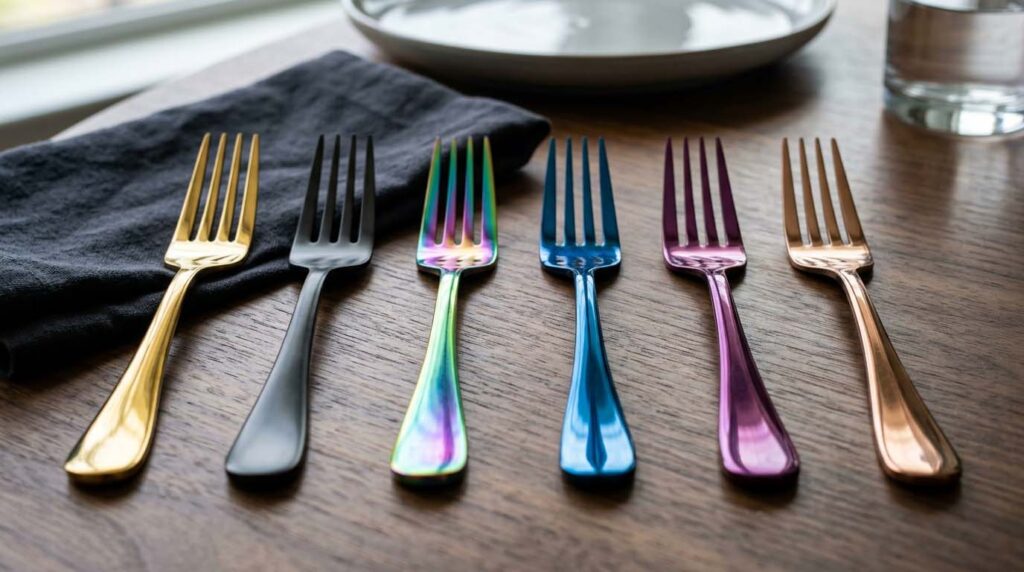
The most popular and commercially successful colors are gold, black, rose gold, and champagne gold. Each carries a distinct aesthetic and is best suited for specific applications, from luxury hotels to trendy retail brands.
Gold Flatware
Gold is the timeless choice for luxury. It instantly conveys a sense of opulence and high quality. When produced using a high-quality PVD coating on a well-polished 18/10 stainless steel base, the result is a stunning and durable product.
- Features: Luxurious appearance, premium visual effect, strong market recognition.
- Common Applications: Luxury hotels, premium retail brands, wedding gift collections, corporate gifts.
- Recommended Finish: Gold PVD coating for maximum durability and color consistency.
Black Flatware
Black flatware is the epitome of modern sophistication. It's bold, minimalist, and high-end, making it a favorite among designers and contemporary brands. It can be produced in either a matte or mirror finish, each offering a different feel.
- Features: Modern, minimalist, and versatile.
- Common Applications: Contemporary restaurants, modern home goods brands, designer collections, Amazon sellers looking for a strong visual product.
- Recommended Finish: Black PVD coating. As a black flatware supplier, we've seen this color dominate in markets that value bold and unique table settings.
Rose Gold Flatware
Rose gold brings a warm, elegant, and fashionable touch to the table. Its softer hue is less traditional than gold but equally luxurious, appealing to a demographic that follows fashion and lifestyle trends.
- Features: Elegant, fashion-oriented, warm appearance.
- Common Applications: Boutique brands, wedding and event planners, lifestyle retailers, influencer collections.
- Recommended Finish: Rose Gold PVD coating.
Other Notable Colors
Beyond the main three, other colors have carved out strong niches:
- Champagne Gold: A softer, more muted version of traditional gold. It's perfect for "daily luxury" and appeals to premium household collections and restaurants wanting a touch of class without being overtly flashy.
- Rainbow / Multi-color: This iridescent finish is created by a unique PVD process. It's highly eye-catching and best suited for creative brands, gift markets, and limited-edition collections that aim for a "wow" factor.
Here's a quick reference table to help you choose:
| Market Segment | Recommended Colors | Why It Works |
|---|---|---|
| Luxury Hotels | Gold, Champagne Gold, Black | Conveys opulence, sophistication, and modernity. |
| Modern Restaurants | Black, Matte Silver, Champagne Gold | Matches contemporary decor and creates a unique vibe. |
| Wedding Suppliers | Gold, Rose Gold | Adds elegance and romance to special occasions. |
| Retail & Amazon | Gold, Black, Rose Gold, Rainbow | Strong visual appeal for online listings and packaging. |
| Corporate Gifts | Gold, Black, Custom Brand Colors | Projects a premium and thoughtful image. |
How Is Color Applied to Stainless Steel Flatware?
You might wonder how a piece of solid stainless steel gets its brilliant gold or sleek black finish. The application method is just as important as the color itself, as it directly impacts durability, appearance, and food safety.
The most advanced and reliable method for coloring premium stainless steel flatware is PVD (Physical Vapor Deposition) coating. While older methods like electroplating and spray coating exist, PVD offers superior durability, consistency, and a premium finish suitable for high-end consumer and commercial use.

PVD Coating (Physical Vapor Deposition)
PVD is our recommended method and the industry standard for high-quality colored flatware. It's a vacuum coating process that produces a brilliant, durable finish. A solid metal material (like titanium) is vaporized in a vacuum chamber and deposited onto the flatware as a thin, atomic-level layer.
Advantages of PVD Coating:
- Excellent Durability: The PVD coating creates a finish that is molecularly bonded to the stainless steel. This makes it highly resistant to scratches, abrasion, and fading from daily use and dishwasher cycles. This is why it's the only method we recommend for hotel and restaurant clients.
- Superior Color Consistency: The process is highly controlled, ensuring uniform color across every piece in a production run. This is critical for brands that need to maintain quality standards across large orders.
- Premium Appearance: PVD produces a rich, deep color that cannot be replicated by painting or simple plating. It enhances the underlying polish of the steel, whether mirror or matte.
- Food Safe & Eco-Friendly: The process is environmentally friendly, with no hazardous materials or waste. The resulting coating is chemically inert and non-toxic, easily passing food-grade standards like FDA and LFGB.
Common PVD colors include gold, black, rose gold, champagne, and rainbow. As a specialized OEM flatware manufacturer, we have extensive experience with PVD technology, allowing us to produce consistent, high-quality finishes for global brands.
Other Methods (and Their Limitations)
- Electroplating1: This is a more traditional method where a thin layer of metal (like gold) is deposited onto the flatware using an electric current. While it can be cost-effective, its durability is highly dependent on the process quality and thickness of the plating. It is generally less wear-resistant than PVD and may not be suitable for demanding commercial environments.
- Spray Coating / Painting: This involves applying a layer of colored paint. We almost never see this used for premium flatware because the durability is very poor. The paint can easily chip or peel, especially in a dishwasher, which poses both aesthetic and safety concerns. This method is typically reserved for very cheap, decorative items, not functional cutlery.
For any serious brand looking to build a reputation for quality, PVD coated flatware is the clear choice.
What Should You Consider Before Placing an Order for Custom Color Flatware?
You've chosen a color and understand the technology. Now what? Ordering custom color flatware involves more than just picking from a catalog. To ensure a successful product launch, you need to align your product specifications with your market strategy and partner with a capable manufacturer.
Before ordering, you must carefully evaluate your product positioning, durability requirements, the manufacturer's production process, and potential pitfalls like relying on photos instead of physical samples. A well-planned approach is key to developing a profitable custom color flatware collection.

Define Your Product Positioning
First, ask yourself who you are selling to and how you want your product to be perceived.
- Luxury or Mass Market? A luxury hotel collection demands a flawless mirror polish under a gold PVD finish on heavy-gauge 18/10 stainless steel. A mass-market retail set might prioritize a trendy matte black finish on more cost-effective 18/0 steel.
- Daily Use or Special Occasions? Flatware for daily use, especially in restaurants, requires maximum durability. Special occasion or gift sets might prioritize packaging and a unique color over dishwasher resistance.
- Your Brand Identity: The color and finish should reflect your brand. A minimalist brand should lean towards matte black or silver, while a glamorous brand would be better served by a brilliant rose gold.
Specify Durability, Material, and Finish
The final quality is a combination of three things: the base material, the pre-coating polish, and the coating application itself.
- Base Stainless Steel: We typically use 304 (18/8 or 18/10) for forks and spoons and 420 for knife blades for optimal corrosion resistance and feel. The quality of the steel provides the foundation.
- Surface Preparation: A perfect PVD finish requires a perfectly polished surface. Any scratches or imperfections in the steel will be visible after coating. Our process includes multiple polishing steps, including manual fine-polishing, to ensure a flawless base.
- Coating Quality: A good PVD process ensures strong adhesion and uniform thickness. When vetting a supplier, ask about their PVD process and quality control for coating adhesion and wear resistance.
Understand the Manufacturing & QC Process
Partnering with a transparent OEM/ODM manufacturer is crucial. A typical workflow for high-quality custom color flatware looks like this:
- Material Selection & Testing: Raw stainless steel coils are inspected for composition, thickness, and defects.
- Flatware Production: The steel goes through stamping, shaping, forging, and multiple stages of polishing to create the raw flatware piece.
- Pre-Coating Cleaning: The polished flatware is ultrasonically cleaned to remove all residues. This step is critical for PVD adhesion.
- PVD Coating Application: The pieces are loaded into the vacuum chamber for coating.
- Quality Inspection: This is a multi-stage process. We inspect for color consistency against a master sample, surface defects (like spots or unevenness), and coating adhesion. A final check is done during packing.
Avoid Common Pitfalls
Many buyers make avoidable mistakes. Here are two of the most common:
- Choosing a Color Without Testing Samples: Colors can look drastically different on a screen versus in person, and they change under different lighting. Always, always request and approve physical pre-production samples before committing to a bulk order.
- Focusing Only on Price: A low price on colored flatware is often a red flag. It may indicate a poor-quality base material, rushed polishing, or a cheap, non-durable coating method like spray painting. This will lead to customer complaints and damage your brand's reputation. Premium color requires premium execution.
Frequently Asked Questions
How durable is PVD coated flatware?
PVD coated flatware is extremely durable and designed for everyday use. The coating is molecularly bonded to the steel, making it highly resistant to scratches, wear, and fading. When sourced from a quality manufacturer, it is dishwasher safe and ideal for commercial use in hotels and restaurants.
What is the minimum order quantity (MOQ) for custom color flatware?
The MOQ typically depends on the complexity of the color and the manufacturer's process. Since custom color runs require specific machine setups and color matching, MOQs are generally higher than for standard silver flatware. However, as a flexible OEM partner, we can often accommodate trial orders for our clients.
Can I create a completely custom color for my brand?
Yes. As an OEM/ODM flatware manufacturer, we can support custom color development. This process involves creating specific PVD targets and running multiple tests to achieve the desired hue and finish. It's a collaborative process that requires sampling and testing to match your brand's vision.
Is colored flatware food-safe and dishwasher-safe?
Absolutely, provided it's made correctly. High-quality PVD coatings are chemically inert, non-toxic, and biocompatible. Reputable manufacturers like us ensure our colored flatware passes international food safety standards like FDA and LFGB. Our PVD flatware is also engineered to be dishwasher-safe for both residential and commercial machines.
Conclusion
Color is more than just an aesthetic choice; it's a strategic tool for creating value in a competitive market. This Custom Color Flatware Guide has shown that by understanding market trends and choosing the right combination of color, material, and finish, you can develop a product line that truly stands out. The key to success lies in prioritizing quality. A durable and beautiful PVD coating on a well-made stainless steel base provides the longevity and premium feel that builds brand trust and justifies higher price points. By focusing on quality from the start, you can turn a simple color choice into a significant business advantage.
As a specialized OEM flatware manufacturer with over 20 years of experience, we have helped countless brands, importers, and hotels develop successful custom color collections. We understand the nuances of PVD technology and the quality control required to deliver a world-class product. If you're ready to explore custom color flatware for your brand, contact us to discuss your project and request samples.
-
Electroplating is a widely used technique for depositing metal coatings on various substrates, including flatware, utilizing electric current. ↩