
China vs Vietnam Flatware Manufacturing: Which Is Better for B2B Buyers?
Struggling to decide on your sourcing strategy for stainless steel flatware? The debate over China vs Vietnam flatware manufacturing often creates a paralysis of choice, with conflicting information about costs, quality, and capabilities. You might be hearing that one is simply "cheaper," but you suspect the reality is far more complex and that a wrong move could impact your supply chain for years. This article provides a clear framework for making the right decision based on your specific business needs.
The best choice between China vs Vietnam flatware manufacturing depends entirely on your project's requirements. For large-scale production, complex OEM/ODM customization, and a deep selection of materials and finishes, China's mature manufacturing ecosystem offers a significant advantage. For buyers prioritizing supply chain diversification with simpler, standardized products, Vietnam presents a legitimate and growing alternative.
This decision goes far beyond a simple labor cost comparison. To truly understand which country is a better fit, we need to dive into the critical factors that affect your total cost of ownership, product development capabilities, and long-term supply stability. Let's break it down.
Why Does Manufacturing Scale Matter More Than Labor Costs?
Are you focused on finding the lowest possible labor rate? This is a common starting point, but it can be misleading. Focusing only on labor ignores hidden costs and risks associated with production efficiency, raw material access, and supply chain maturity, which can ultimately erase any initial savings.
The scale of a country's industry is a powerful indicator of its overall manufacturing ecosystem. A larger, more established industry generally has a lower total cost of ownership, higher efficiency, and greater reliability, especially for high-volume orders.
Dive Deeper
For years, the sourcing conversation has been dominated by a simple narrative: find the country with the cheapest labor. While I understand the appeal, my 20+ years in this industry have shown me that this is a dangerously oversimplified approach for B2B procurement.
A Look at the Global Export Data
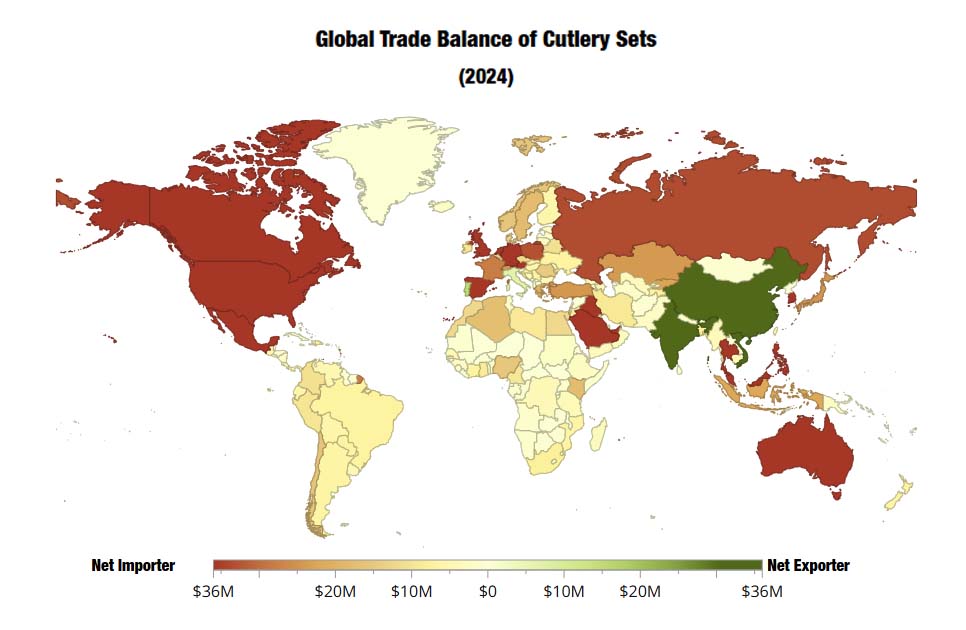
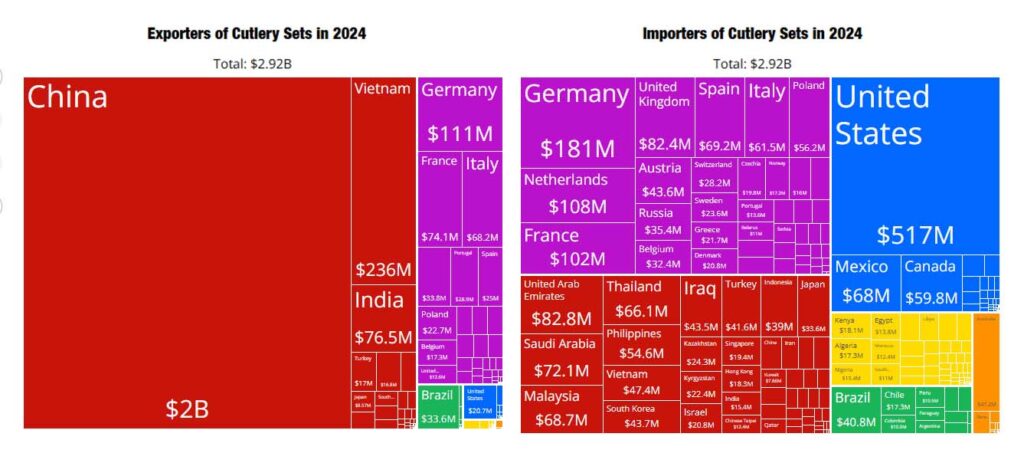
Let's start with some objective data to frame the conversation. According to 2024 industry estimates for table flatware exports:
- Global Export Volume1: Approximately 419,000 tons.
- China's Export Volume: Approximately 359,000 tons.
- Vietnam's Export Volume: Approximately 12,000 tons.
While figures can vary slightly based on data sources and HS codes, the trend is undeniable: China currently accounts for roughly 86% of the world's exported flatware by volume. This isn't a statement about which country produces "better" quality; it's a statement about industrial scale. This massive scale creates a gravitational pull, fostering a deeply integrated and competitive environment that benefits buyers in ways that aren't immediately obvious on a price sheet.
Beyond Labor: The Total Cost of Ownership
A savvy buyer looks at the Total Cost of Ownership (TCO), not just the labor line item. A more accurate formula for your final cost per piece looks something like this:
Total Cost = Materials + Labor + Tooling + Production Efficiency + Quality Costs (Rework/Scrap) + Packaging + Logistics
Here's why a focus on labor alone is flawed:
- Production Efficiency: A factory with better automation, more experienced technicians, and optimized workflows can produce more units per hour. This higher efficiency can easily offset a higher hourly wage.
- Material Sourcing: China is a massive producer of stainless steel. This proximity and volume give manufacturers direct, stable access to raw materials (like 304, 430, or 316 grades) at globally competitive prices.
- Quality Costs: A less experienced factory might have a higher defect rate. The cost of rework, scrap, and returns can quickly decimate your profit margins. A mature ecosystem has proven processes to ensure batch-to-batch consistency.
In my experience, a factory in a mature industrial cluster might have slightly higher labor costs than one in a developing region, but its higher efficiency and lower defect rate often result in a lower final cost per unit for the buyer.
How Does Supply Chain Depth Affect OEM/ODM and Customization?
Do you have a unique flatware design in mind, but worry about finding a supplier who can execute it? A factory might say "yes" to your custom request, but if they lack access to a robust local supply chain, your project can get bogged down in delays, high tooling costs, and communication errors.
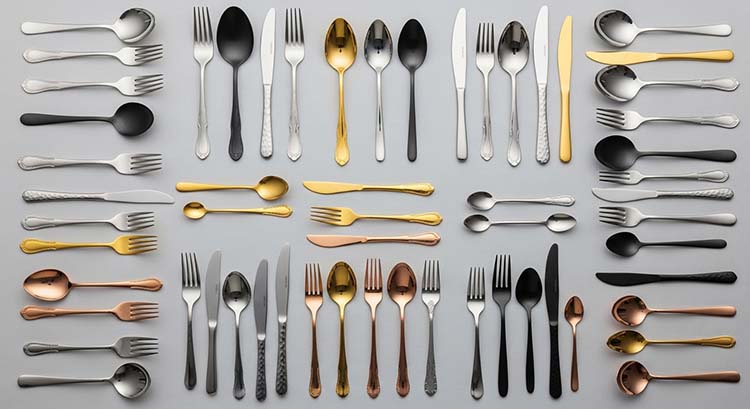
A deep supply chain with a high concentration of specialized vendors is critical for successful OEM/ODM projects. Industrial clusters like Jieyang in China provide rapid and affordable access to tooling, raw materials, specialized finishing, and packaging, dramatically accelerating product development and problem-solving.
Dive Deeper
This is where China's advantage becomes most apparent, especially for private label brands, retailers, and hospitality suppliers who need unique products. The ability to bring a custom design to life quickly and cost-effectively is not just about the factory itself—it's about the entire ecosystem surrounding it.
A View from the Ground: The Jieyang Industrial Cluster
Our own operations are based in Jieyang, Guangdong, which is one of the world's most important industrial clusters for stainless steel hardware. Industry estimates suggest there are over 5,000 companies related to the stainless steel industry in this region alone.
This isn't just a collection of factories. It's an interconnected web of:
- Raw Material Suppliers: Dozens of steel mills and distributors compete on price and quality.
- Mold & Tooling Shops: Need a new knife forging die or a custom stamping mold? There are specialists just down the road who can create it in days, not weeks.
- Stamping & Forging Specialists: The core manufacturing processes are supported by decades of accumulated technical knowledge.
- Polishing Supply Chains: From machine polishing to high-end mirror finishing by hand, there are entire businesses dedicated to just this one step.
- Surface Treatment Experts: Need PVD in gold, black, or rose gold? Or a hammered or sandblasted finish? These specialized services are readily available and affordable due to intense local competition.
- Packaging and Printing Companies: Custom gift boxes, retail packaging, and shipping cartons are all designed and produced locally.
For a B2B buyer, this means that when you ask for a custom handle shape or a unique PVD color, your supplier isn't starting from scratch. They are coordinating with trusted local partners they have worked with for years. This makes complex OEM/ODM development significantly faster and more reliable.
From Sample to Mass Production: The True Test
Getting a beautiful sample is one thing. Consistently producing 500,000 pieces to the exact same standard is a completely different challenge. This is where production systems, capacity, and experience are truly tested.
| Order Volume | Key Considerations | Where a Mature Ecosystem Excels |
|---|---|---|
| 5,000 pcs | Basic quality, simple logistics. | Both China and Vietnam can likely handle this. |
| 100,000 pcs | Production scheduling, raw material consistency, QC across multiple batches. | A mature supplier with established processes has a clear advantage. |
| 500,000+ pcs | Massive raw material procurement, dedicated production lines, multi-team QC, complex logistics, stress-tested capacity. | Only large-scale factories within a deep supply chain can reliably execute. |
I've seen projects falter when scaling up because the supplier couldn't secure enough quality-controlled stainless steel or their limited number of polishing machines created a massive bottleneck. The larger the order, the more important the factory's underlying system—and the ecosystem that supports it—becomes.
Isn't Quality and Lead Time Better from a Specific Country?
Are you assuming one country inherently produces higher-quality goods or delivers them faster? This is a common but incorrect assumption. Poor quality and missed deadlines are risks with any supplier in any country if their internal systems are weak.
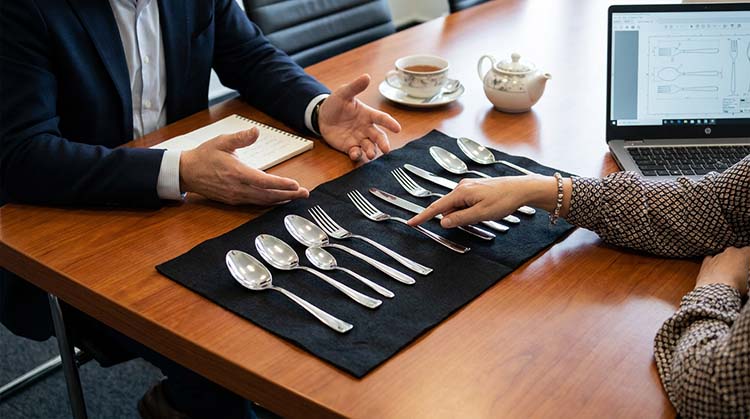
Quality and lead time are functions of a specific factory's management systems, not its national flag. A well-managed factory with robust QC protocols and efficient production planning will outperform a poorly managed one, regardless of location. The key is to vet the individual supplier, not just their country of origin.
Dive Deeper
It's tempting to create simple mental shortcuts like "Country A is for quality" and "Country B is for speed." However, in manufacturing, the devil is always in the details—specifically, the factory's internal processes.
What to Look for in a Supplier's Quality System
Instead of asking "Is Chinese quality better than Vietnamese quality?", you should be asking your potential supplier, "Can you show me your quality control process?"
Quality in stainless steel flatware is not a single metric. It's a combination of checkpoints that a professional supplier must manage:
- Stainless Steel Grade Verification: Do they test incoming raw materials to ensure it's the grade you ordered (e.g., 18/10 or 18/0)?
- Thickness & Weight Consistency: Are pieces consistent from the beginning to the end of a 100,000-piece production run?
- Polishing & Finish: Is the mirror finish free of scratches? Is a satin finish uniform?
- PVD Adhesion: For colored flatware, do they perform tests to ensure the coating won't flake or peel?
- Edge Finishing: Are the edges of forks and spoons smooth and free of burrs?
- Logo & Stamp Accuracy: Is your logo crisp, clear, and correctly positioned on every piece?
- Final Inspection: What is their AQL (Acceptable Quality Limit) standard for final inspection before packing?
A factory's ability to control these variables has far more impact on your final product than its location.
Deconstructing Lead Time for OEM Projects
Similarly, lead time is not determined by geography but by process management. For a standard, in-stock item, lead time is simple. But for a custom OEM project, the timeline is more complex:
- Design & CAD Confirmation: (1-2 weeks)
- Tooling & Mold Creation: (2-4 weeks)
- Prototype & Sample Production: (1 week)
- Sample Approval & Revisions: (1-2 weeks)
- Mass Production: (4-6 weeks)
- Surface Finishing & QC: (1-2 weeks)
- Packaging & Final Inspection: (1 week)
A mature manufacturing ecosystem helps shorten this timeline by making steps like tooling and surface finishing faster and more predictable. However, the factory's internal project management is what truly keeps everything on track. A well-organized supplier in either country will outperform a disorganized one.
Frequently Asked Questions
Is Vietnam cheaper for flatware manufacturing?
Labor costs in Vietnam may be lower, but this does not guarantee a lower total cost. You must consider material costs, production efficiency, tooling, and quality control. For large, complex orders, China's efficiency and mature supply chain can often result in a more competitive total cost of ownership.
Can I get OEM/ODM custom flatware from Vietnam?
Yes, OEM/ODM manufacturing is available in Vietnam. However, the ecosystem for complex customization—including rapid tooling, a wide variety of surface treatments like PVD, and deep engineering experience—is currently more developed and accessible in China's established industrial clusters. Always vet a specific factory's capabilities thoroughly.
What is the main advantage of sourcing stainless steel flatware from China?
The primary advantage is the unparalleled depth and scale of its manufacturing ecosystem. This results in immense product variety, strong OEM/ODM capabilities, competitive pricing on large volumes, and the ability to reliably handle complex, large-scale production runs that require extensive coordination with specialized suppliers.
How do I choose between a Chinese and a Vietnamese supplier?
Start by defining your needs, not by choosing a country. First, clarify your required order volume, product complexity, customization needs, and quality standards. Then, seek out specific suppliers in both countries who can demonstrate they have the systems, experience, and capacity to meet those specific requirements.
Conclusion
The China vs Vietnam flatware manufacturing decision is not a simple "either/or" choice. Vietnam is a legitimate and growing sourcing option, particularly for buyers seeking supply chain diversification or sourcing simpler, standardized products. However, for B2B buyers who need large volumes, complex OEM/ODM customization, a wide array of SKUs, and the assurance of a deeply integrated supply chain, China's manufacturing ecosystem continues to hold a powerful competitive advantage. The real strength lies not in labor costs, but in the combination of scale, efficiency, specialization, and experience that reduces total cost and project risk.
My final advice is this: don't start by choosing a country. Start by defining your needs. Then, find a world-class manufacturing partner who can meet them.
If your business requires a reliable, long-term partner for wholesale, private label, or custom OEM/ODM stainless steel flatware, contact us at XR Cutlery. With our 20+ years of experience and a production capacity of over 5 million pieces per month, we have the expertise and scale to bring your vision to life.
-
This source provides statistical data on global export volumes, supporting the claim with recent figures from international trade databases. The data may vary by year and product category. ↩