
Automatic vs. Hand Polishing in Flatware Manufacturing: Which Is Better?
You're looking at two spoons. They both shine, but one seems to have a deeper, more uniform luster, while the other might have subtle variations. What creates this difference?
In flatware manufacturing, neither automatic nor hand polishing is universally "better." Automatic polishing delivers consistency and efficiency for bulk orders, while hand polishing provides superior detail for complex shapes and premium finishes.
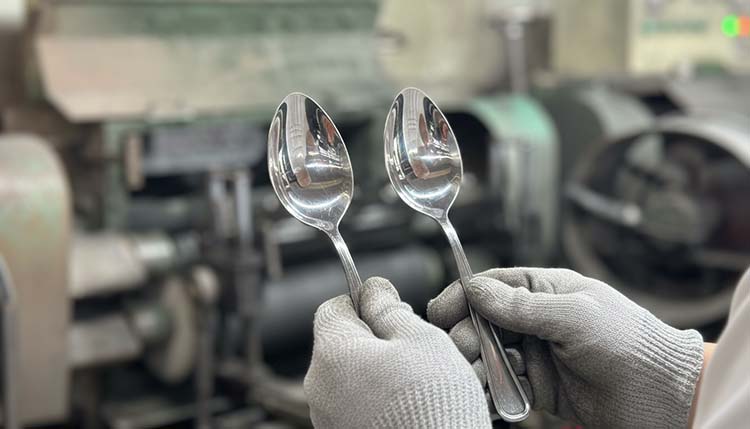
As a manufacturer, this is a conversation I have all the time with clients like Jacky, who are focused on quality and consistency for their brands. The choice isn't just about cost; it's about matching the right process to the product's design and intended market. A high-volume restaurant chain needs thousands of identical, durable forks. A luxury hotel might want a smaller batch of intricately designed knives with a flawless finish. The smartest factories don't just choose one method over the other. They understand the strengths of each and combine them to create the best possible product. Let's break down when and why each method is used.
How Do You Achieve a Perfectly Consistent Finish on Thousands of Pieces?
For a distributor or a large restaurant chain, consistency is everything. If you order 10,000 forks, you expect the last one to look identical to the first. How is this possible?
Consistency in bulk orders is achieved through automatic polishing. Machines use constant pressure, speed, and angles to ensure every piece receives the exact same treatment, resulting in a highly uniform surface gloss.
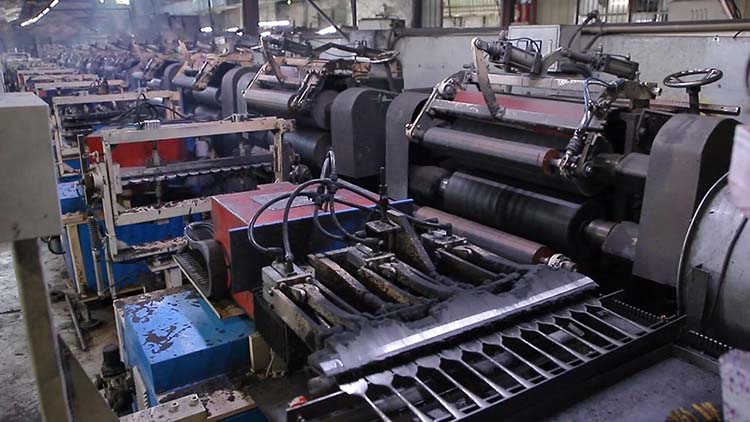
Humans get tired. Their pressure can vary. A machine doesn't. This is the single biggest advantage of automatic polishing for mass production. It removes the human variable to deliver a predictable, repeatable result. I've had distributor clients who came to us because their previous supplier's mirror finish varied noticeably from batch to batch. This was a clear sign of inconsistent hand polishing.
At XR Cutlery, for all our standard high-volume models, we rely on automatic polishing lines. This not only guarantees batch-to-batch consistency but also significantly increases efficiency. A machine can run 24/7, processing hundreds of pieces per hour. This speed and reliability are essential for fulfilling large wholesale orders on time, especially during peak seasons.
When is Hand Polishing Still Necessary?
If machines are so consistent and efficient, why do we still use hand polishing? Can't a machine handle everything?
Hand polishing is essential for complex shapes, intricate details, and achieving the ultimate premium finish. A skilled human polisher can reach areas a machine can't and can adapt to unique geometries on the fly.
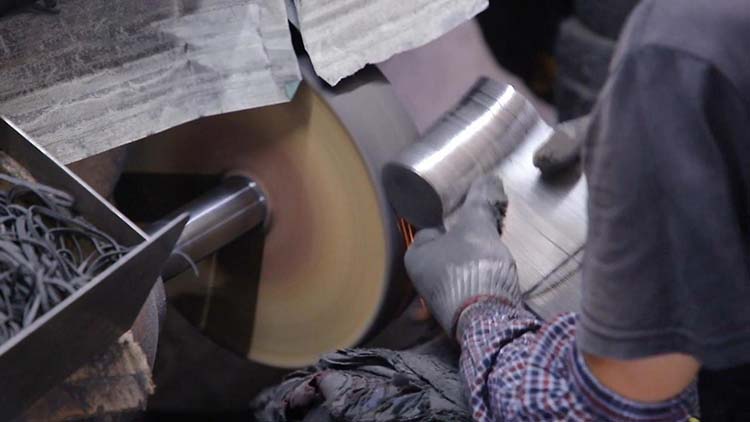
Think of the delicate curves on an ornate handle, the sharp junction between a fork's tines, or the embossed logo on a luxury knife. These are areas where a one-size-fits-all machine might struggle. A skilled artisan, however, can apply just the right pressure and angle to bring out the detail and create a flawless, seamless finish.
Hand polishing is slower and more labor-intensive, which makes it more expensive. This is why it's typically reserved for:
- High-end/Premium Lines: Where the cost is justified by the superior finish.
- Complex Designs: For models with decorative patterns or unusual shapes.
- Small Batches & Prototypes: Where setting up a machine for a short run isn't economical.
- Rework & Final Touch-ups: To correct minor imperfections after the initial machine polish.
In our production, for flatware with special textures or complex designs, we always add a manual polishing step to ensure the details are perfectly refined.
What Is the Most Effective Approach for Modern Manufacturing?
So, if machines provide consistency and hands provide detail, do you have to choose between them? Or is there a way to get the best of both worlds?
The most effective approach is a hybrid model that combines automatic and hand polishing. This balances industrial efficiency with the craftsmanship needed for the highest perceived quality and consistency.
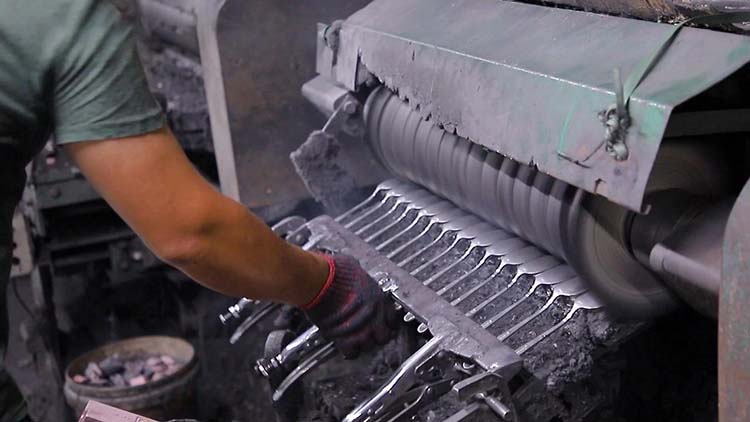
This is the exact strategy we employ at XR Cutlery to deliver consistent quality at scale. Here’s how it works in practice:
- Primary Automatic Polishing1: The bulk of the polishing work is done by our automated lines. This creates a uniform base shine across the entire batch, ensuring consistency and keeping costs competitive for our wholesale clients.
- Manual Detail Finishing2: After the machine pass, key areas are inspected. Our skilled polishers then step in to manually touch up critical details—smoothing the edges between tines, perfecting the curve of a spoon bowl, or enhancing the sharpness of an embossed pattern.
This hybrid method allows us to meet the high-volume demands of distributors who need competitive pricing for their economy lines, while also satisfying the high-quality standards for their premium collections. It’s not about automatic vs. hand polishing; it's about automatic and hand polishing working together.
Conclusion
The polish on a piece of flatware tells a story about its quality. By combining the consistency of automatic polishing with the detailed touch of manual craftsmanship, we can produce high-quality flatware at scale, ensuring every piece meets both our standards and your customers' expectations.